
Cycling · Morocco · 8 days on the bike
Guided tripRoad bikeFuelled by Tajine: Road cycling from the Atlas to the Sahara
Eight days on the bike through southern Morocco, guided and with a support bus: over the Tichka Pass, down the Drâa Valley to the dunes of Merzouga and back through the Todra and Dades gorges.
On the road in
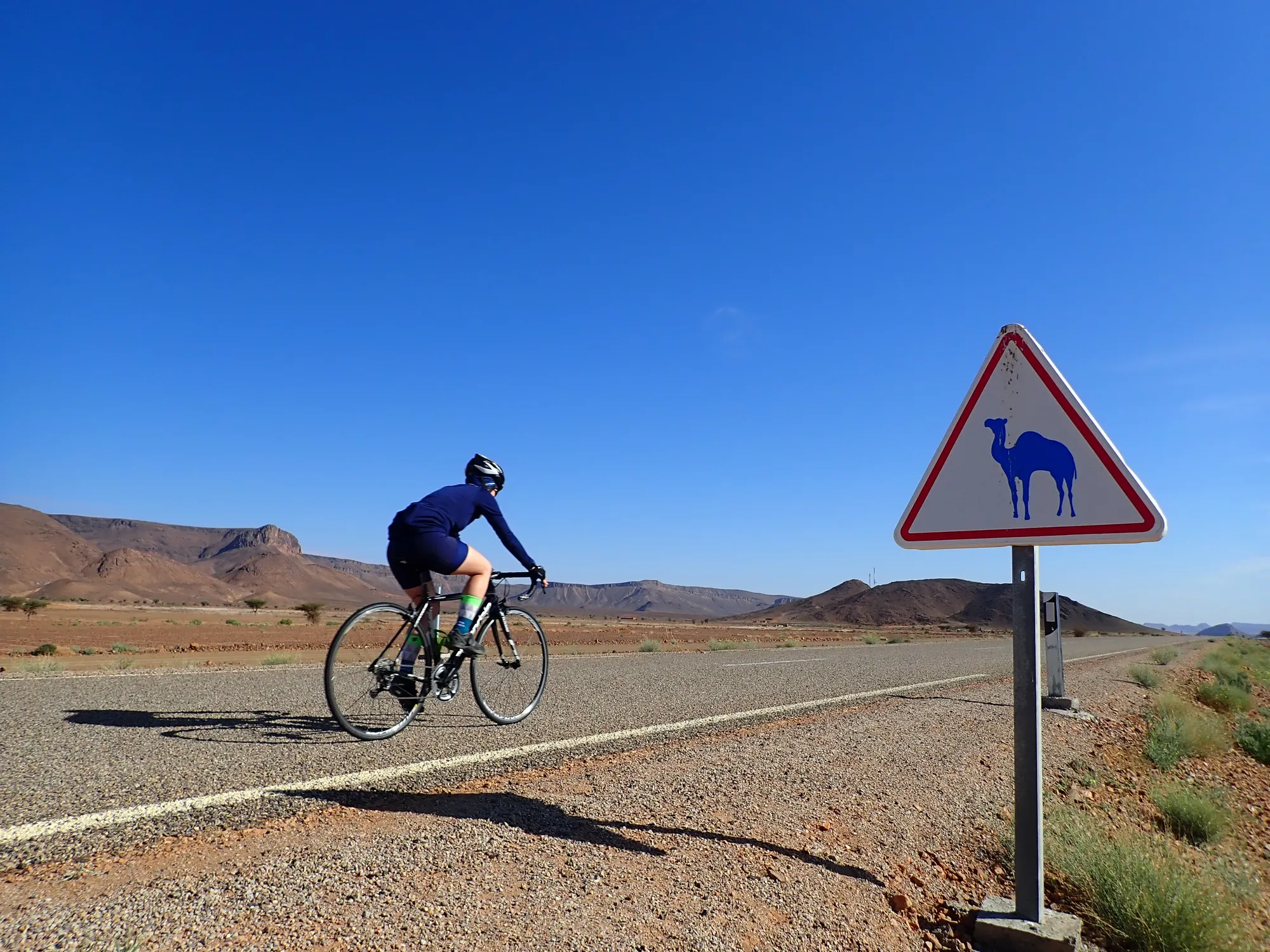
Getting to know a country by road bike, day by day, bend by bend: for me there is hardly a better way to travel. I booked this one, with a guide, a support bus and full board. In eight days on the bike we went from the High Atlas over the Tichka Pass, down the Drâa Valley to the edge of the Sahara near Merzouga, and back into the mountains through the Todra and Dades gorges. And what kept me going more than anything: tajine.
Meeting point Marrakech
The trip starts in Marrakech. Before we get on the bikes, there is time for the medina: narrow alleys, souks full of fabrics, lamps and spices, and riads hiding behind plain doors. Step inside and it is suddenly quiet, just a fountain splashing.
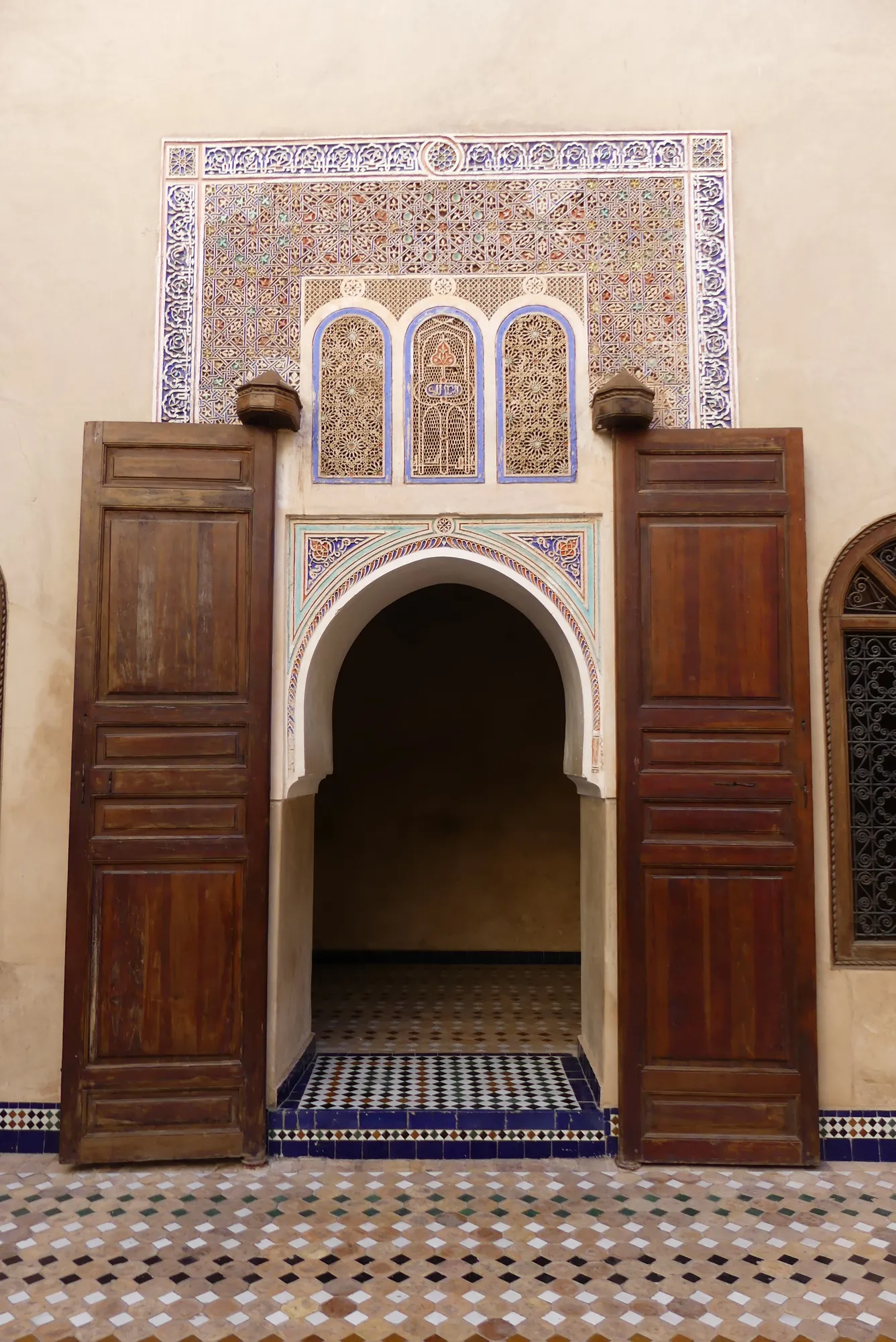
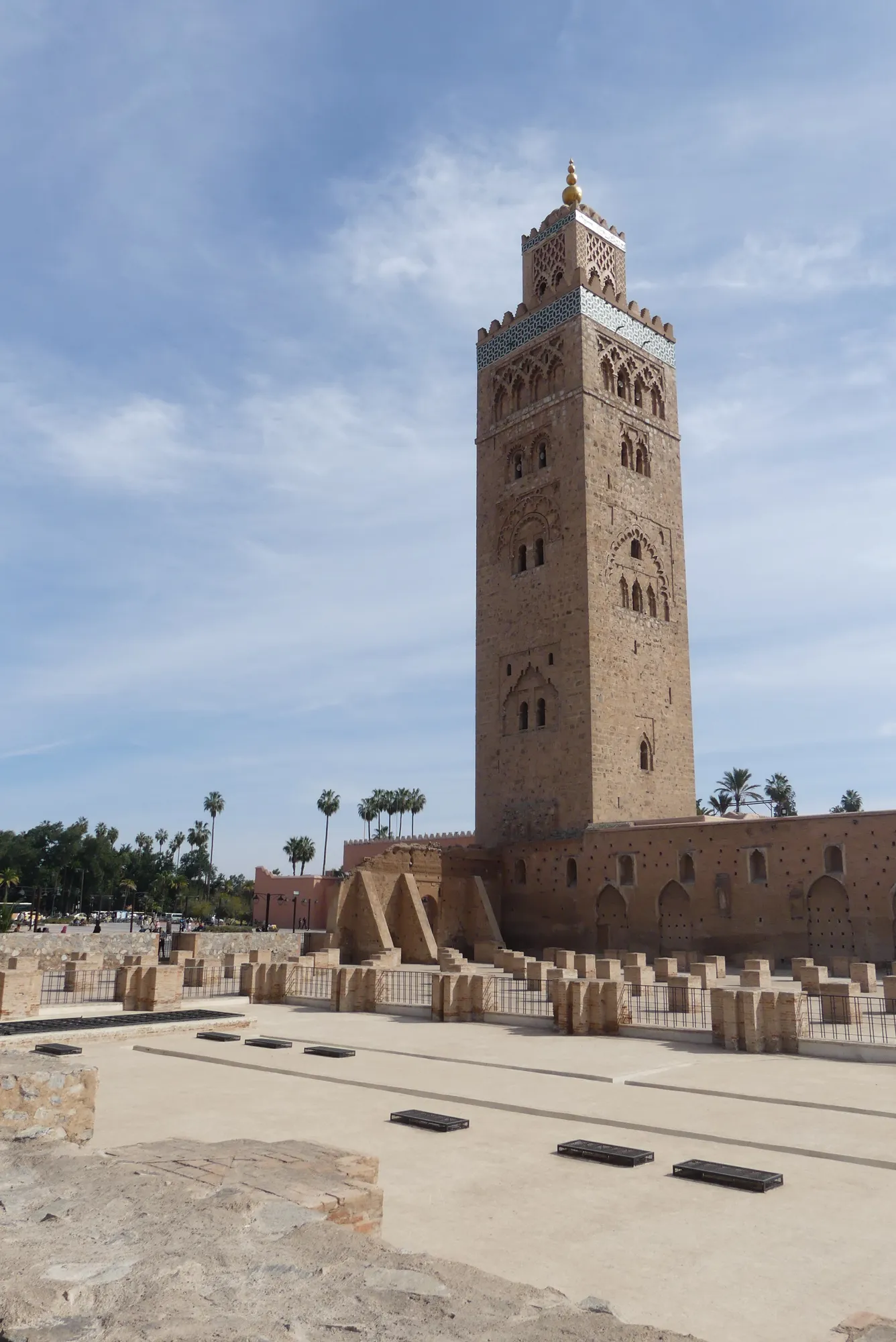
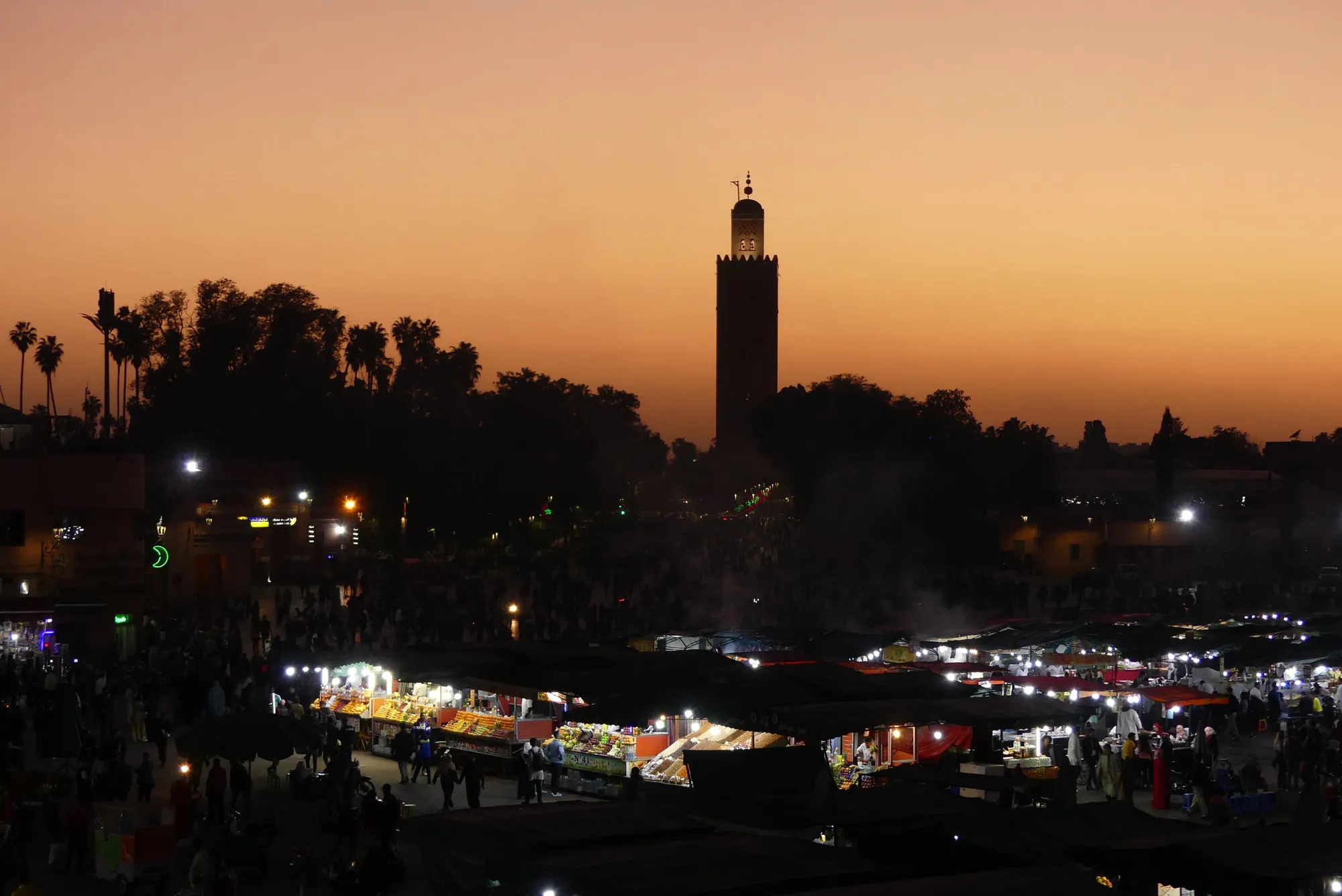
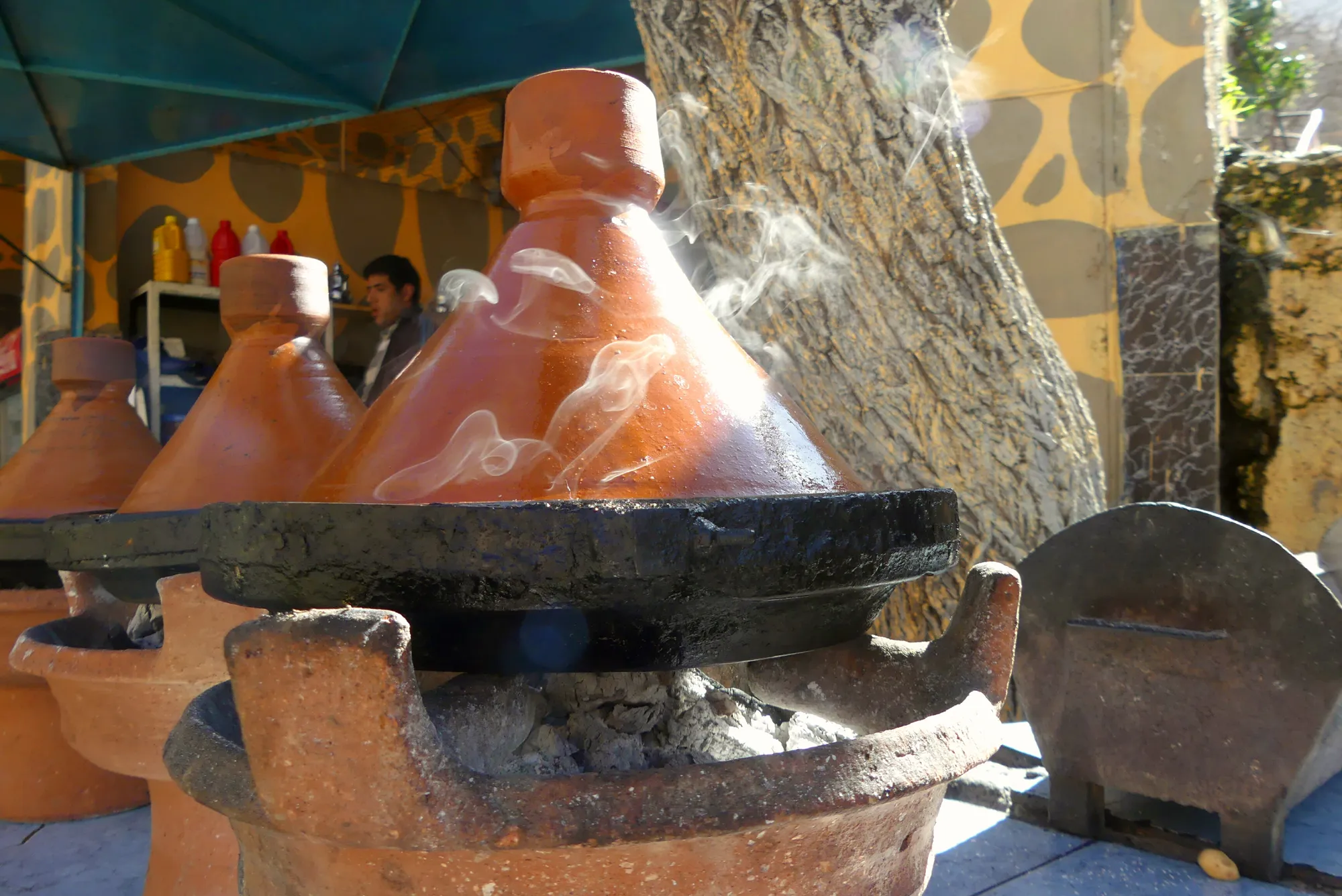
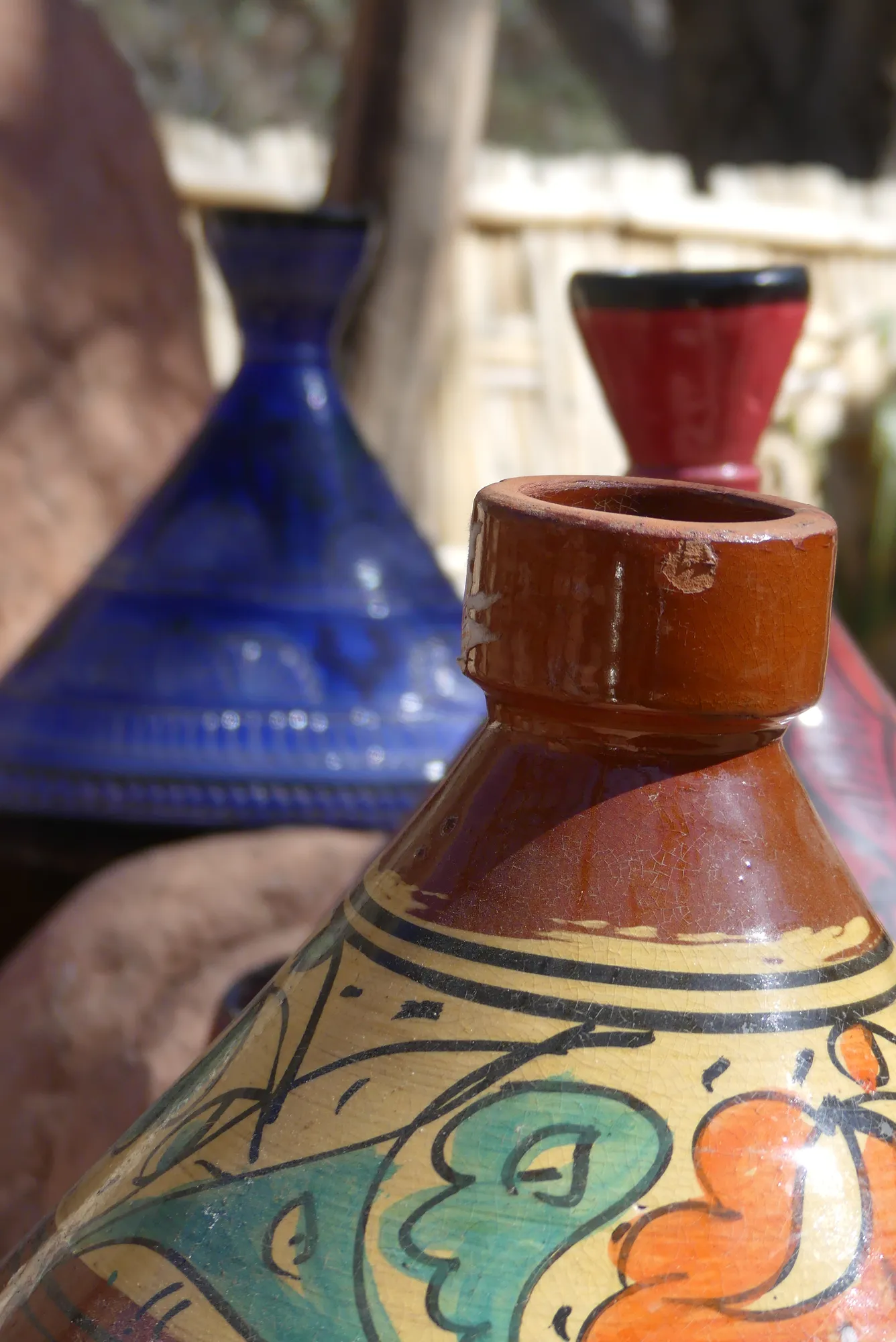
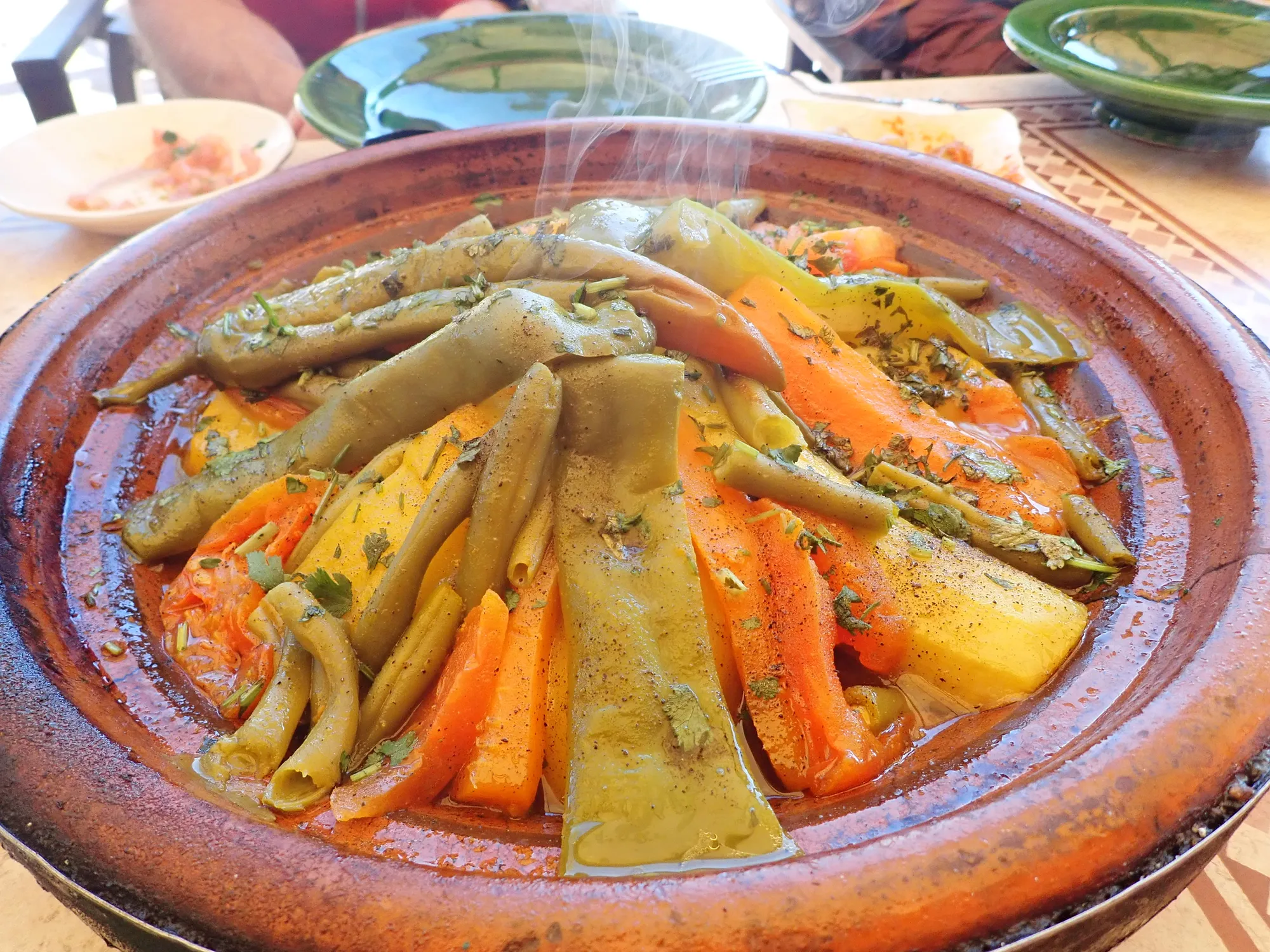
In the evening the sky over Djemaa el Fna turns orange and the lights of the food stalls come on. And then there are the tajine pots, everywhere. They follow me through the whole trip, usually with something very tasty inside.
Day 1: Over the Tichka Pass to Aït-Ben-Haddou
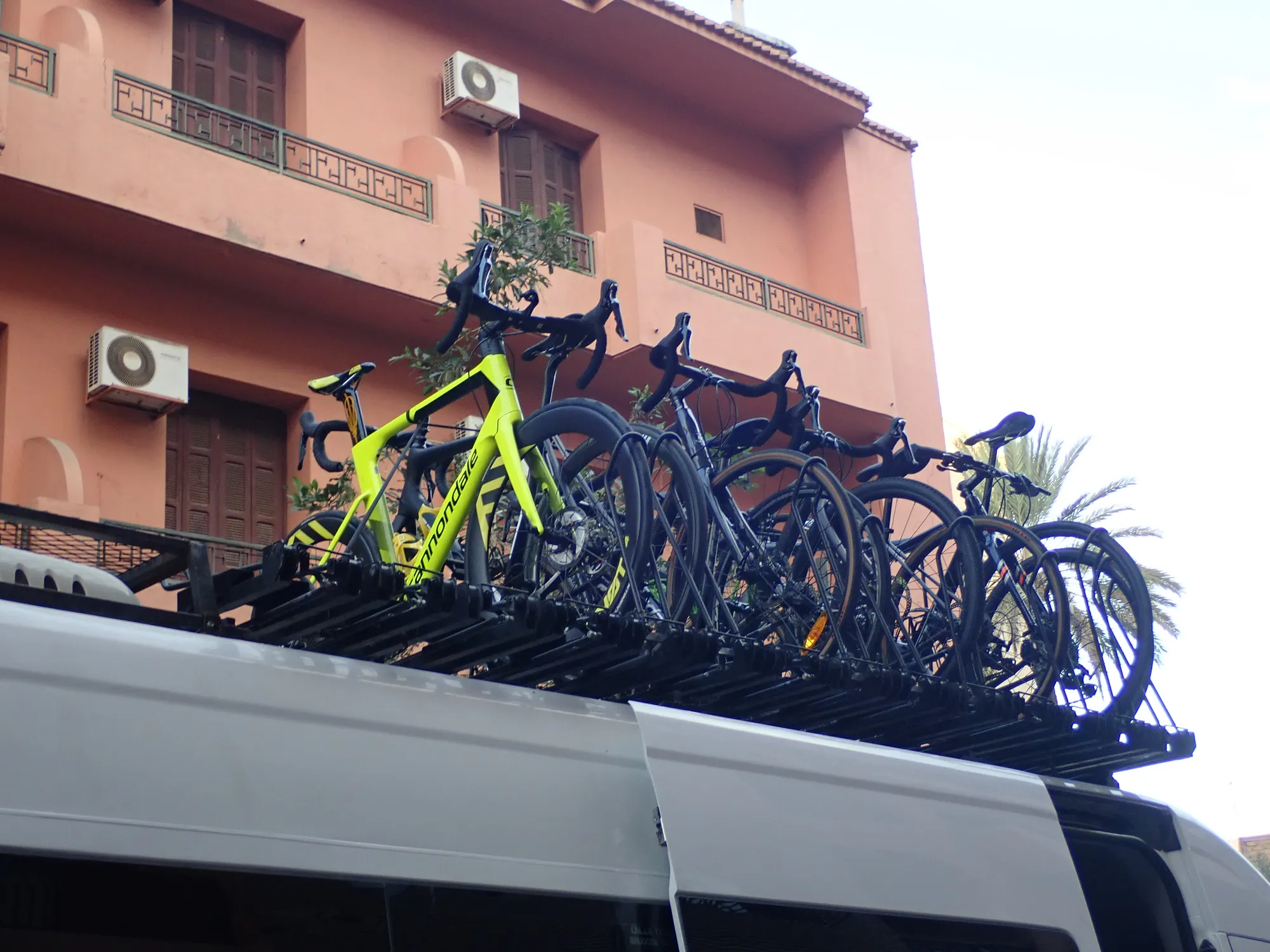
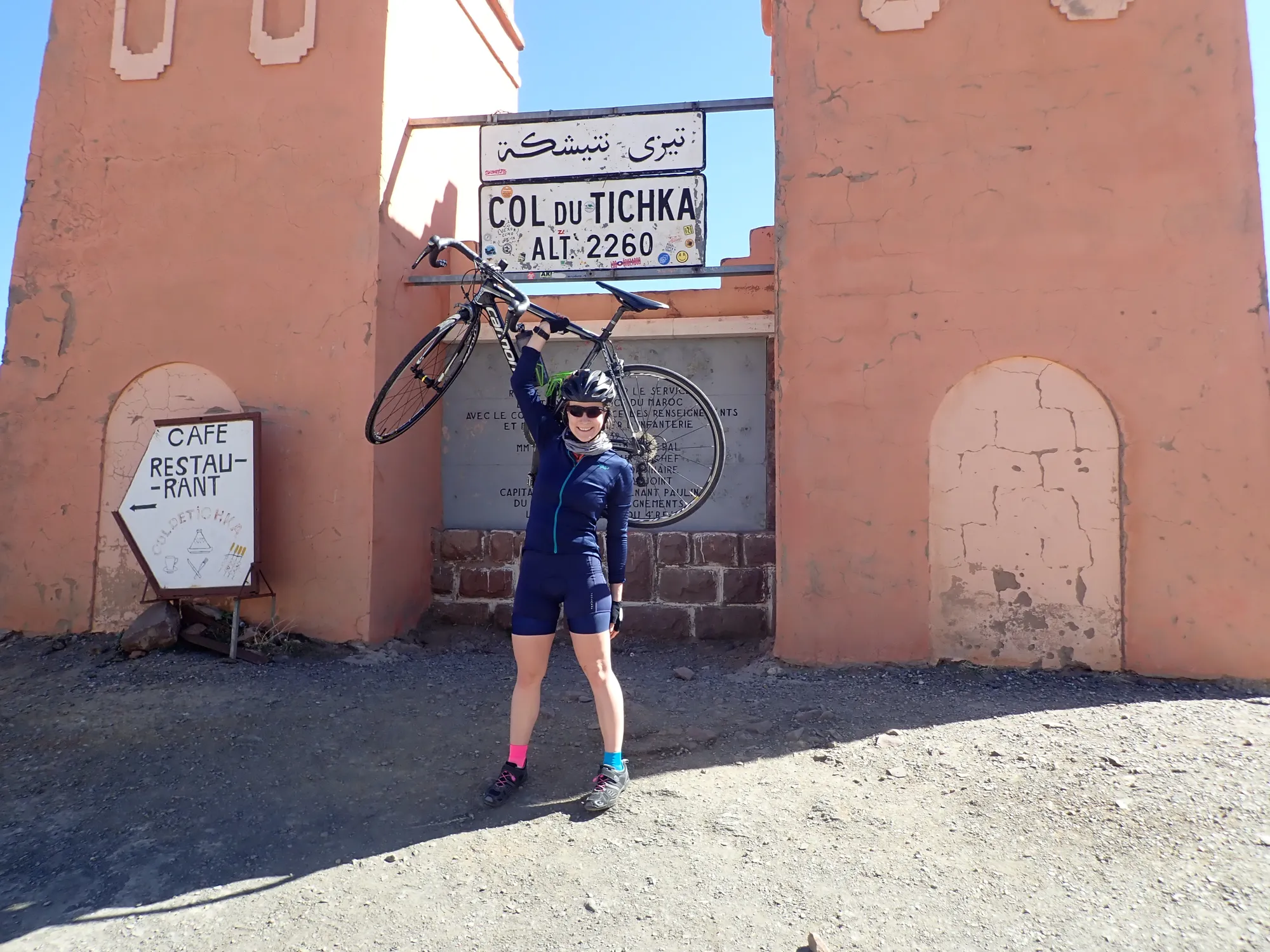
The bus takes us and the bikes up into the High Atlas and drops us off halfway up the climb, about twelve kilometres and 500 metres of climbing below the pass. There are about seven of us, I rented my road bike locally, and off we go, straight uphill. The goal is the Tizi n'Tichka, the pass that carries the road from Marrakech to Ouarzazate. At the top, by the sign at 2,260 metres, I lift my bike into the air for the summit photo.
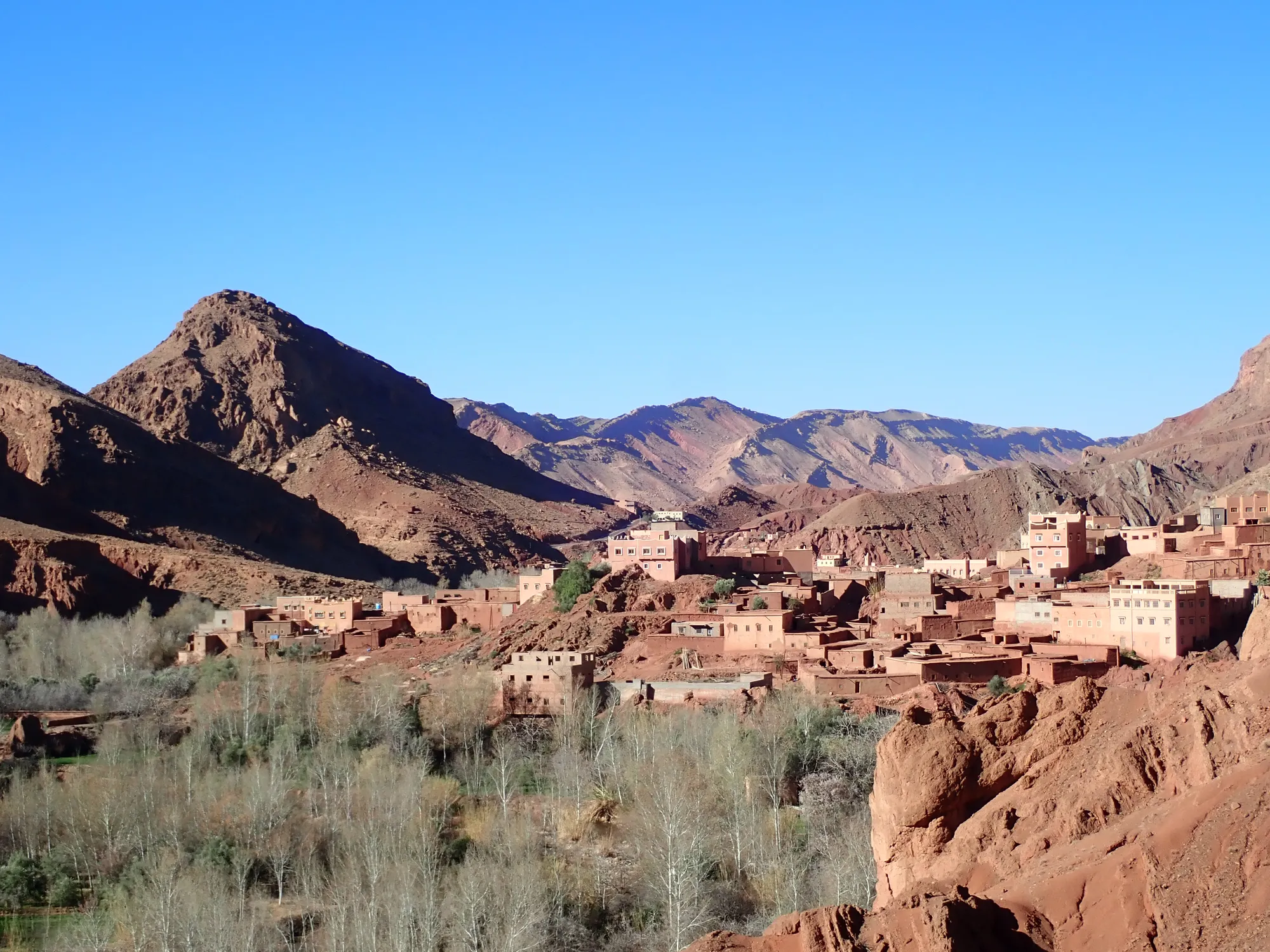
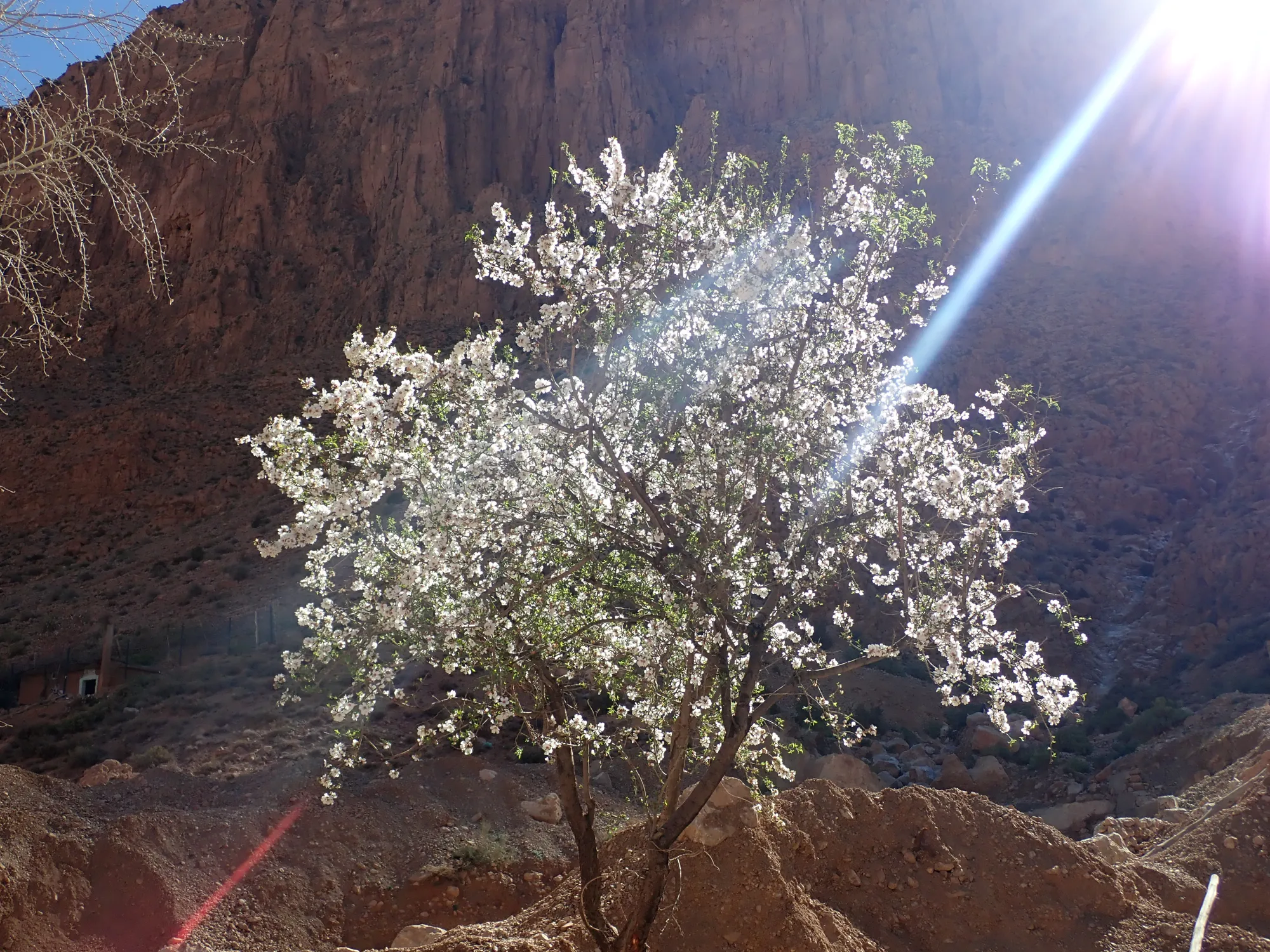
Beyond the pass we turn off towards Telouet, and the landscape changes. The hills turn red and the road winds through a gorgeous valley, up and down all the time. Almond trees are in bloom between the mud-brick villages, a delicate white against all that red.
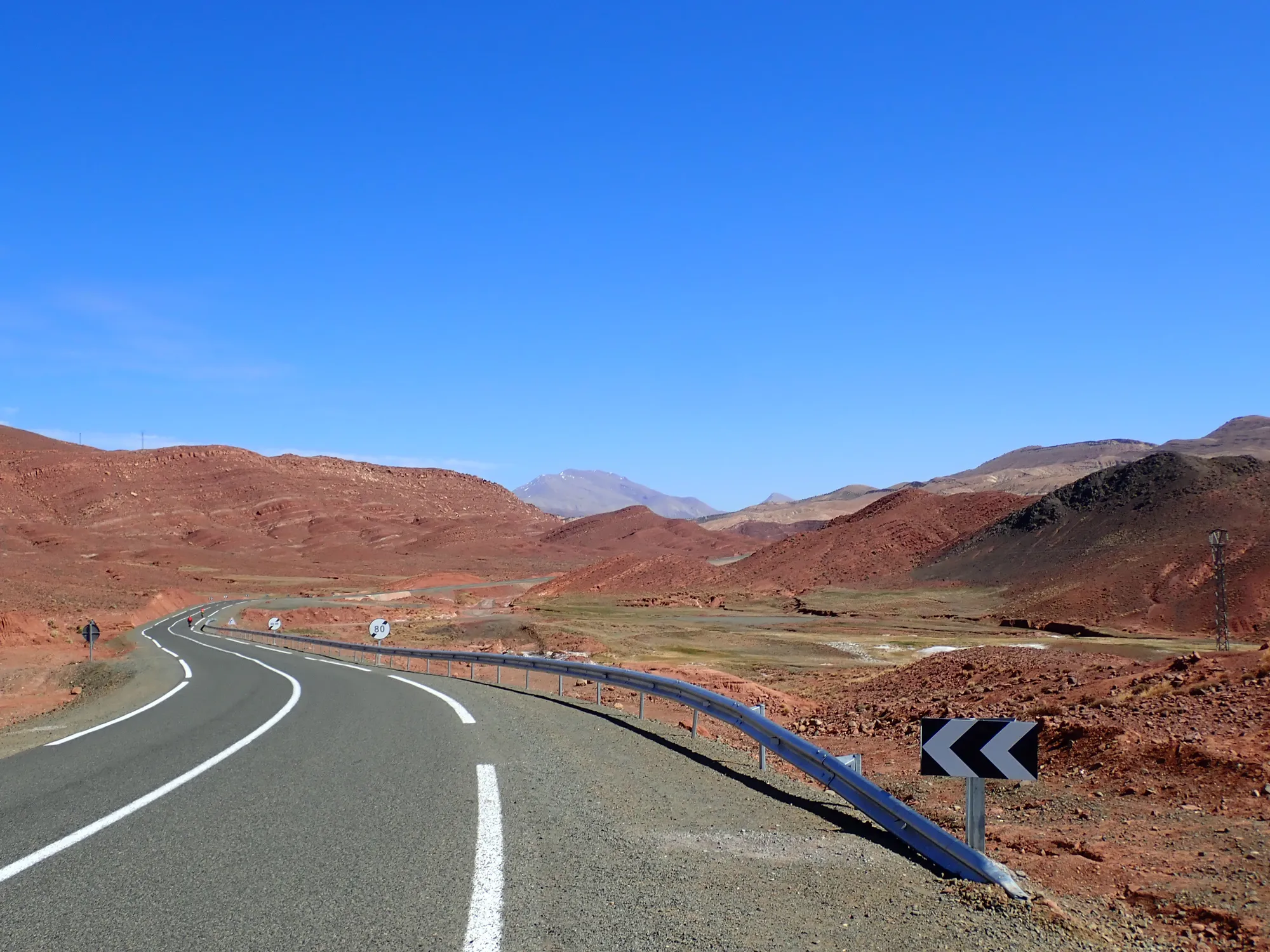
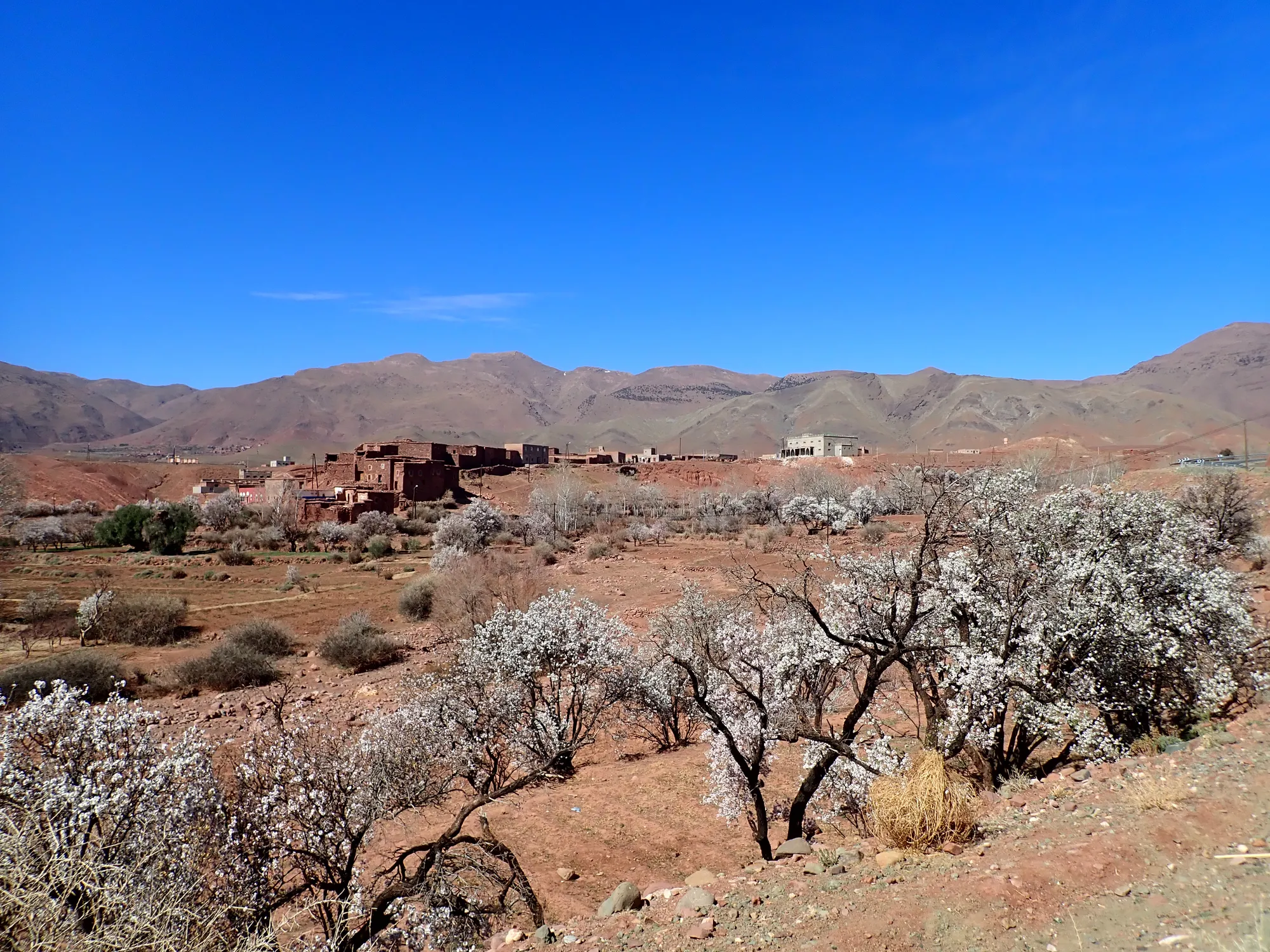
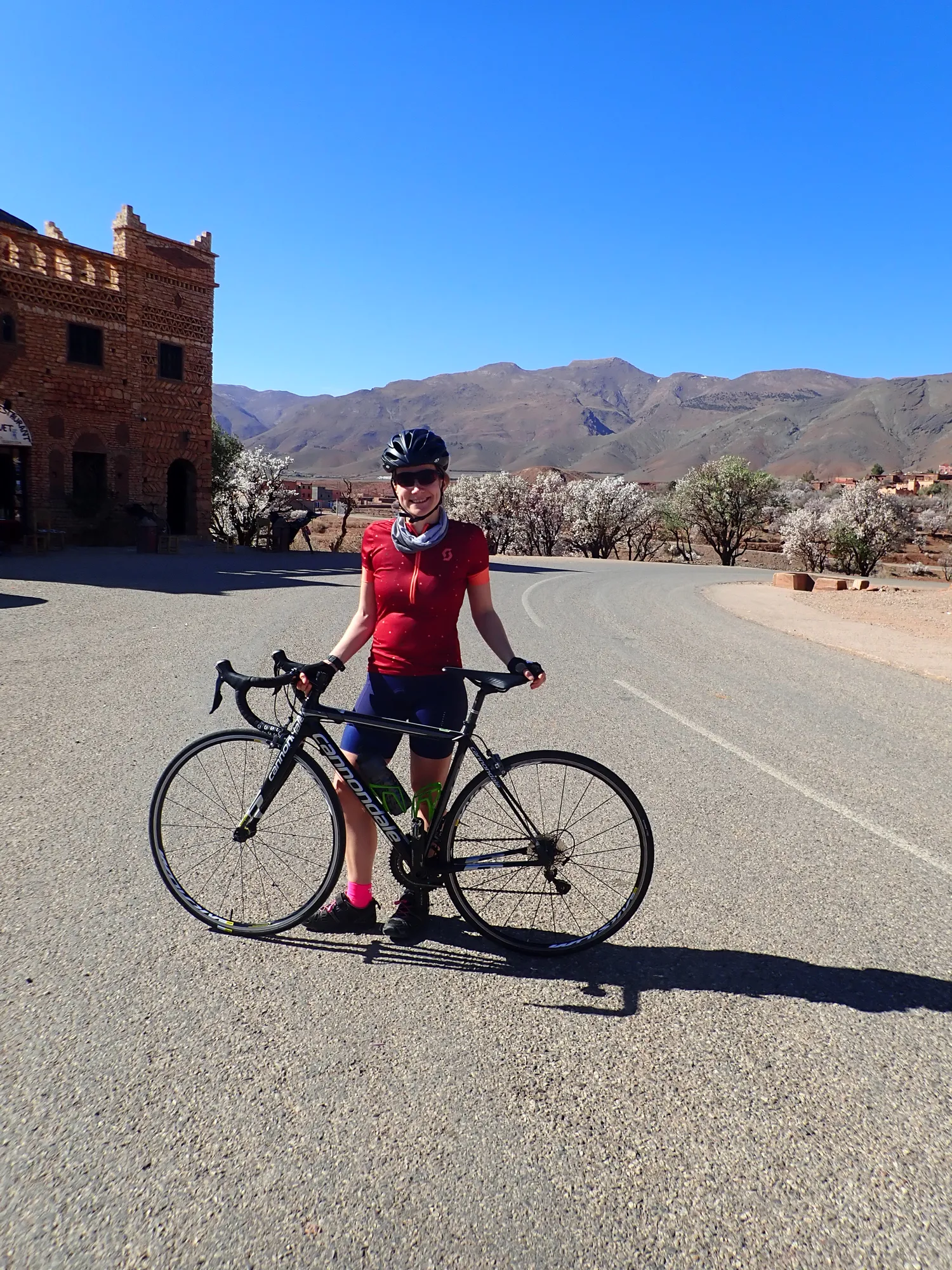
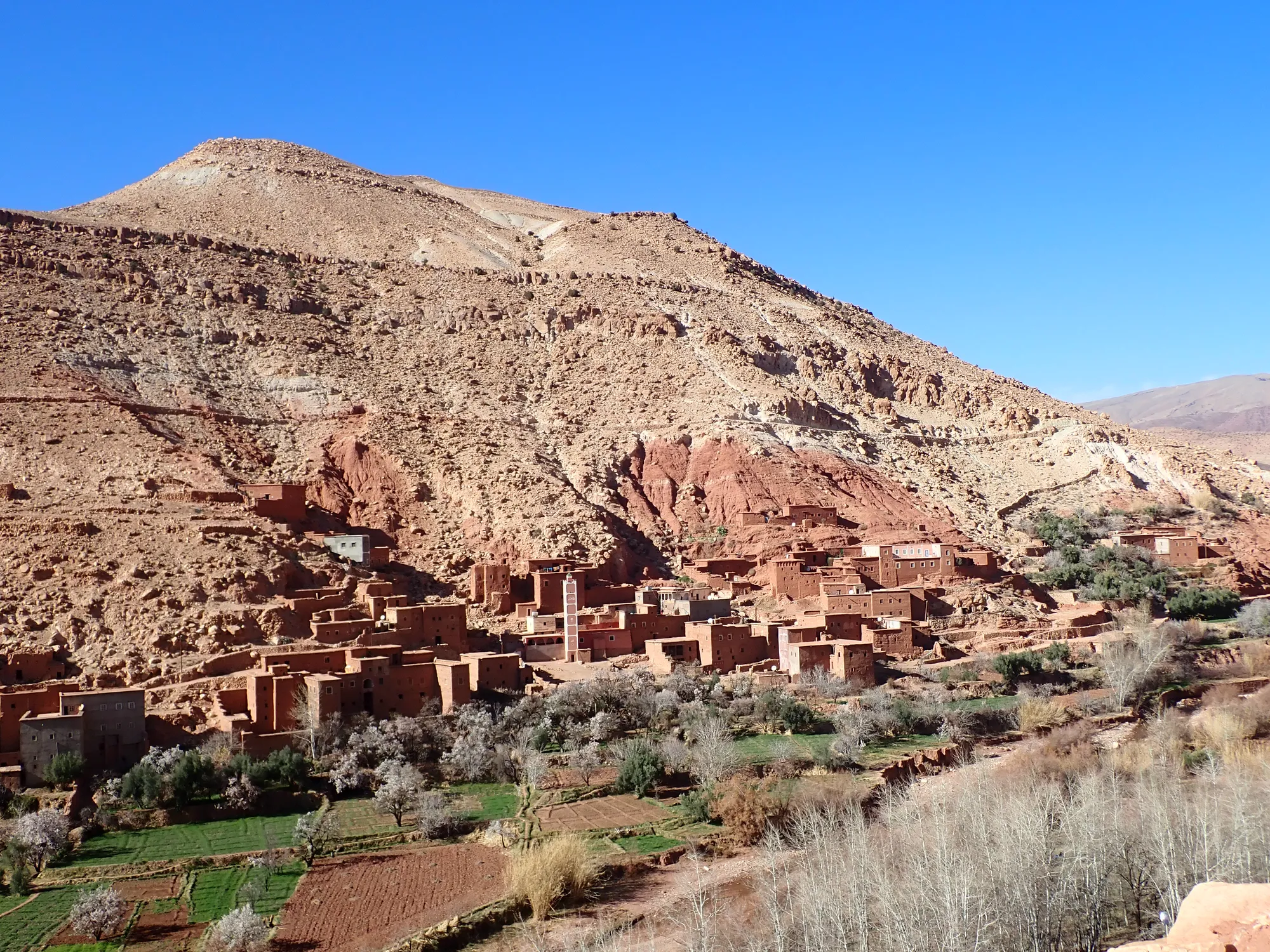
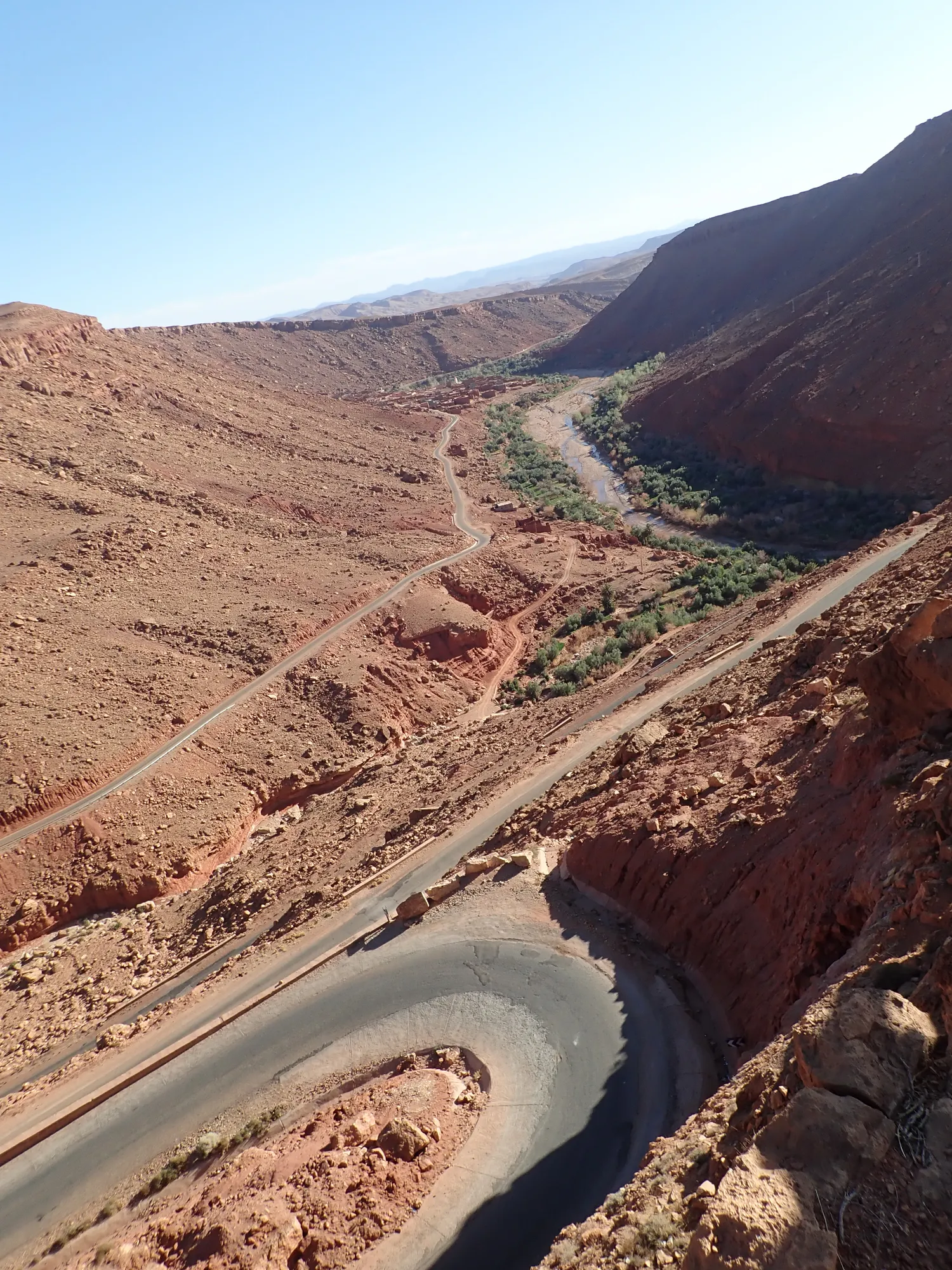
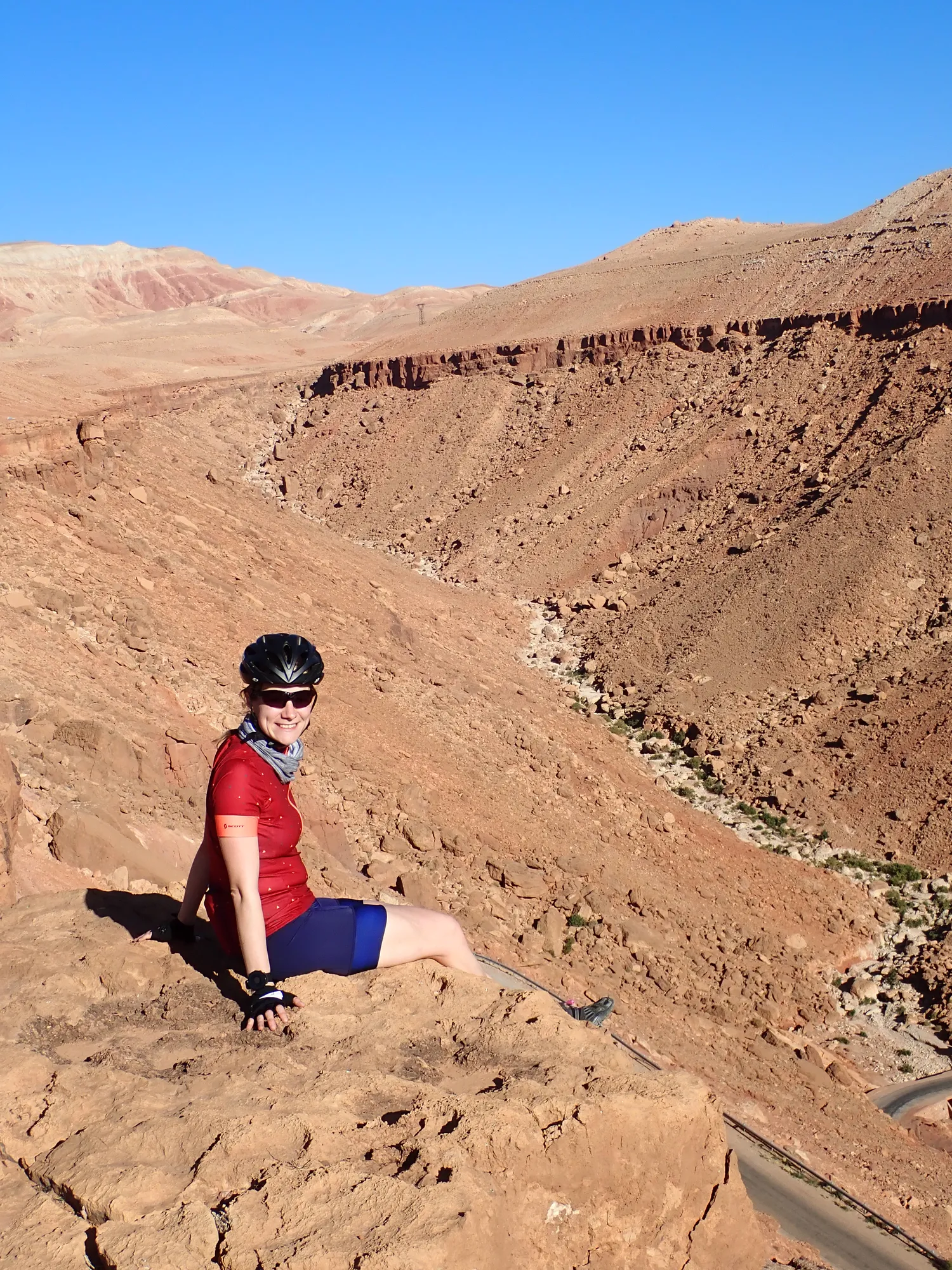
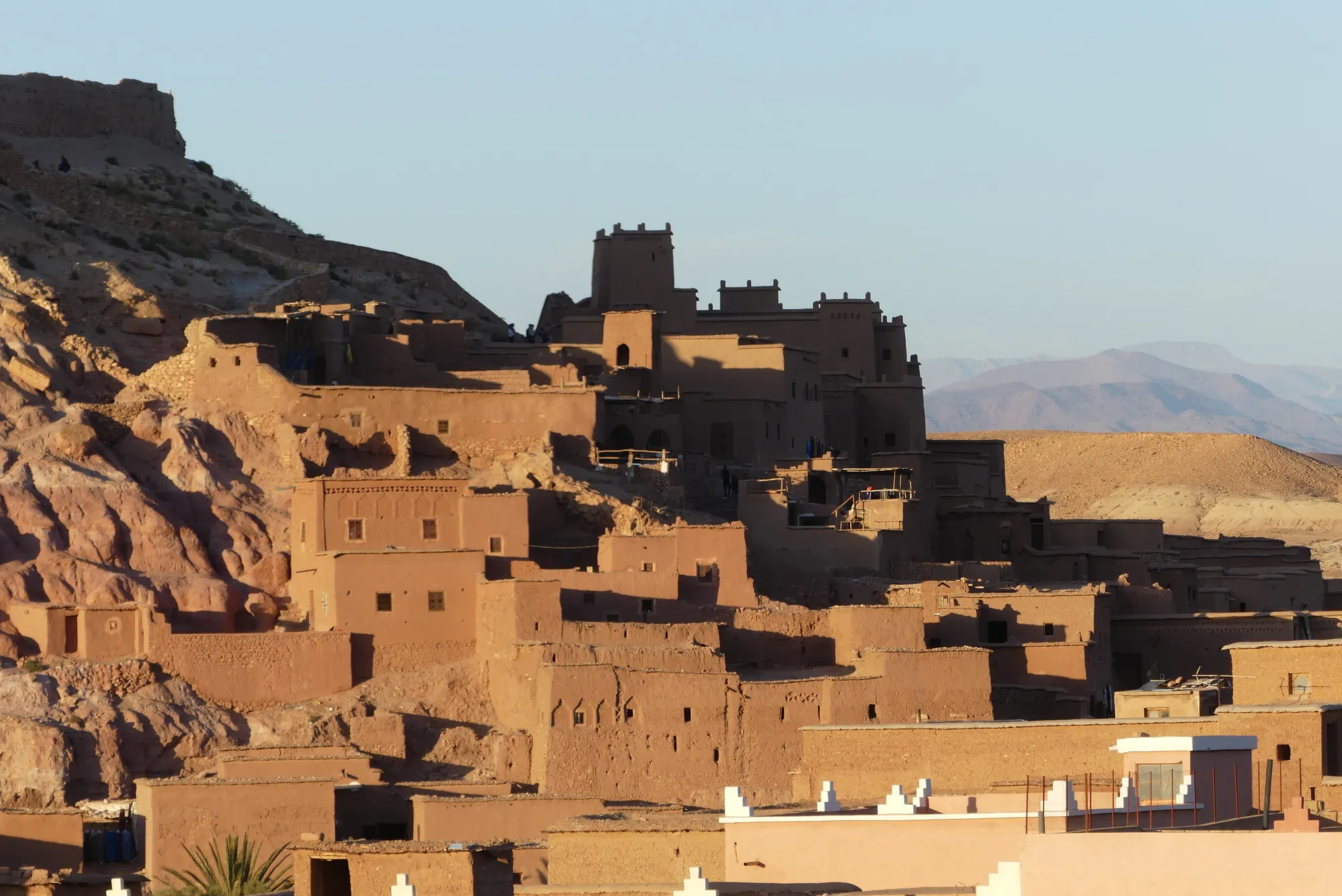
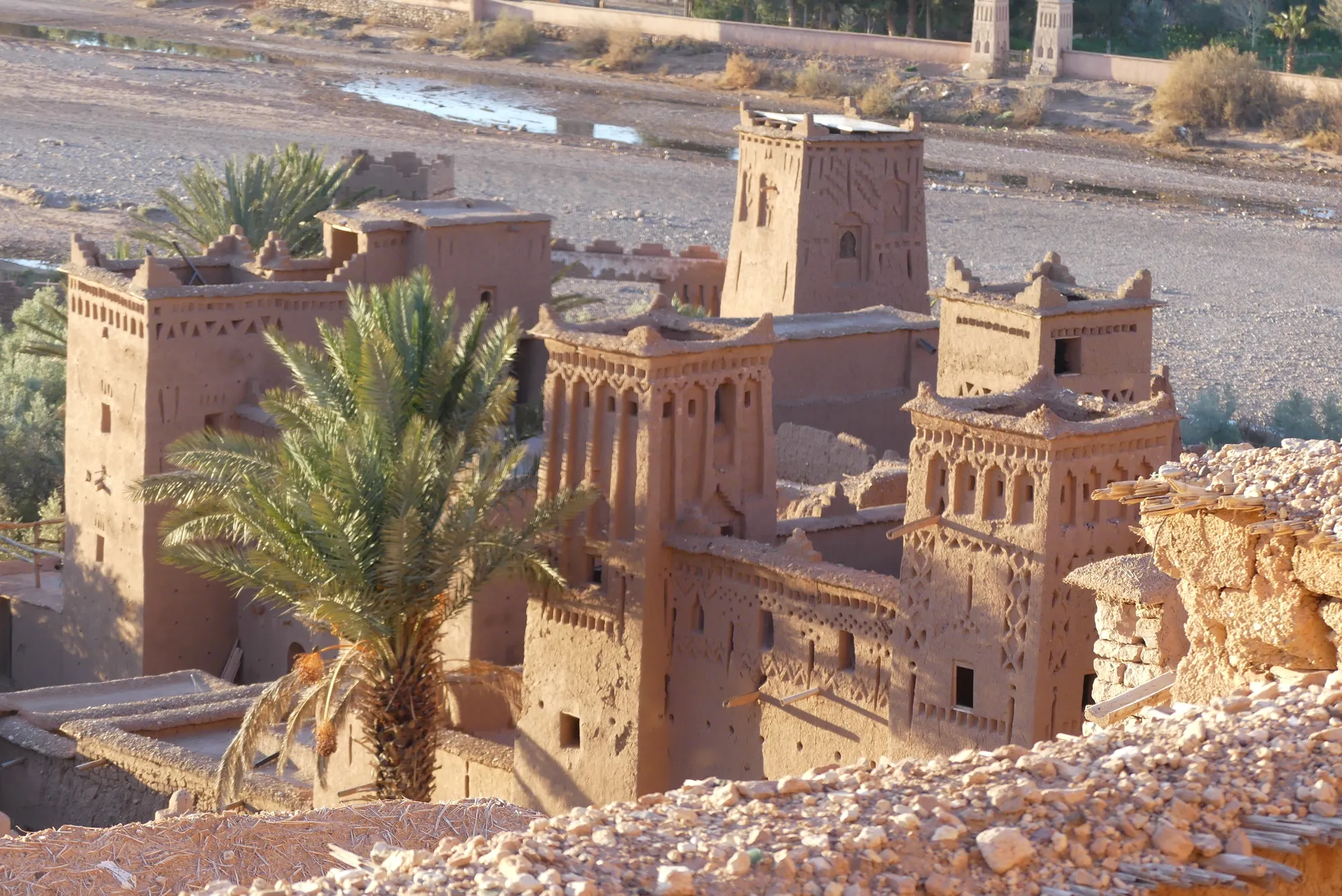
Towards evening the road zigzags down into the next valley. I sit down on a rock for a moment and just look. Soon after, we reach Aït-Ben-Haddou, the fortified mud-brick village that has been a UNESCO World Heritage Site since 1987. In the evening light it glows golden brown. It is also famous as a film location: "Lawrence of Arabia", "Gladiator" and "Game of Thrones" were all shot here, among others.
Day 2: Climbing to Aït Saoun, down into the Drâa Valley
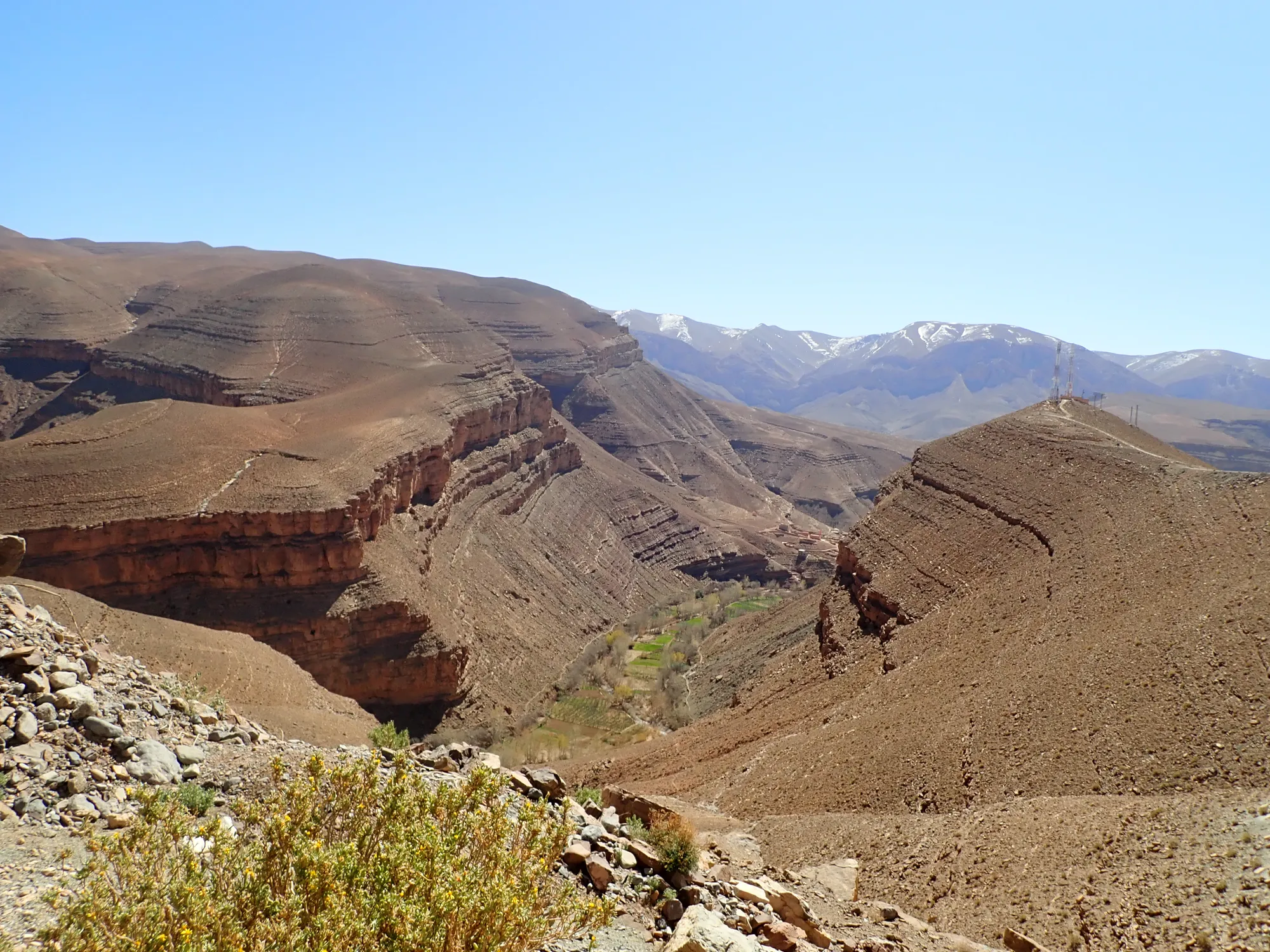
In the morning the mud towers of Aït-Ben-Haddou sit in the sun. After a short transfer we start near Ouarzazate today, and then it is climbing, climbing, climbing. The landscape turns barren and rocky, with table mountains on the horizon. We go all the way up to the village of Aït Saoun.
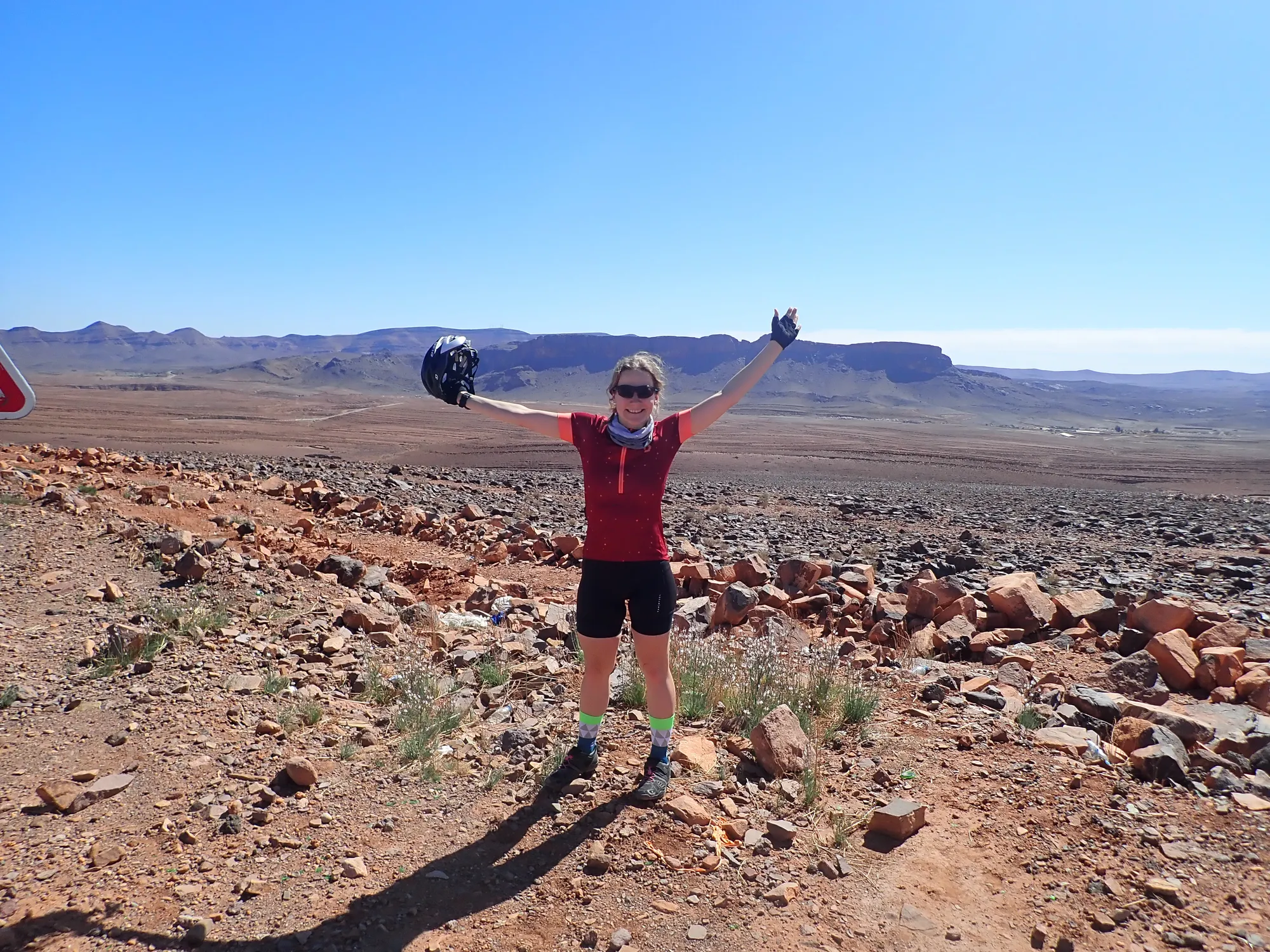
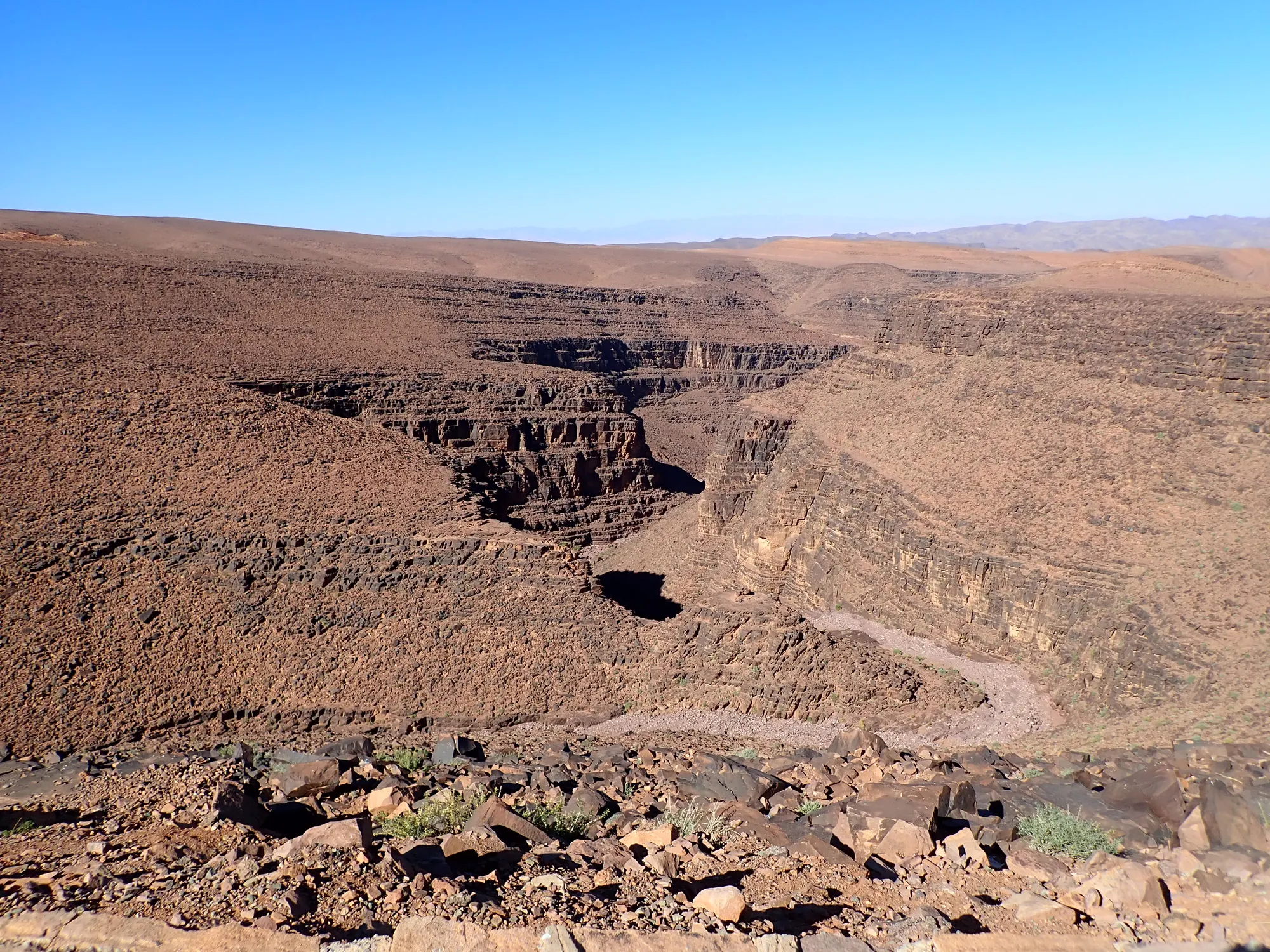
And I notice: I am really starting to like these climbs. You work your way up, hairpin by hairpin, and at the top you look down into deep gorges. Then it is ten per cent downhill, down to the start of the Drâa Valley.
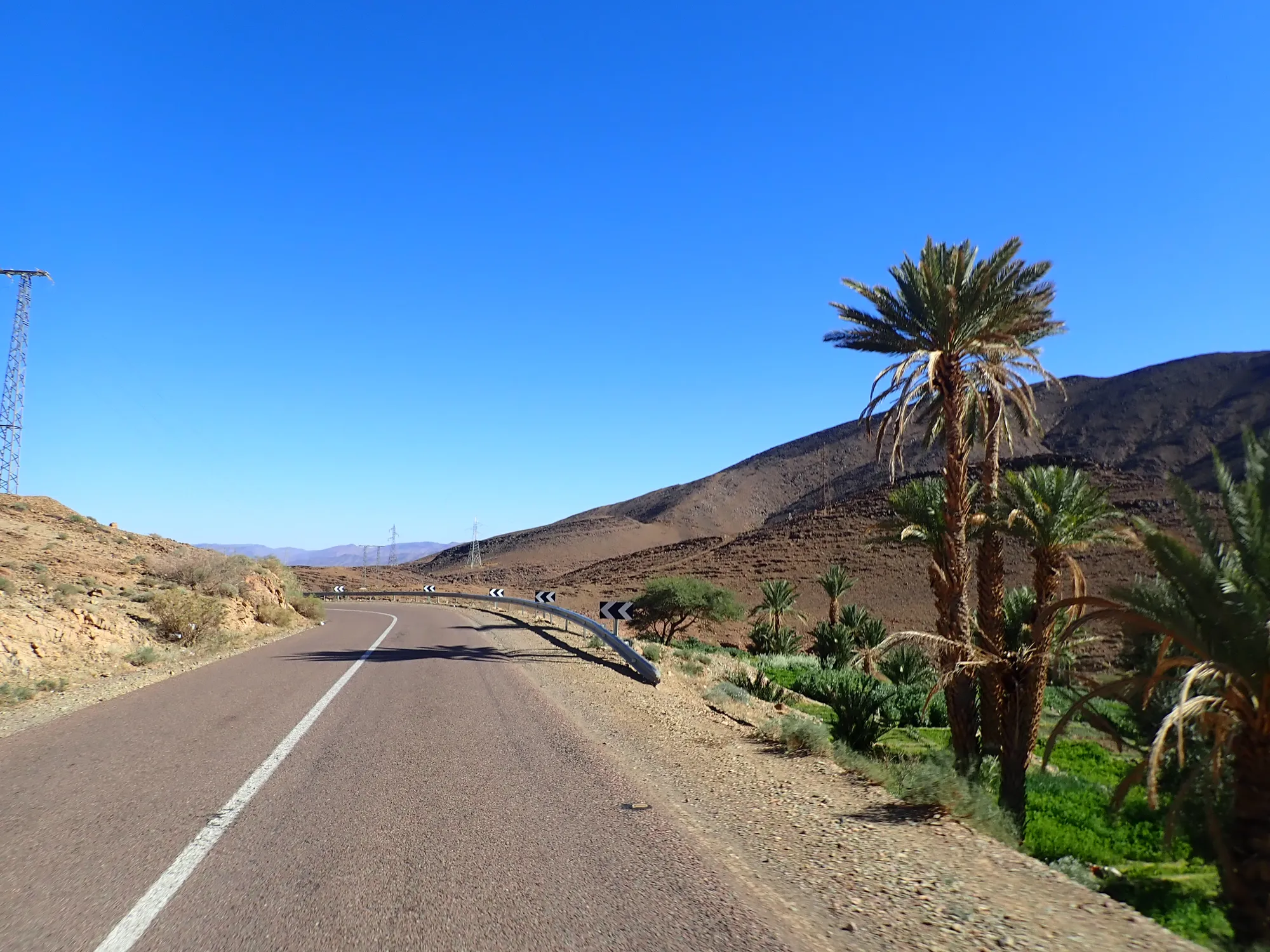
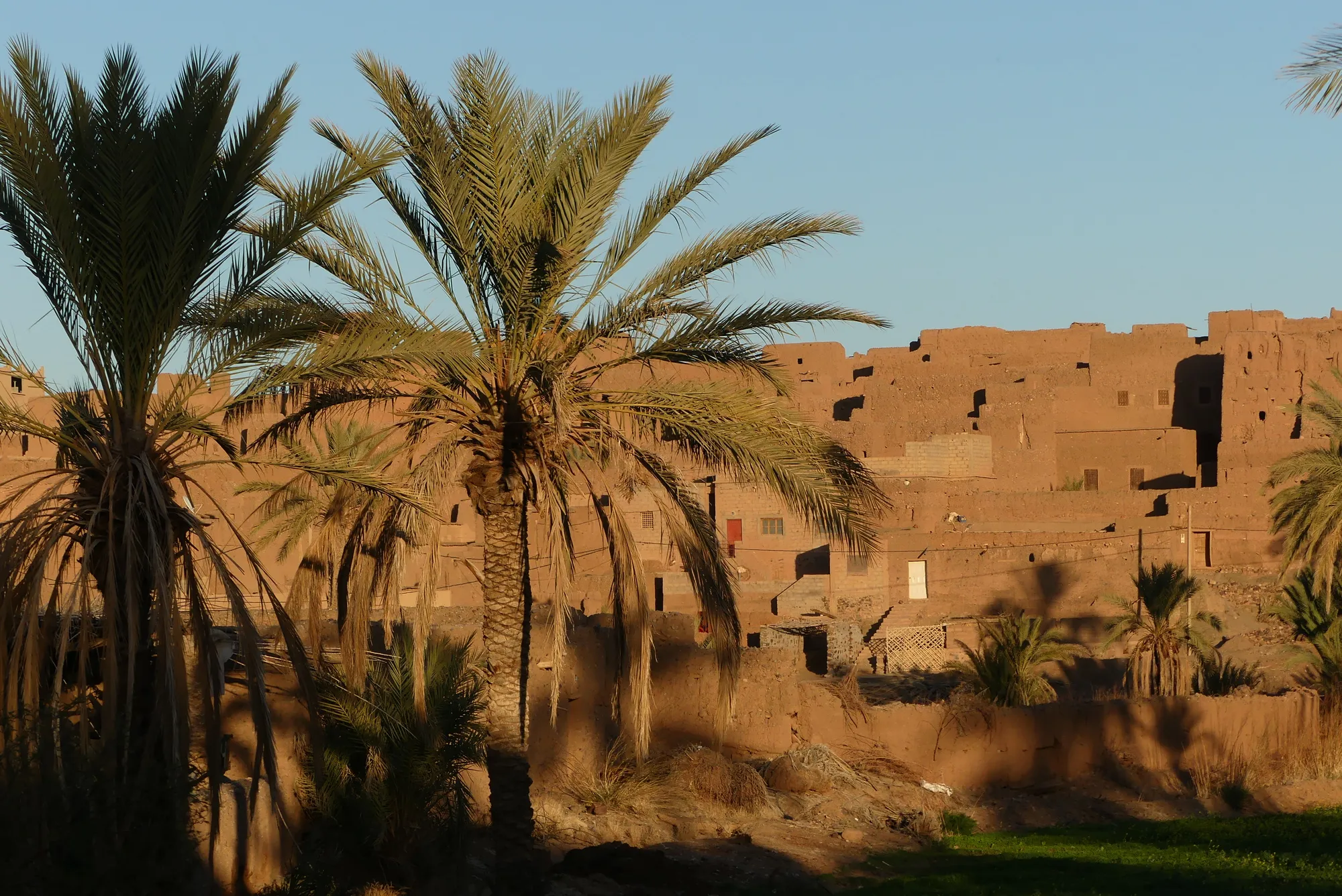
At the bottom the picture changes again: rocks and palms, palms and rocks. We stay in Tamnougalt near Agdz, where the evening sun lights up the old mud walls between the palms.
Day 3: Fast down the Drâa Valley to Zagora
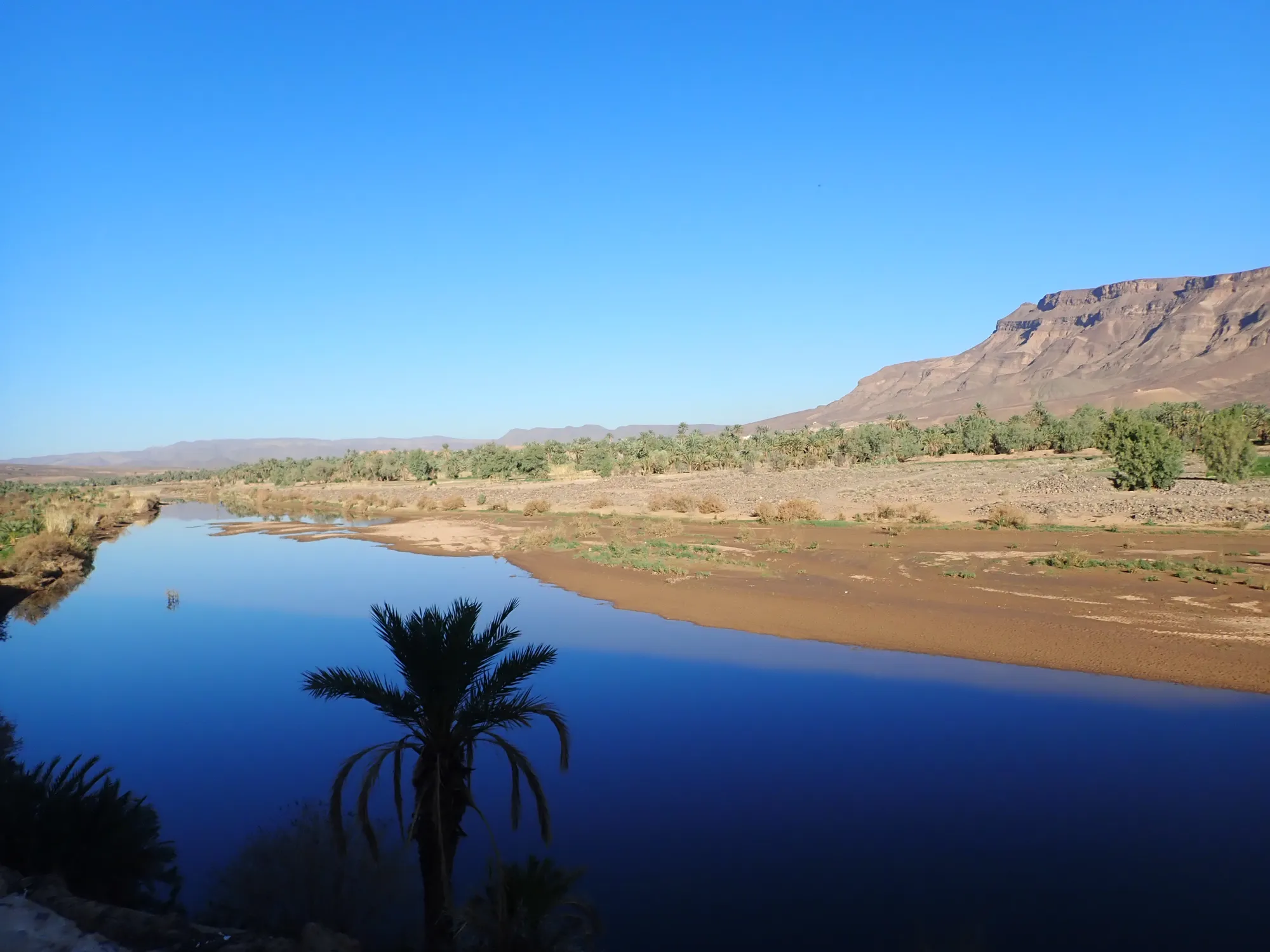
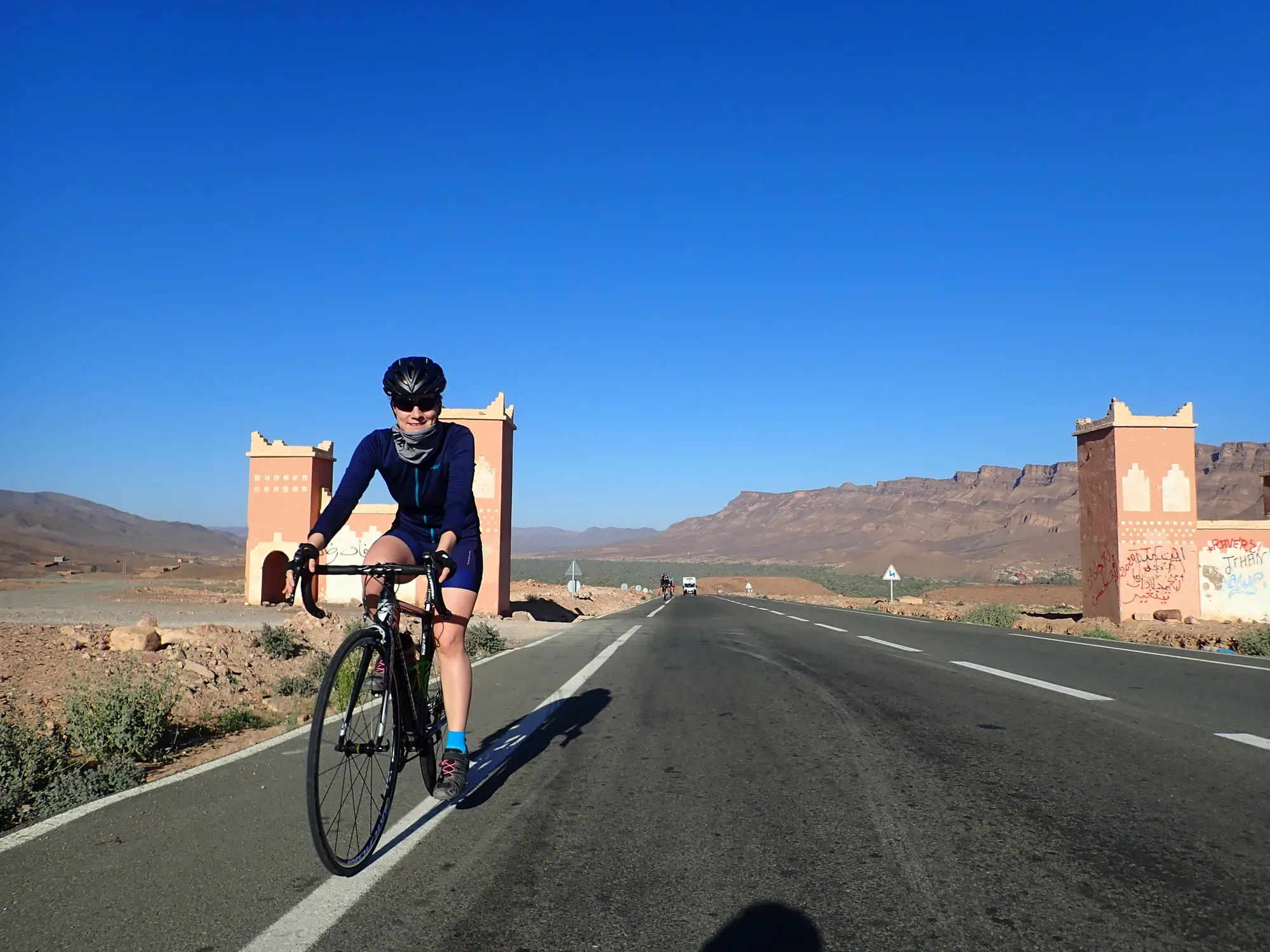
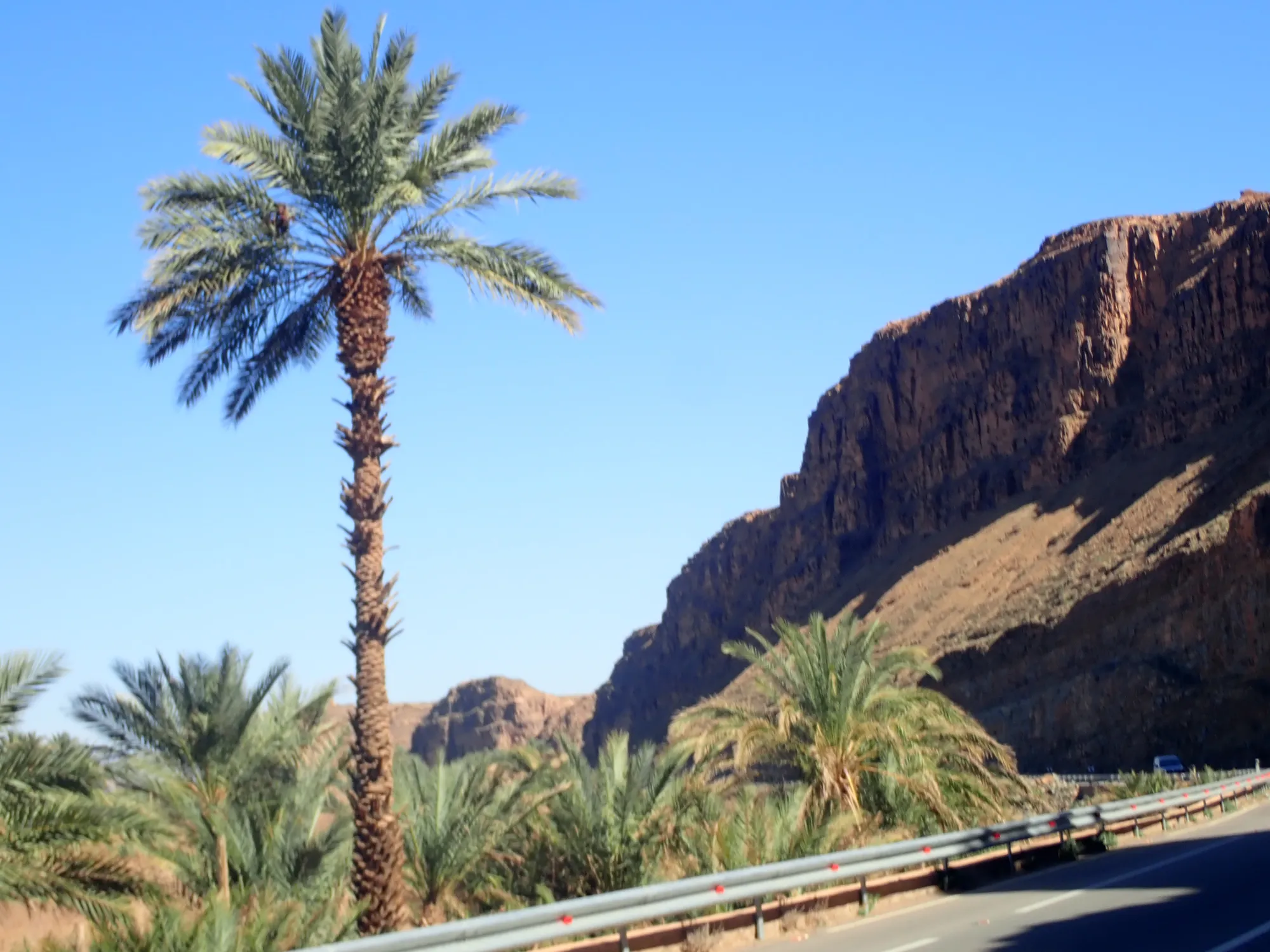
The morning starts by the water. The Drâa is Morocco's longest river, and here, where it leaves the mountains, a green ribbon of palms lines its banks. Today is a fast day: we fly down the valley, past date palms and old kasbahs.
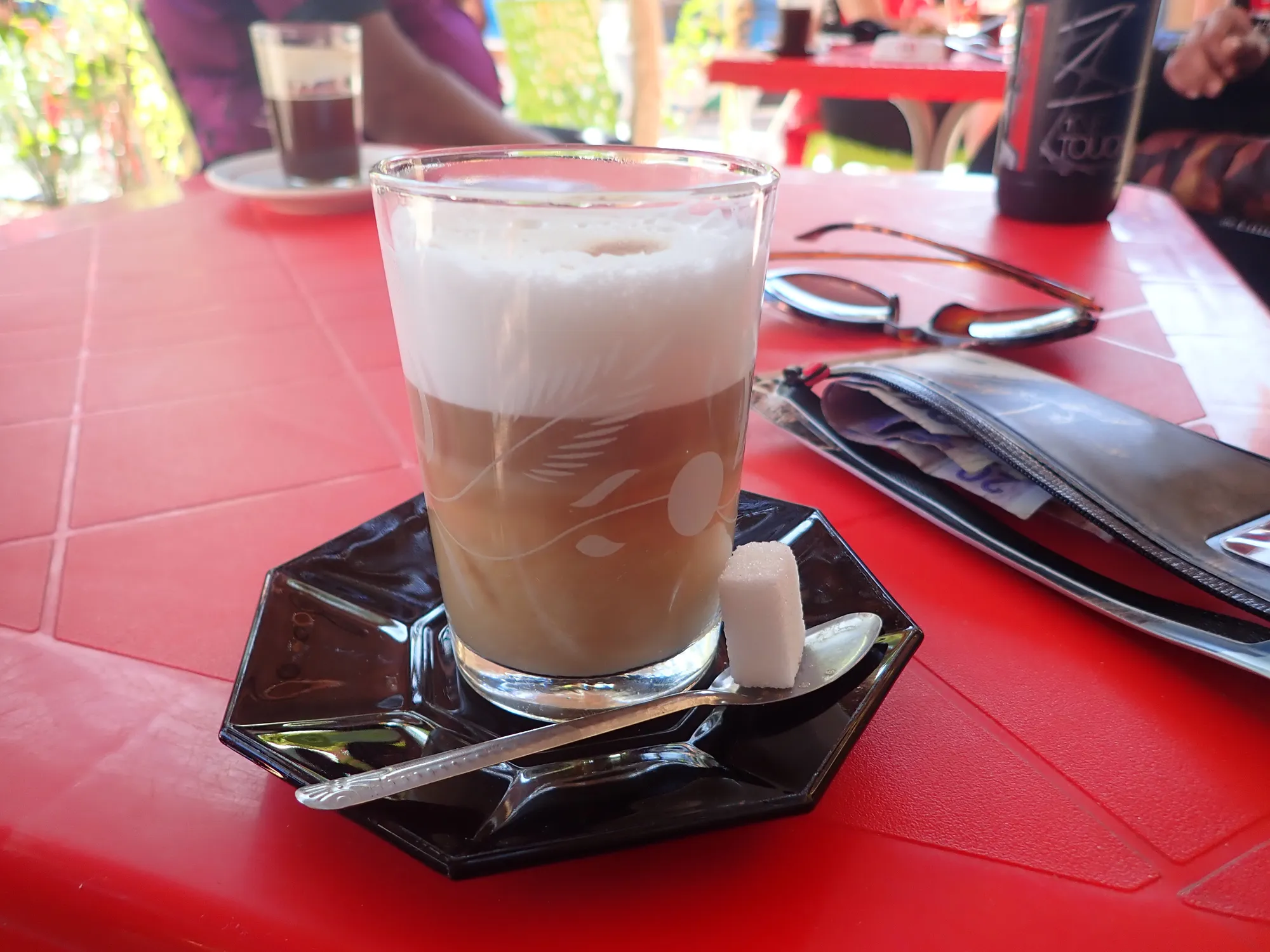
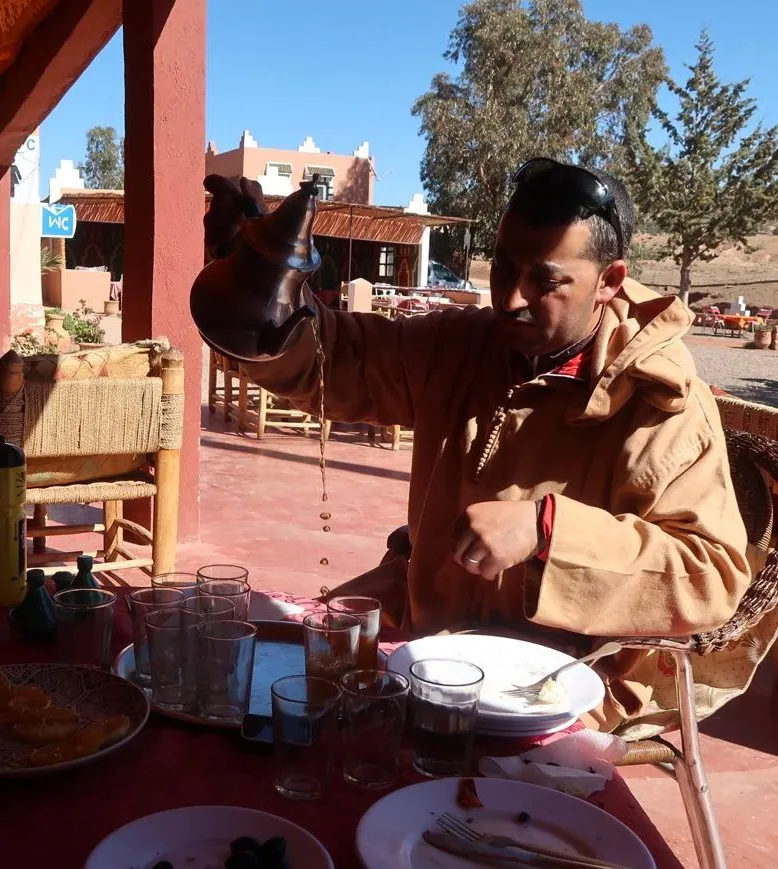
Still, there has to be a break. There is milky coffee in a glass: better than nothing, though I do prefer my flat white. Morocco is definitely a country of tea, not coffee. The tea is poured from high up so that it froths in the glass. At lunch there is another tajine, vegetables this time.
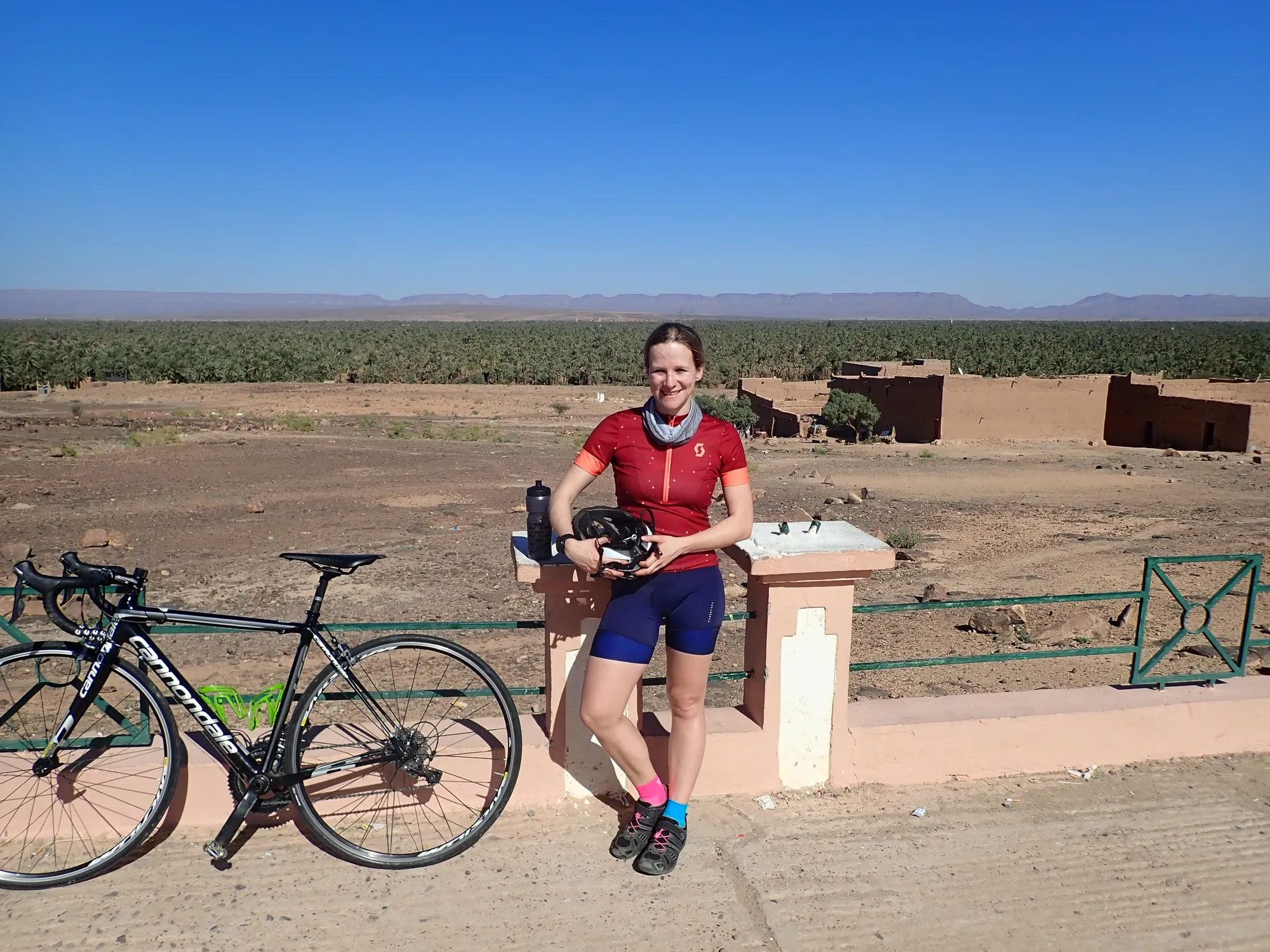
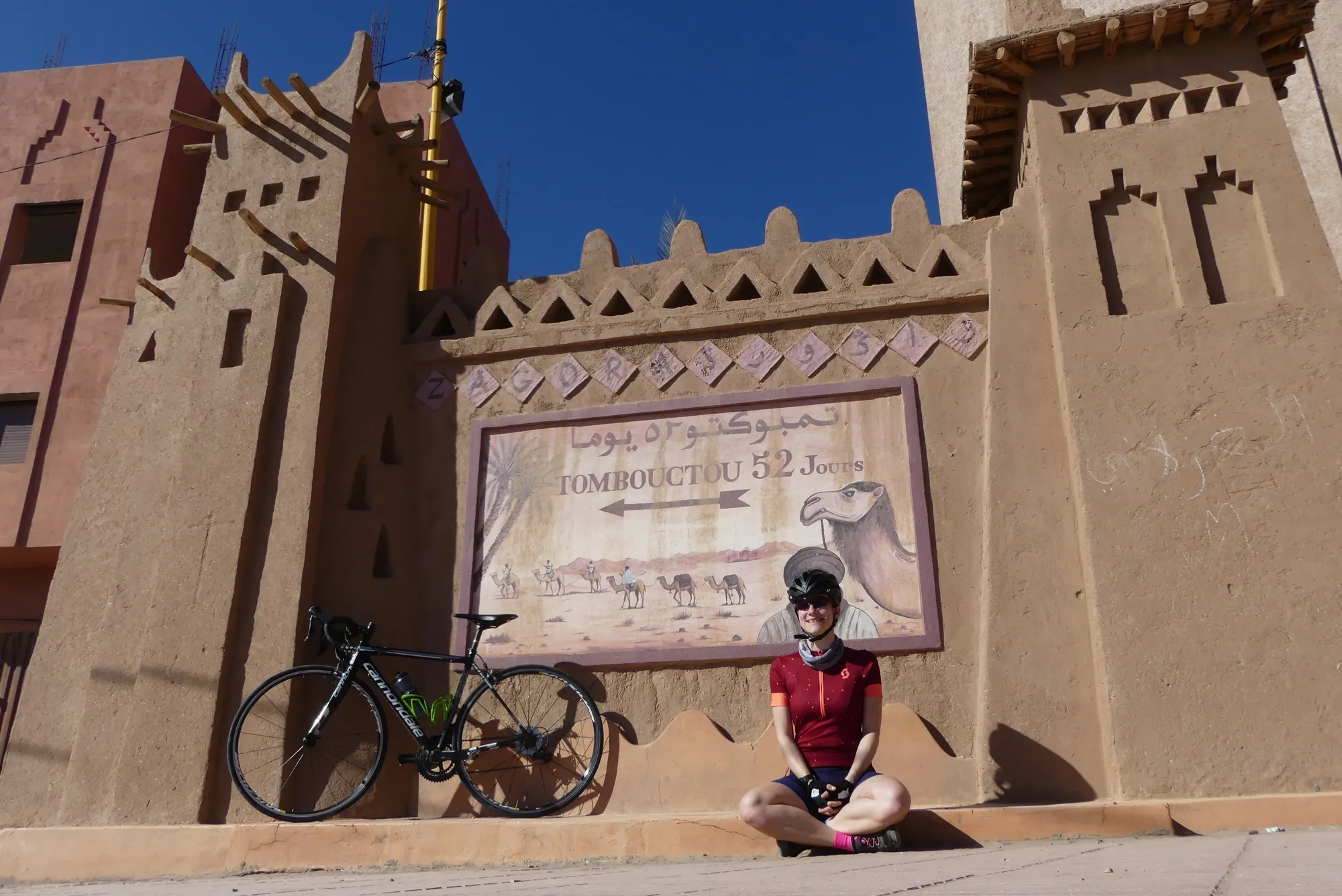
In Zagora the famous sign is waiting: "Tombouctou 52 jours". 52 days: that is how long the camel caravans took from here to Timbuktu. By bike it would probably be a few days less. To round off the day, the sun sets between the palms.
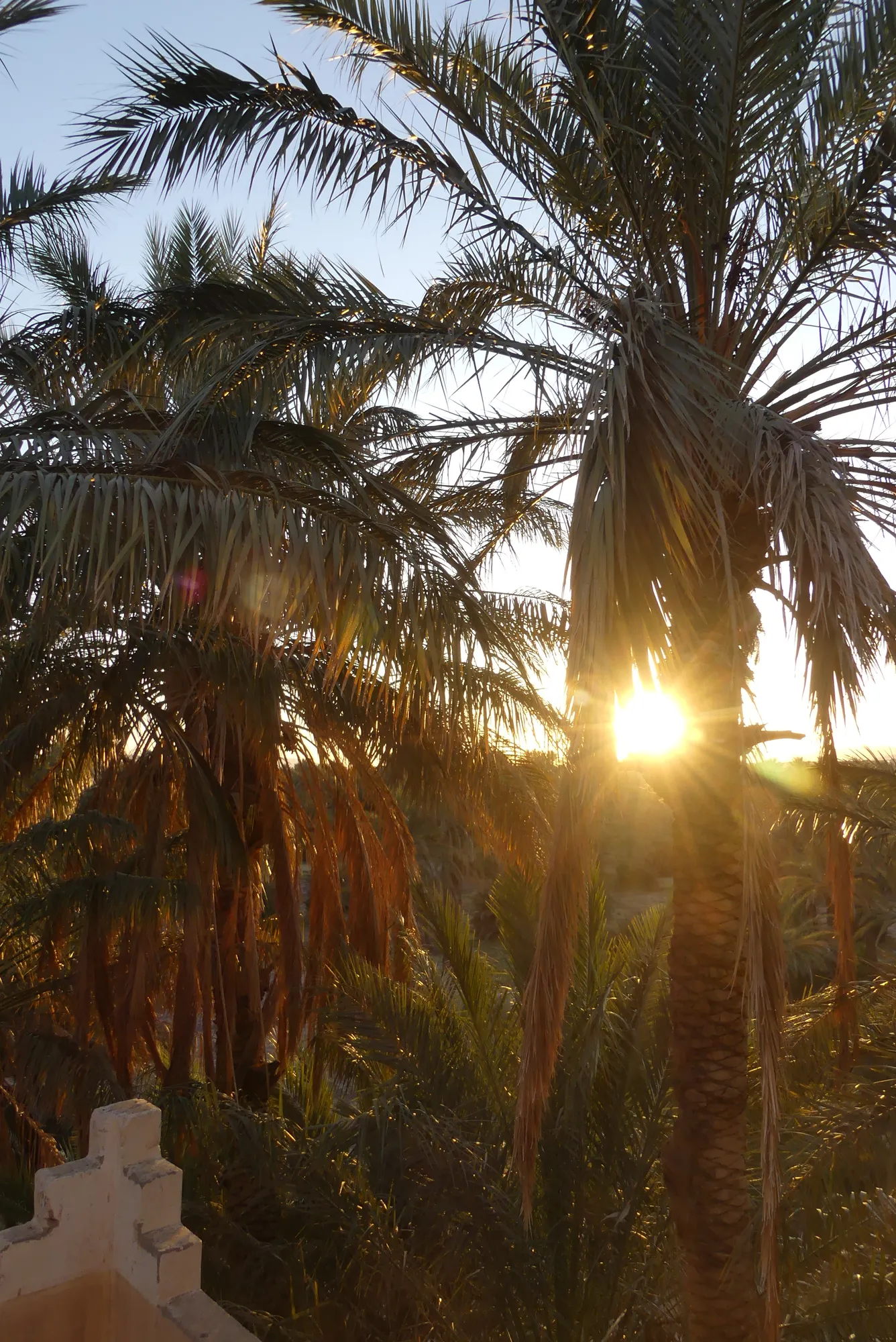
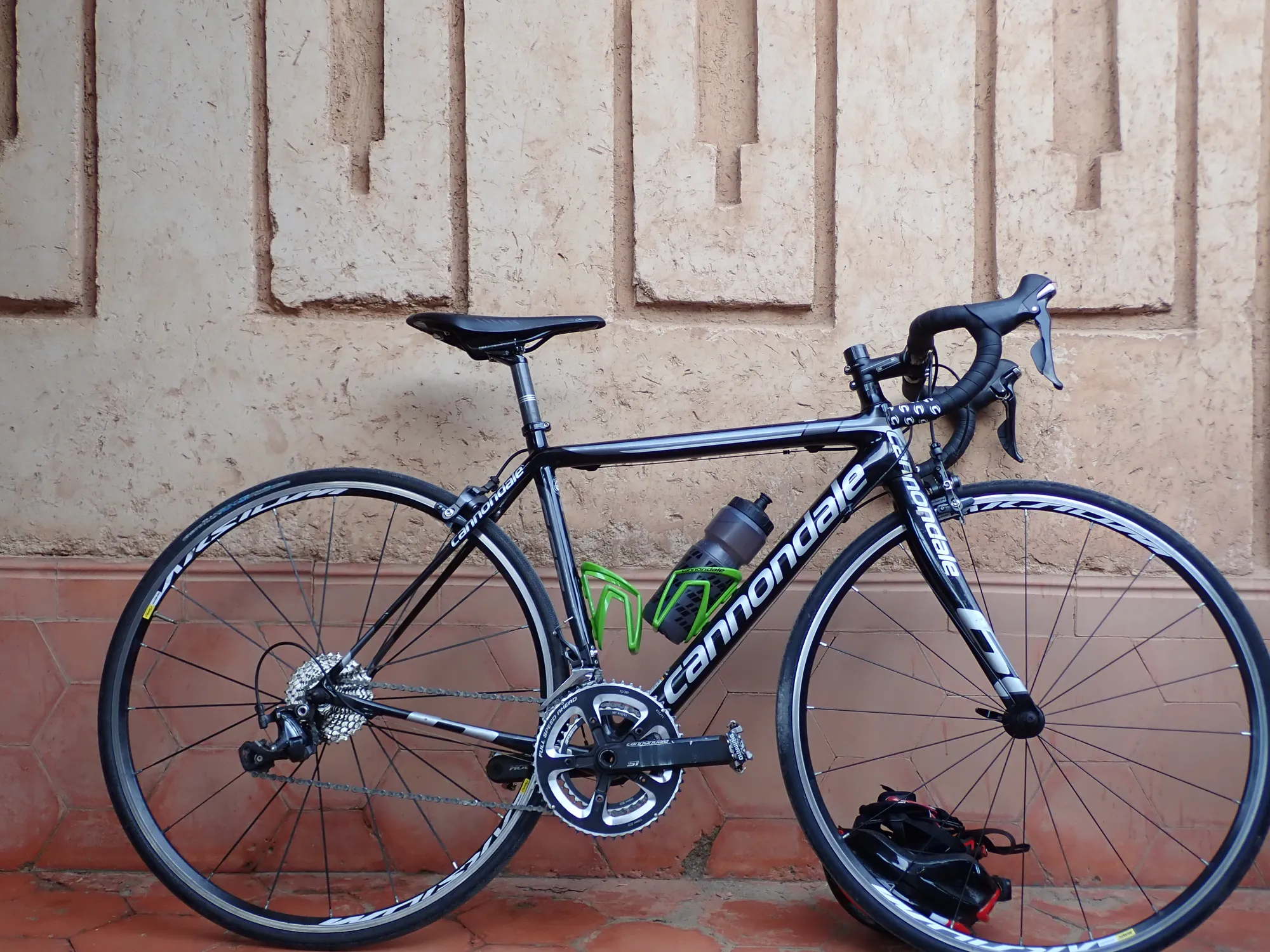
Day 4: Over the Tizi n'Tafilalt, then into the desert
Early in the morning my bike is still leaning against the decorated mud wall where we stayed, and soon after a camel caravan passes us. Beyond the Tizi n'Tafilalt wide plains open up: stony desert left and right, table mountains on the horizon.
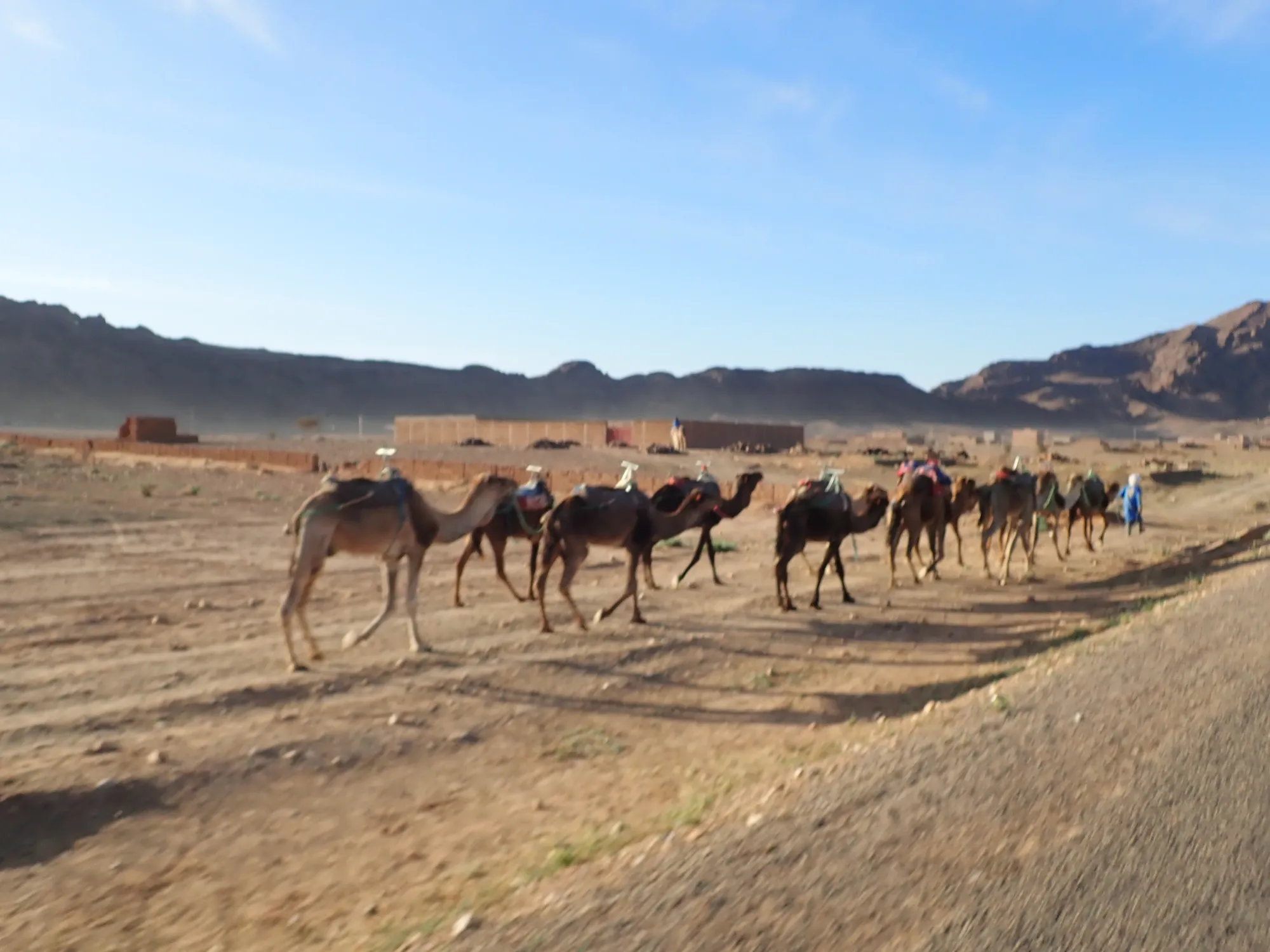
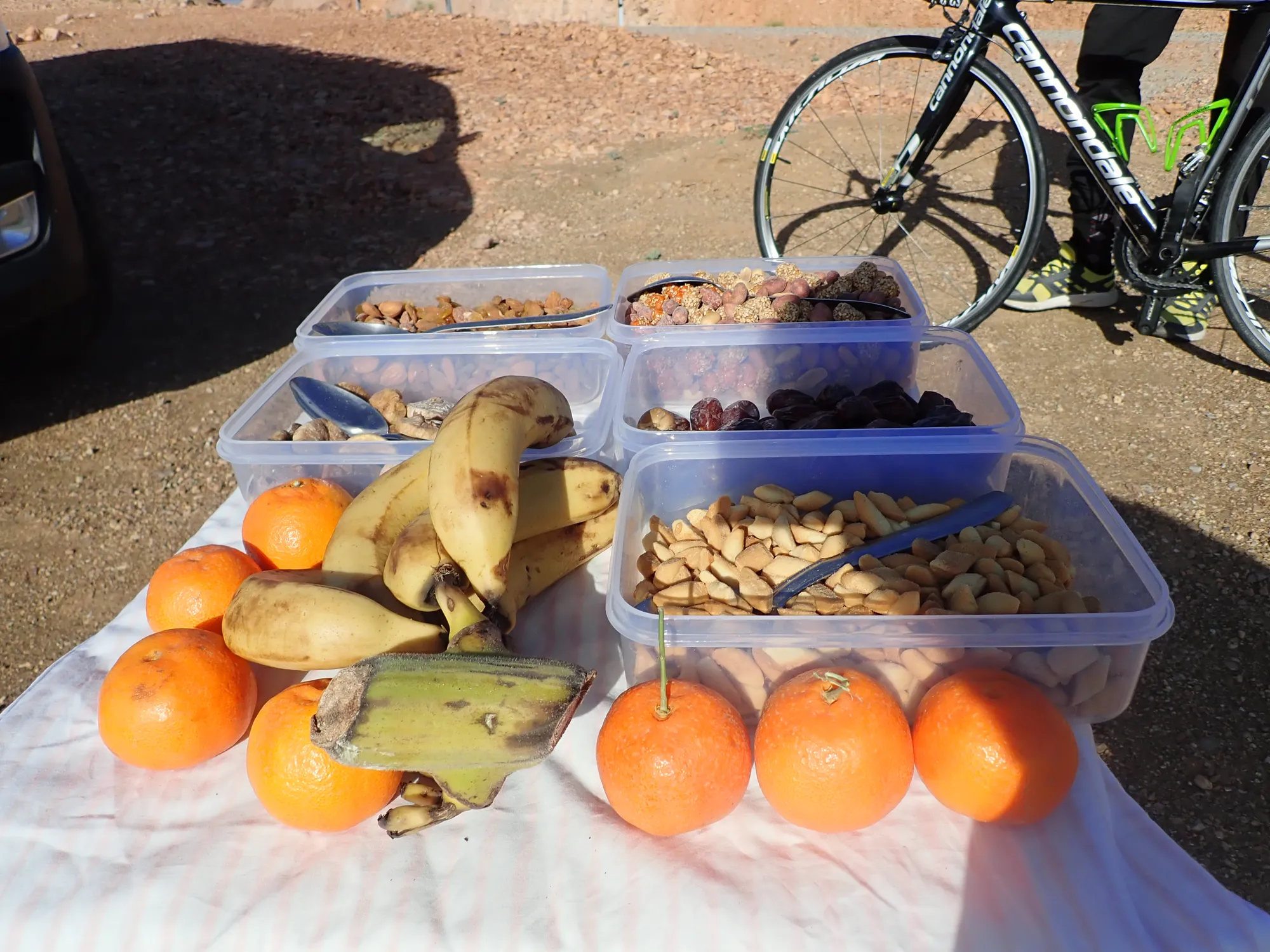
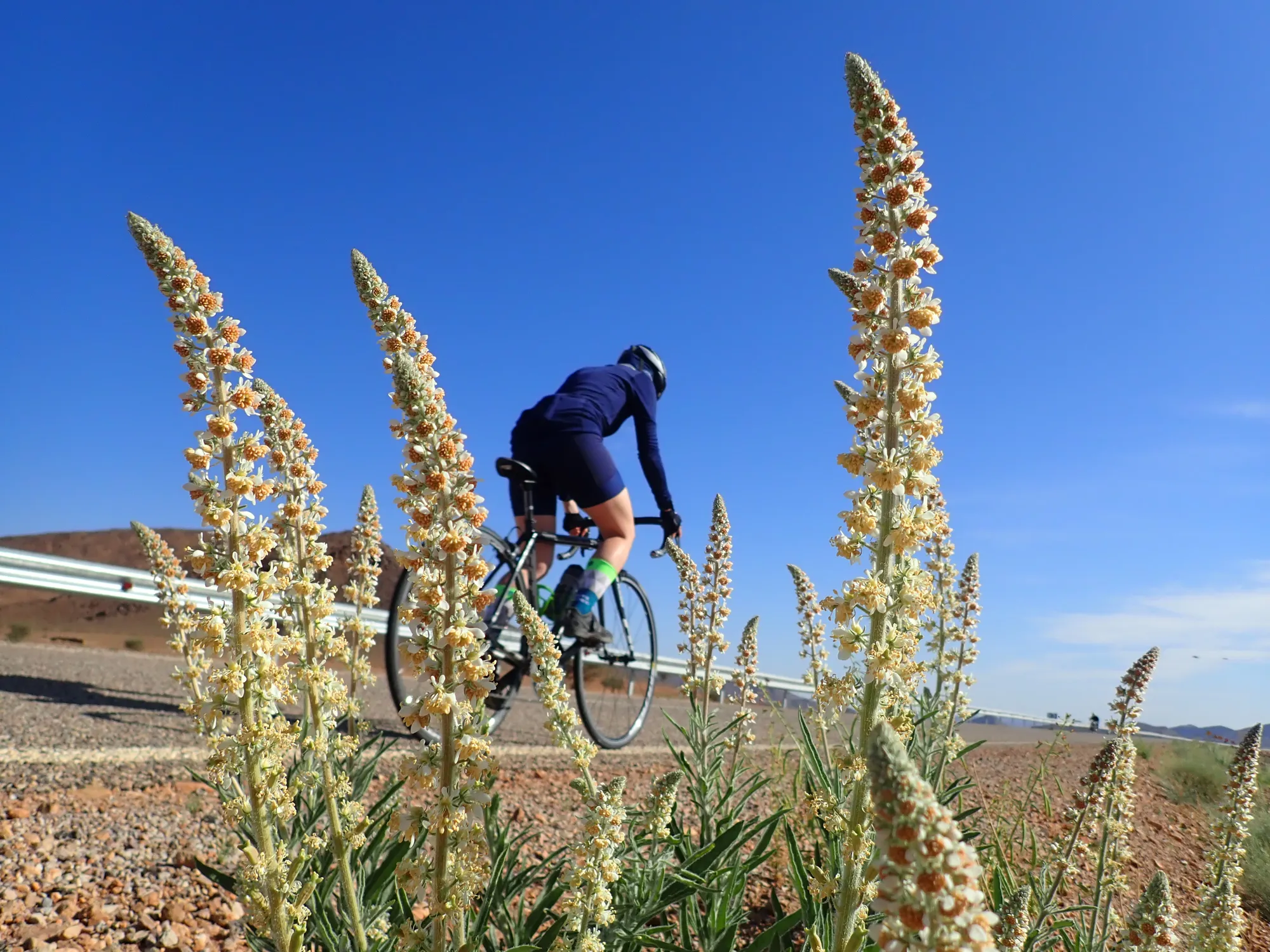
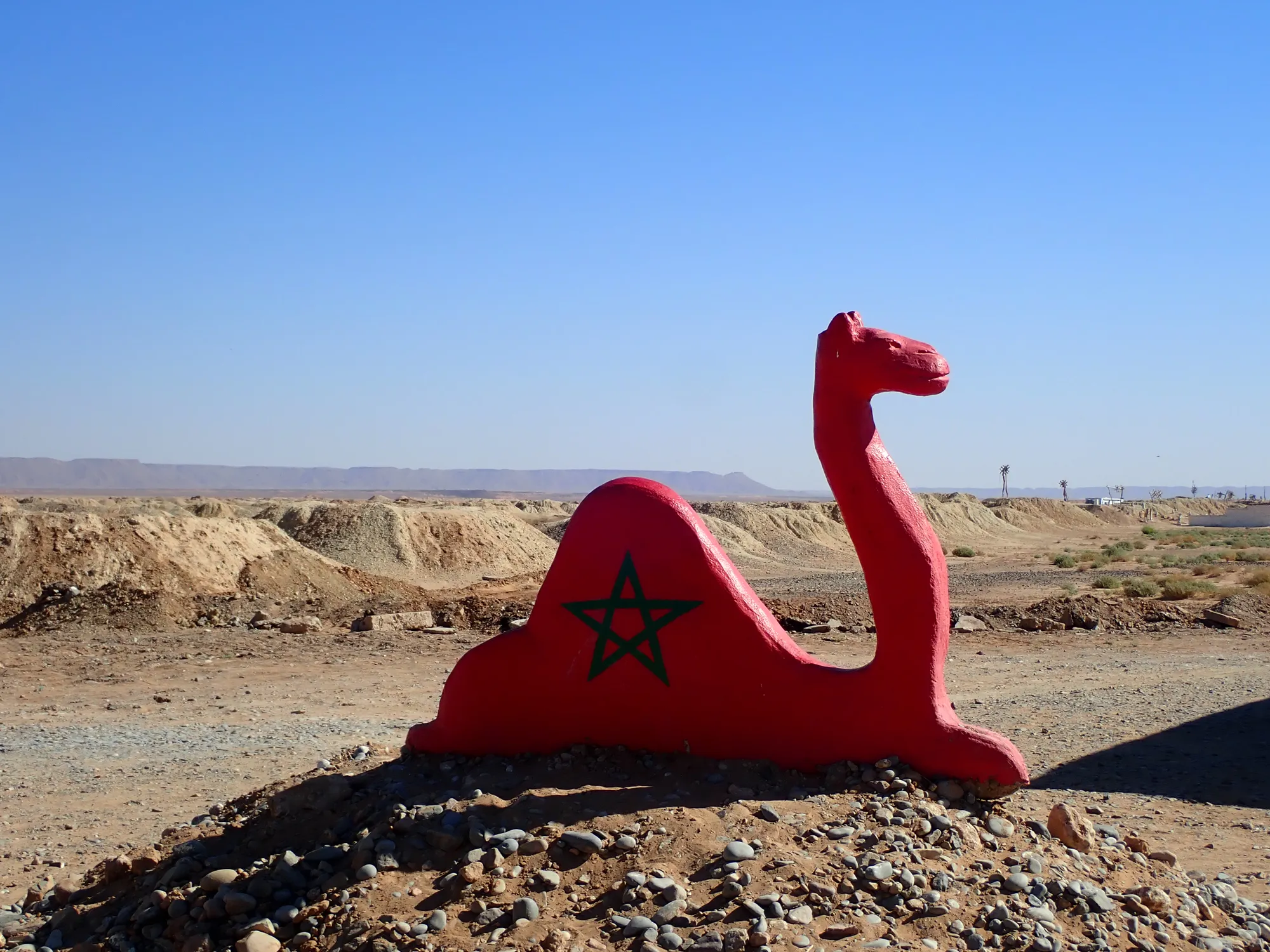
Along the way the support bus waits with oranges, bananas and nuts. On the long, straight roads we throw in a few intervals. And we get some really good action shots, at the camel warning sign and between the flowering plants by the roadside.
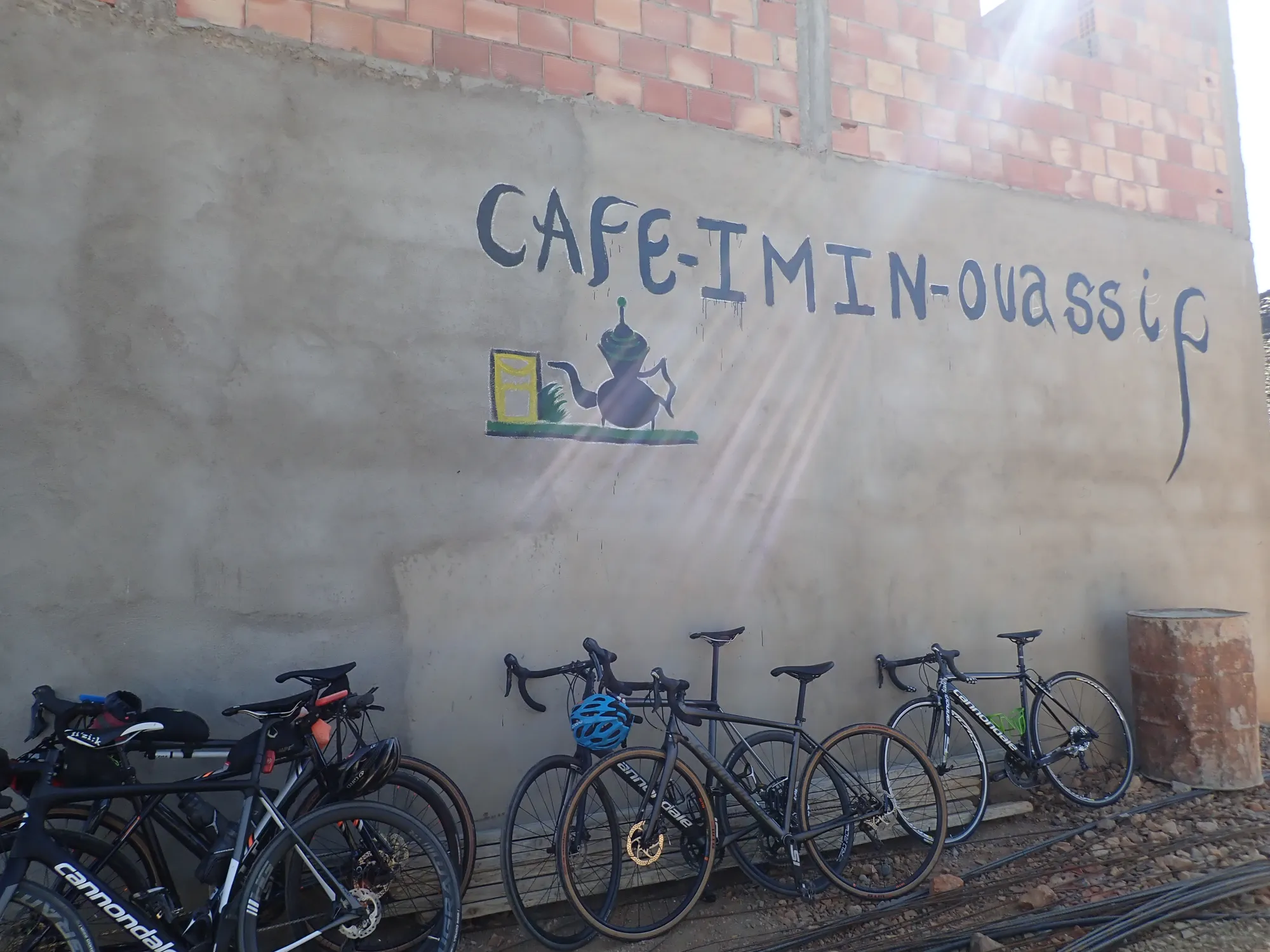
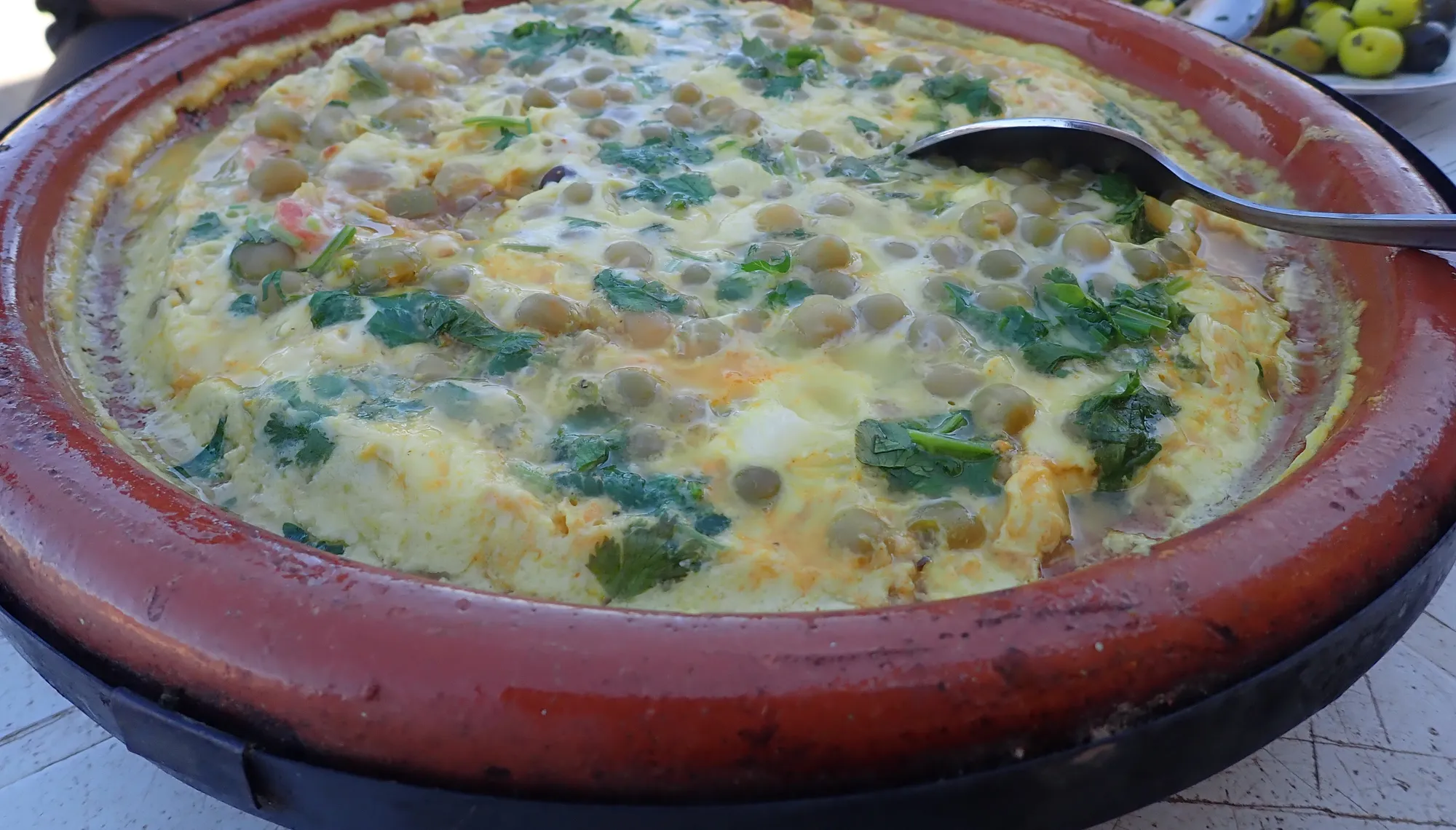
At midday we stop at Café Imin-Ouassif. On the table: a tajine with egg, peas and herbs, the perfect refuel before the desert.
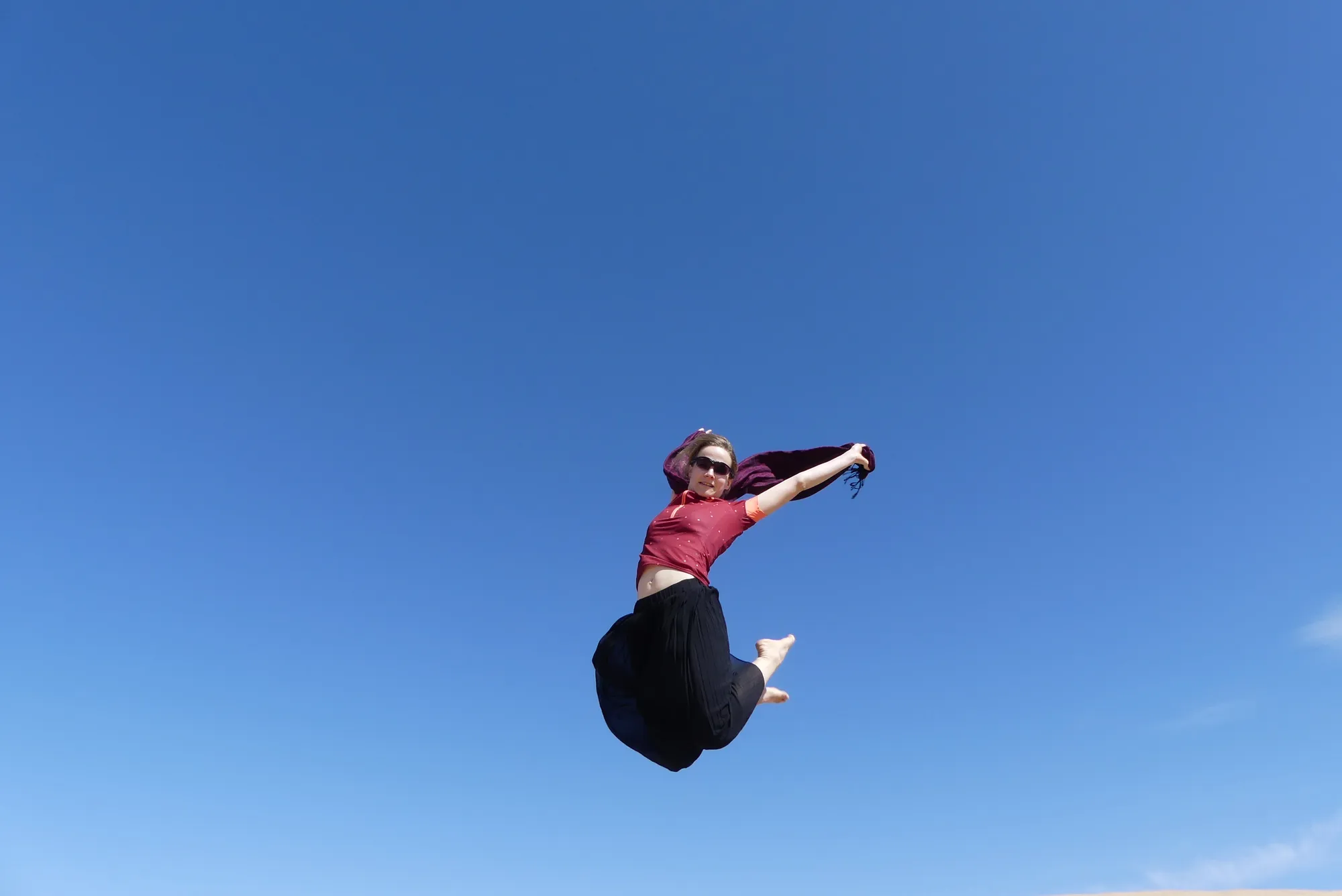
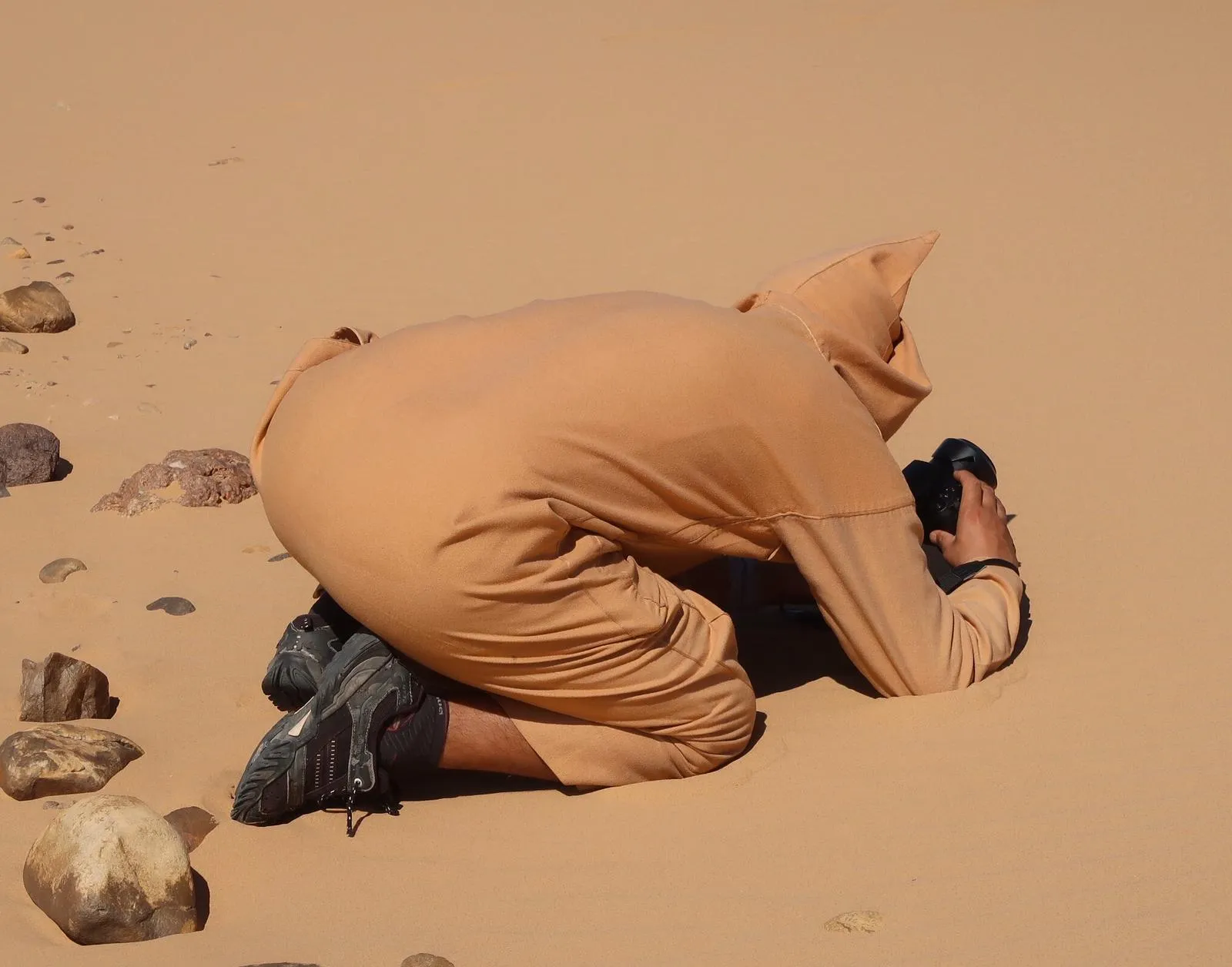
Then it is goodbye to the bikes for a day. We switch to 4x4s, which take us along tracks into the desert. Out there it is just sand, stones and sky. I simply have to jump.
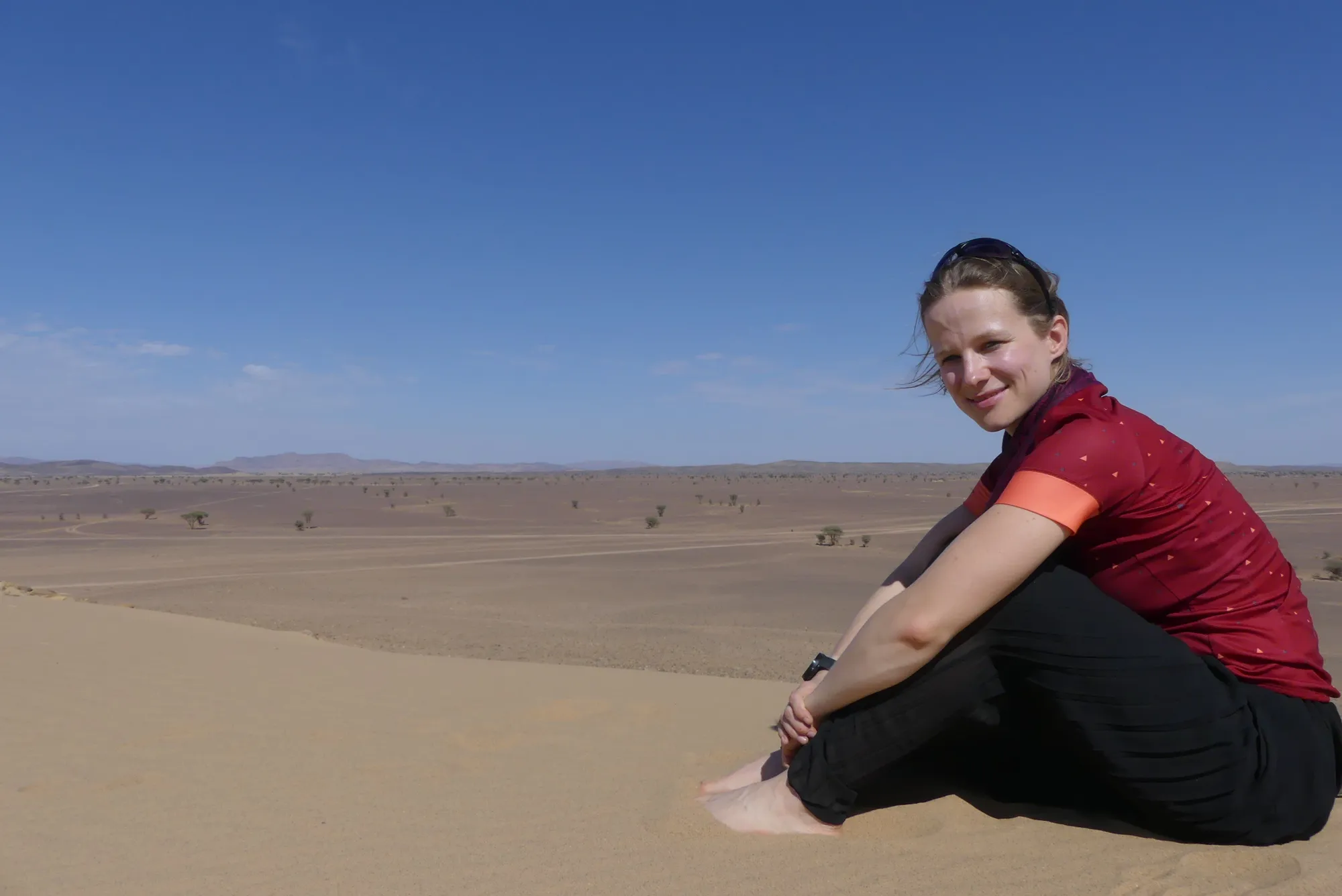
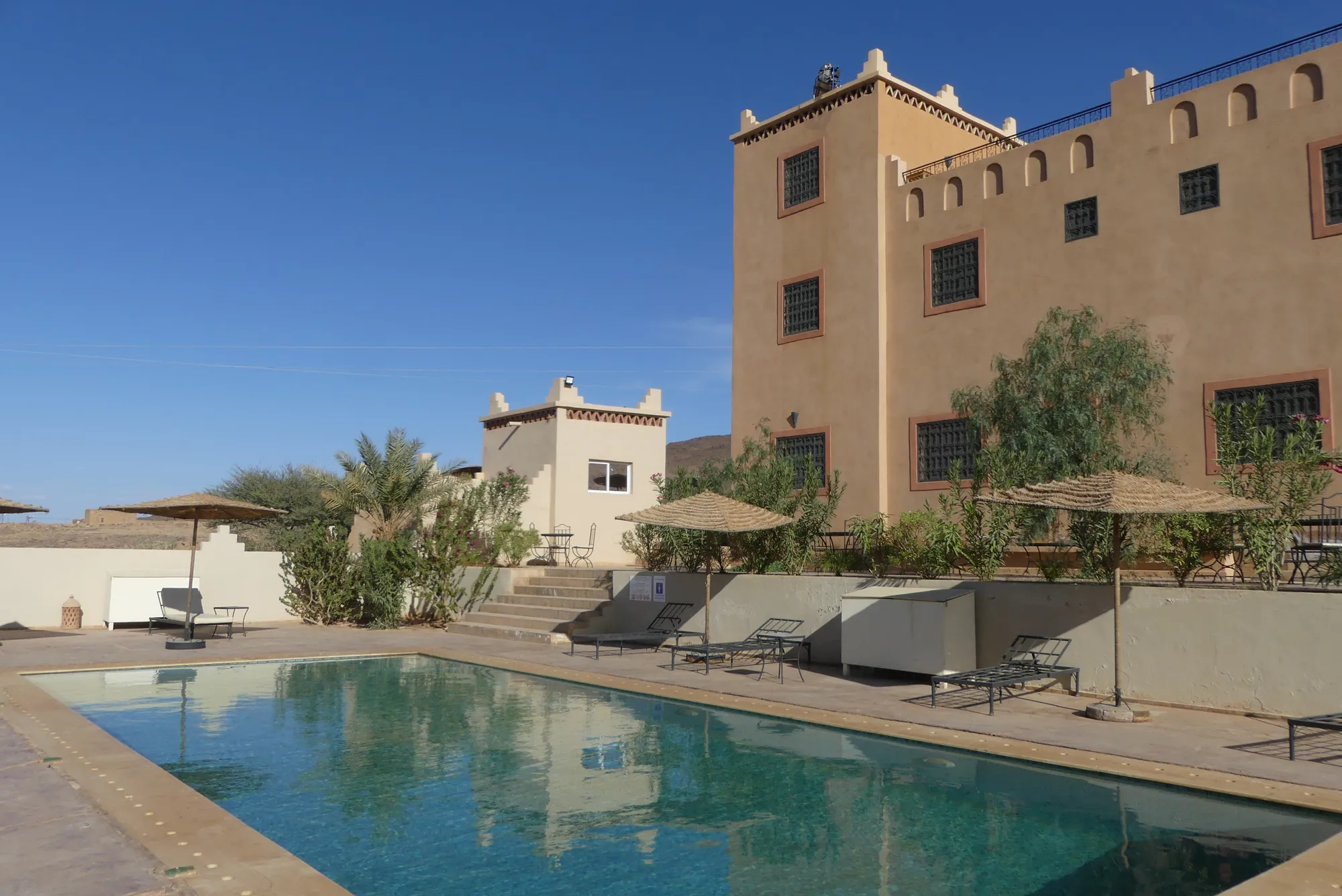
We spend the night in a riad in a small village on the edge of the desert, with a pool.
Day 5: Rest day in the dunes, on to Merzouga
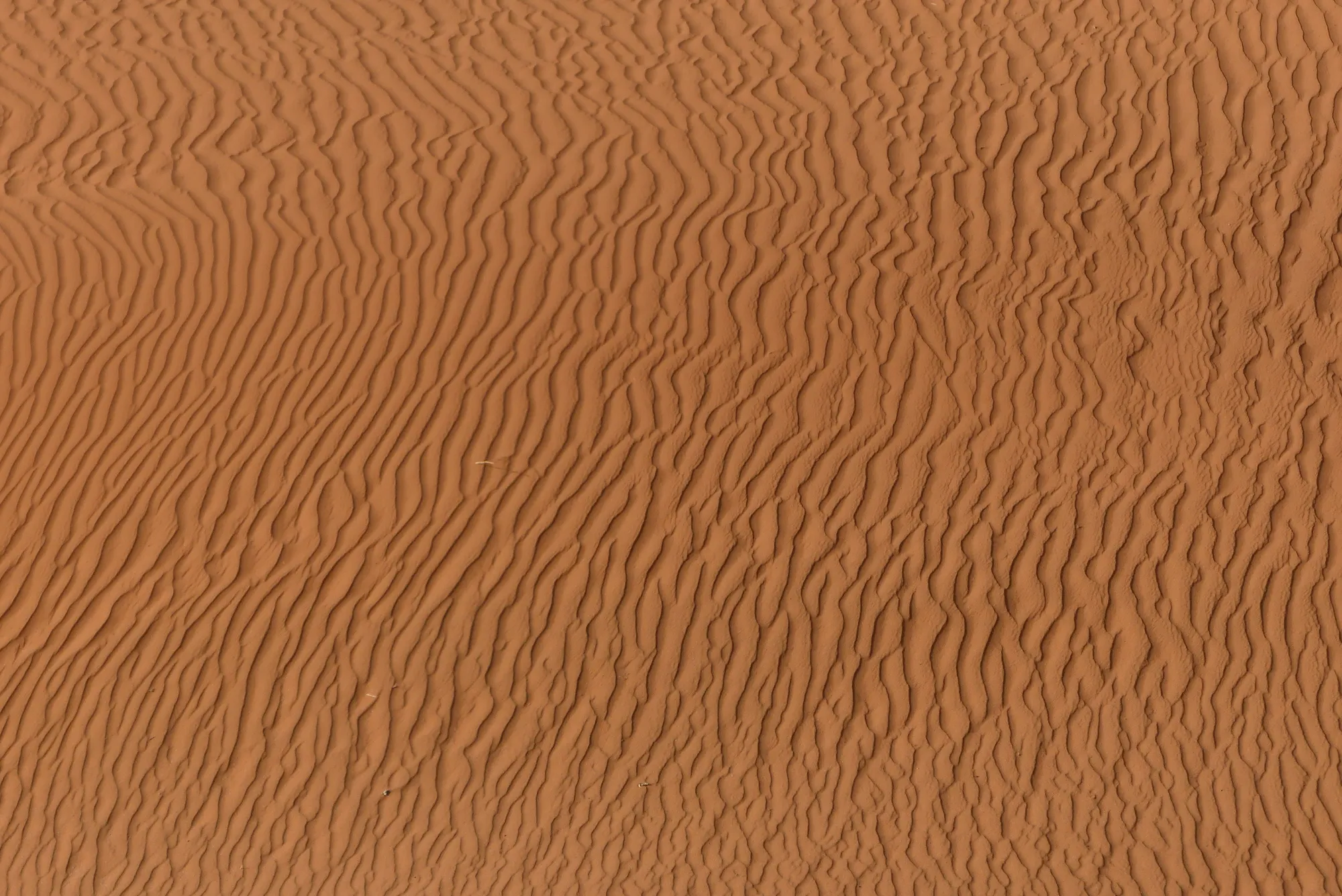
Today is a rest day, more or less. In the morning we walk along the crests of the first dunes. The wind has combed the sand into fine ripples, and every step leaves a trace.
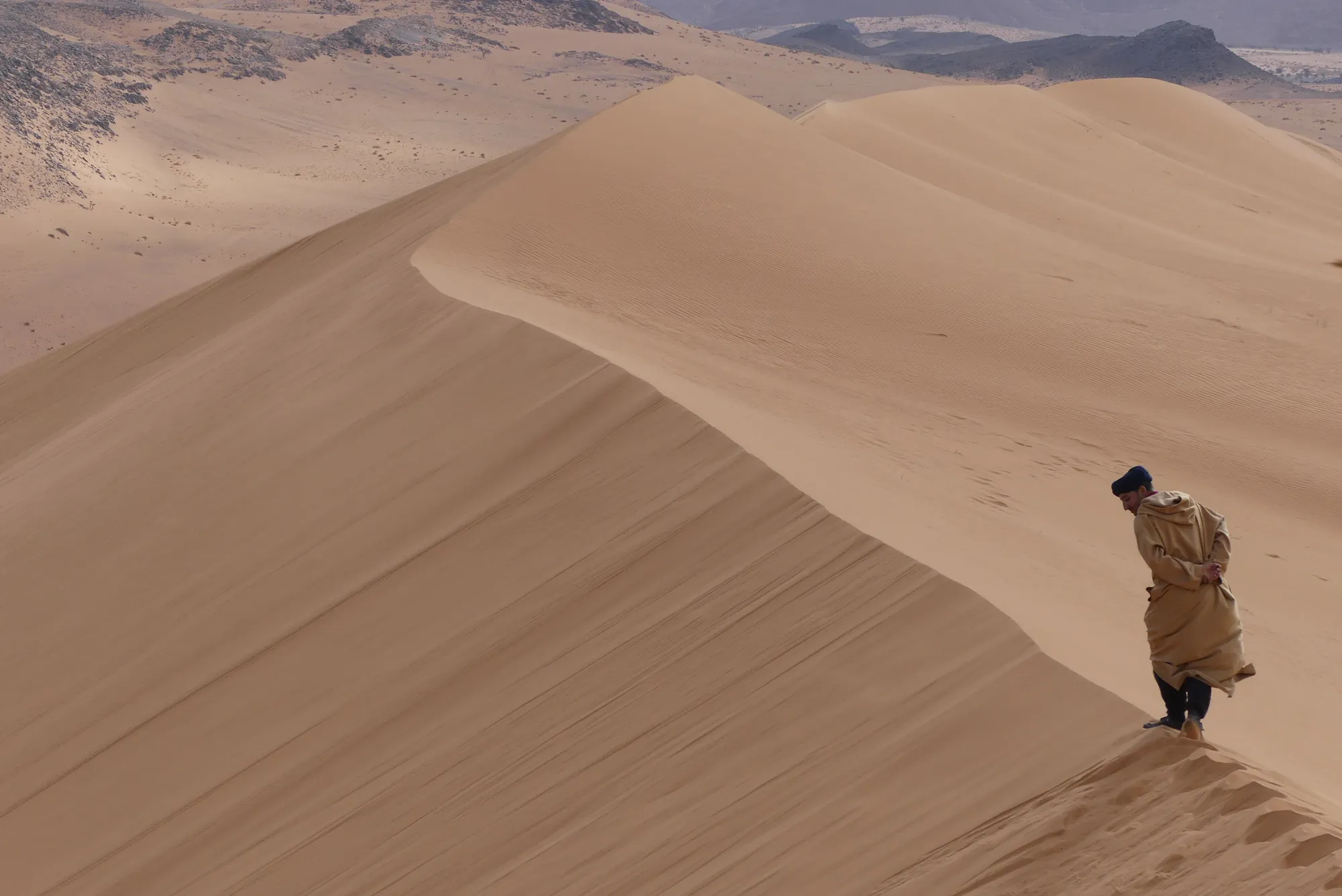
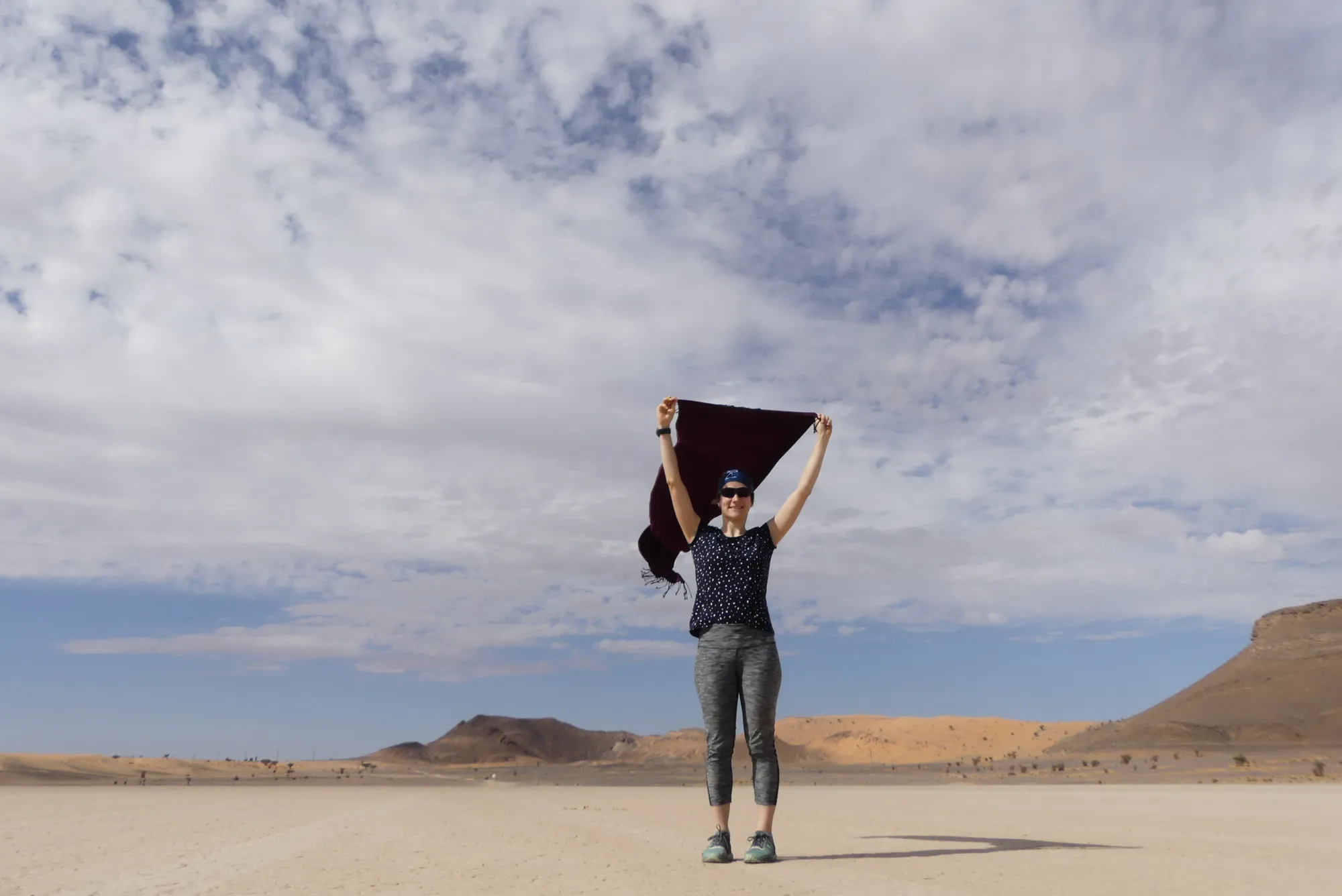
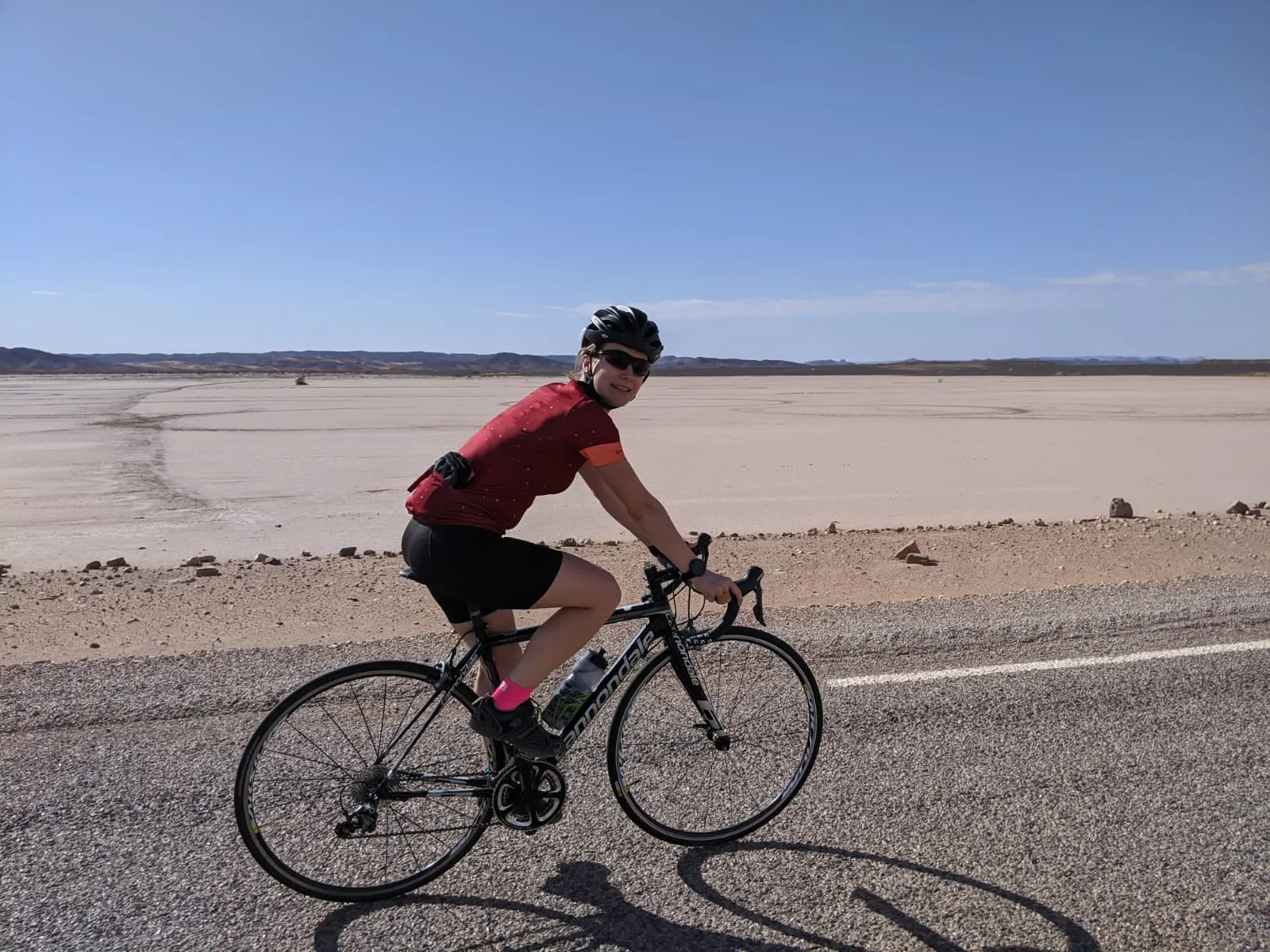
In the afternoon we are back on the bikes for a short, easy spin to Merzouga. The road runs along a pale salt flat, and then they appear: the orange dunes of Erg Chebbi.
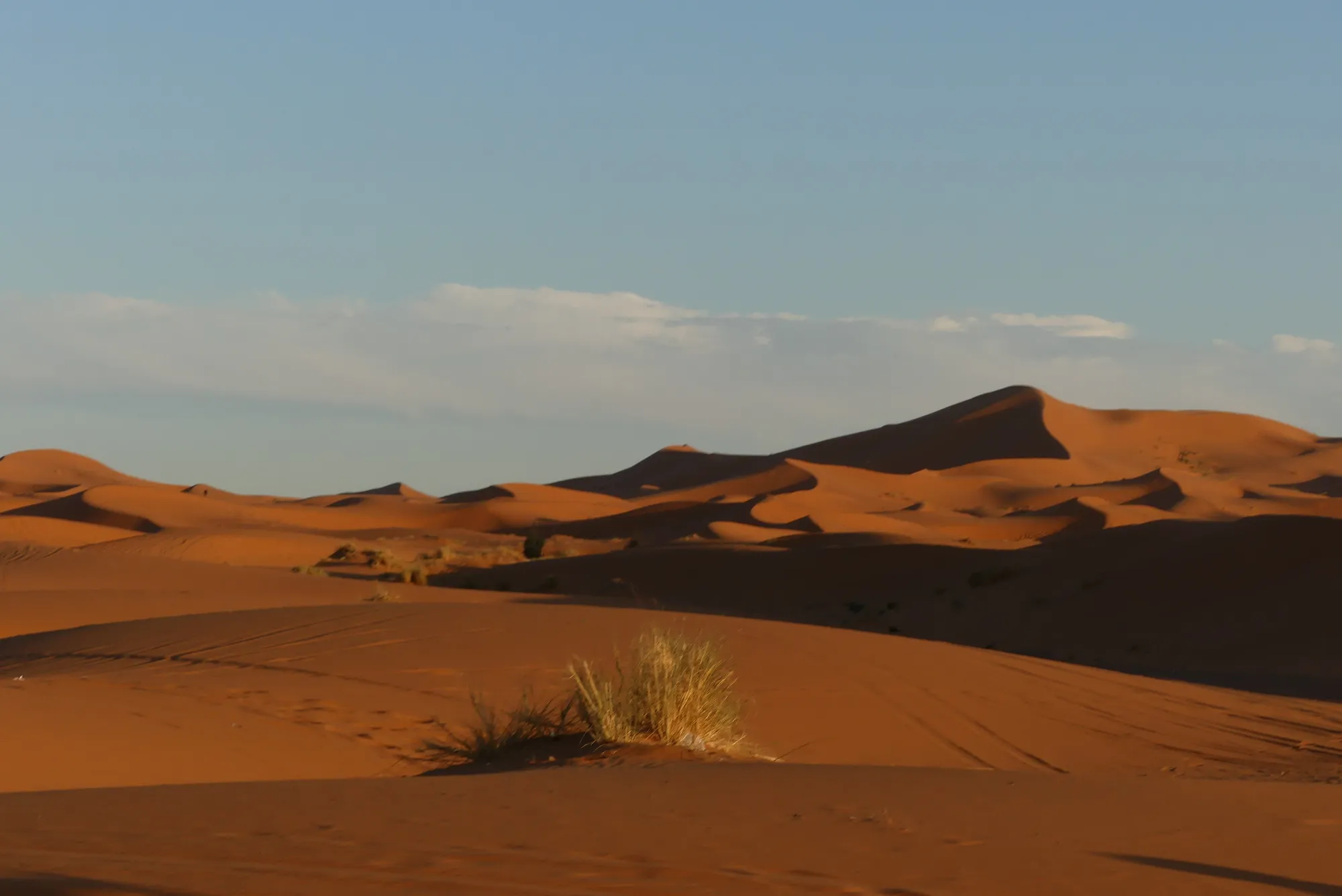
In the evening we ride camels into the dunes. The caravan's shadows grow longer and longer until the sun disappears behind the sand. Here one highlight chases the next.
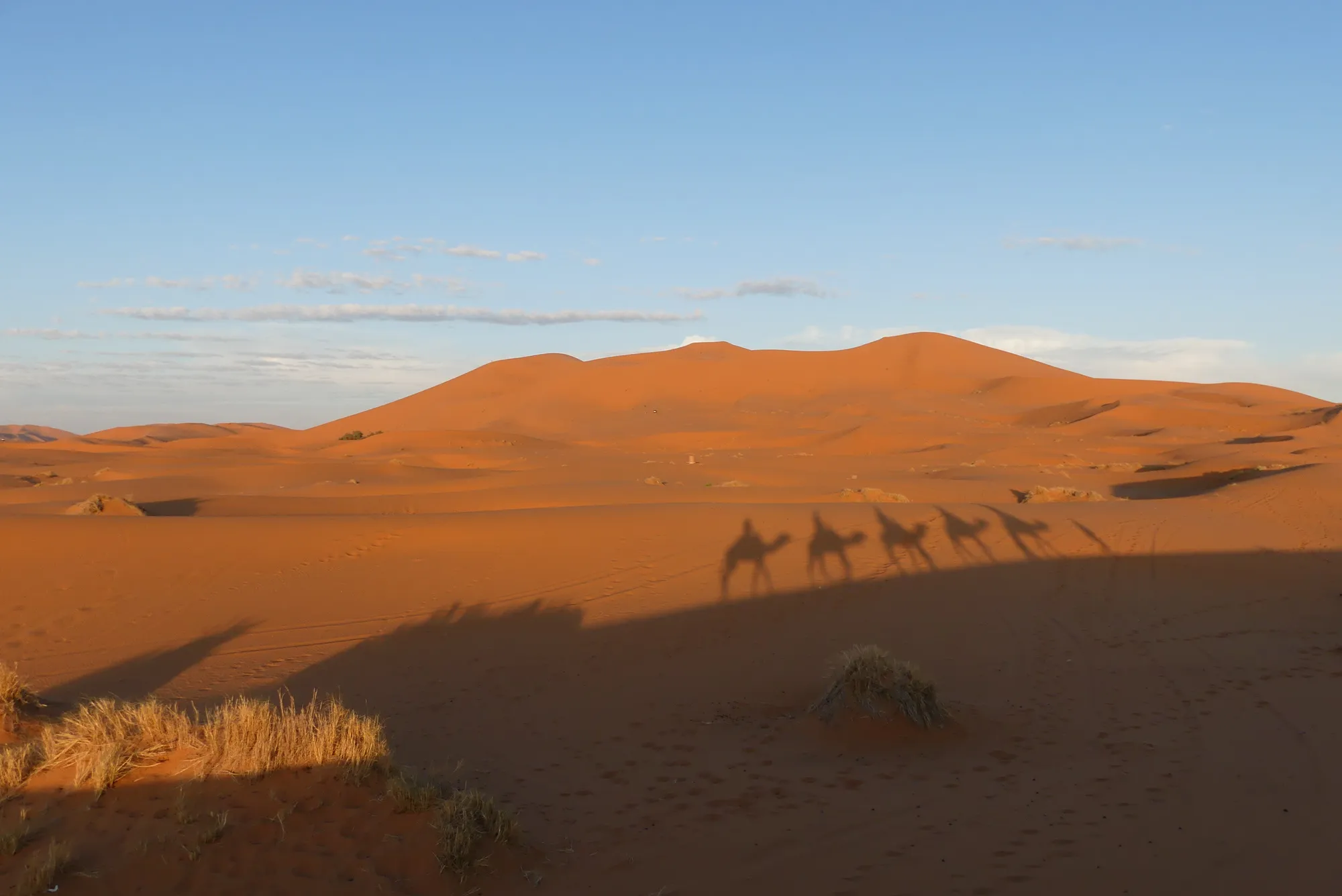
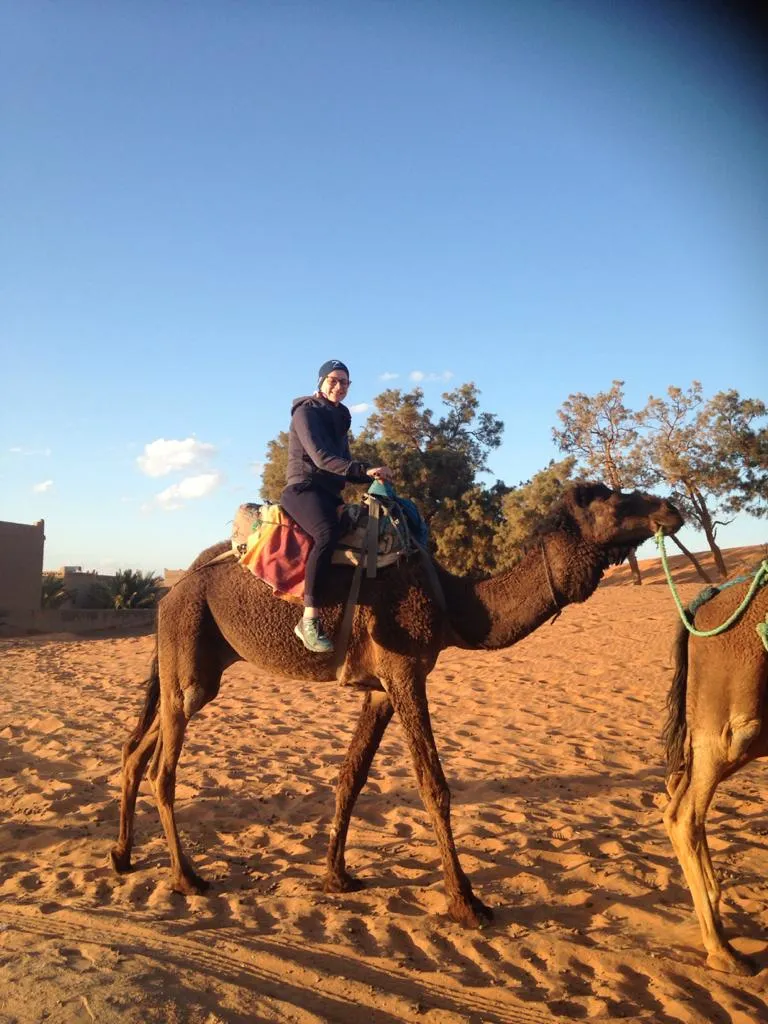
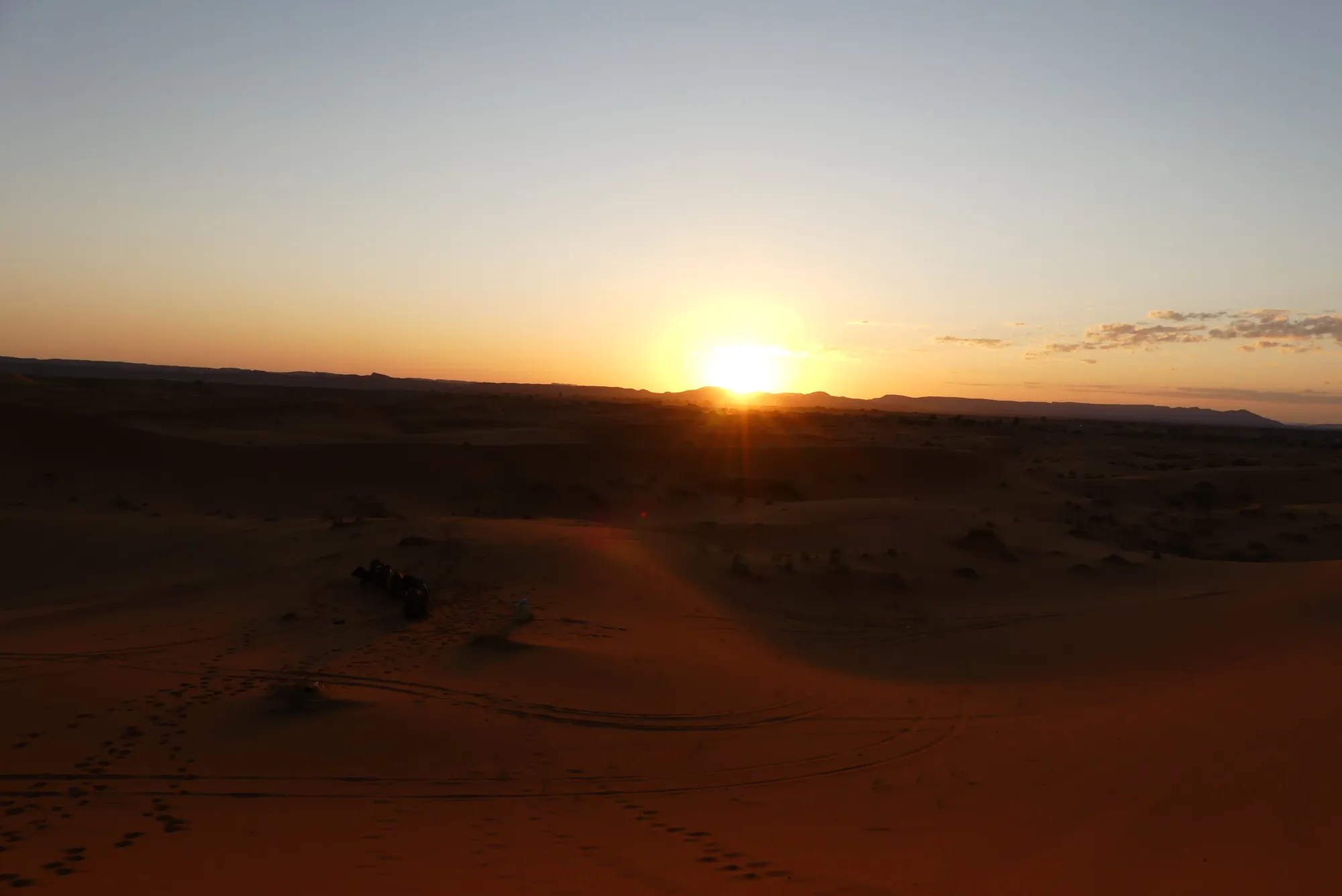
Looking back, I am not sure I would ride a camel again. It is an experience, but there is always the question of animal welfare, which is hard to judge from the outside. I prefer riding my bike.
Day 6: With a sprained finger via Rissani to Erfoud
A long day, and I ride it with a sprained finger. Not from the bike, but from the pool: on the rest day, after arriving in Merzouga, I jumped in to cool off, swam a few lengths and bashed my finger against the wall on a turn. We leave the dunes and the desert behind and head north, towards the Atlas.
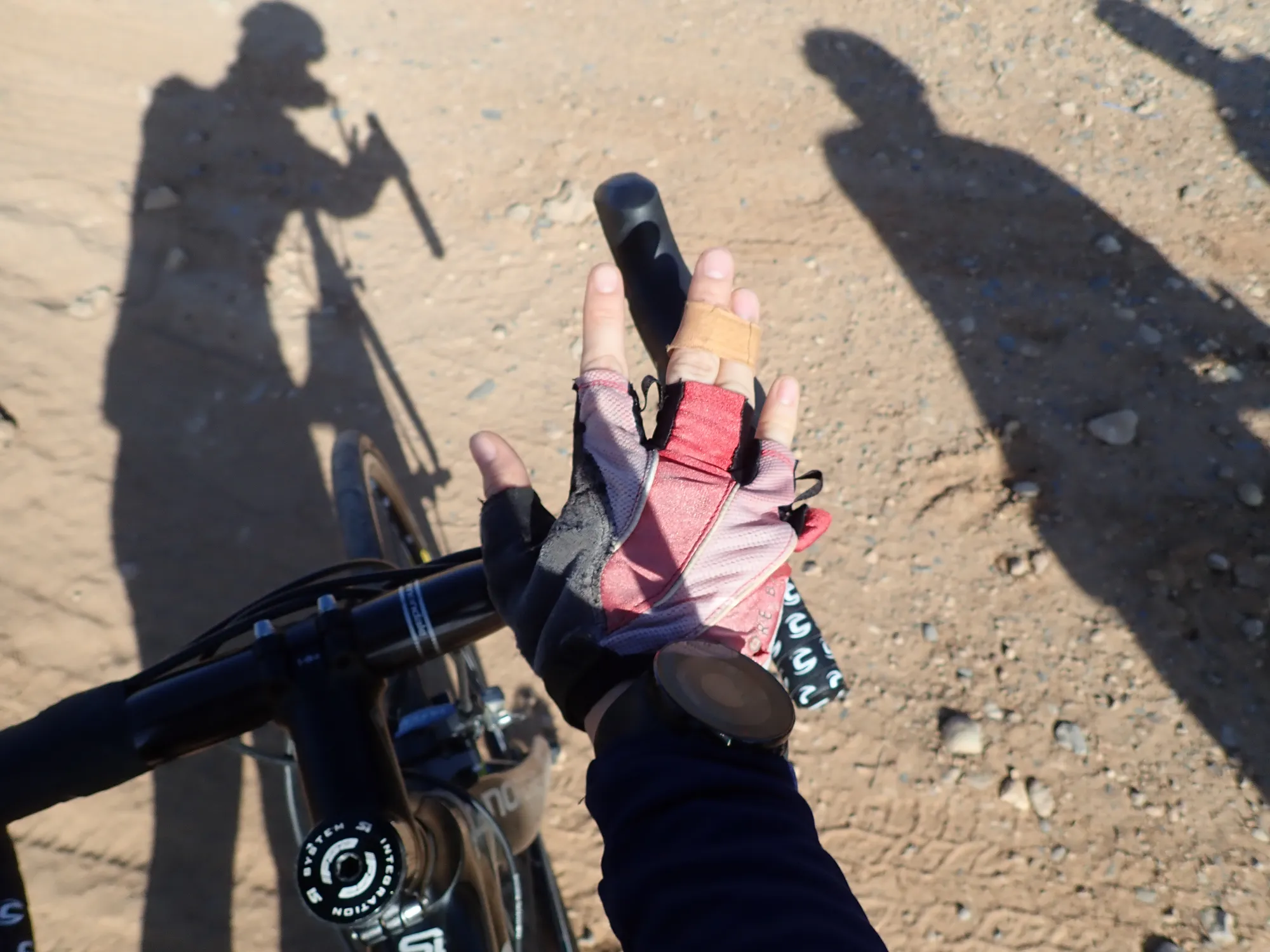
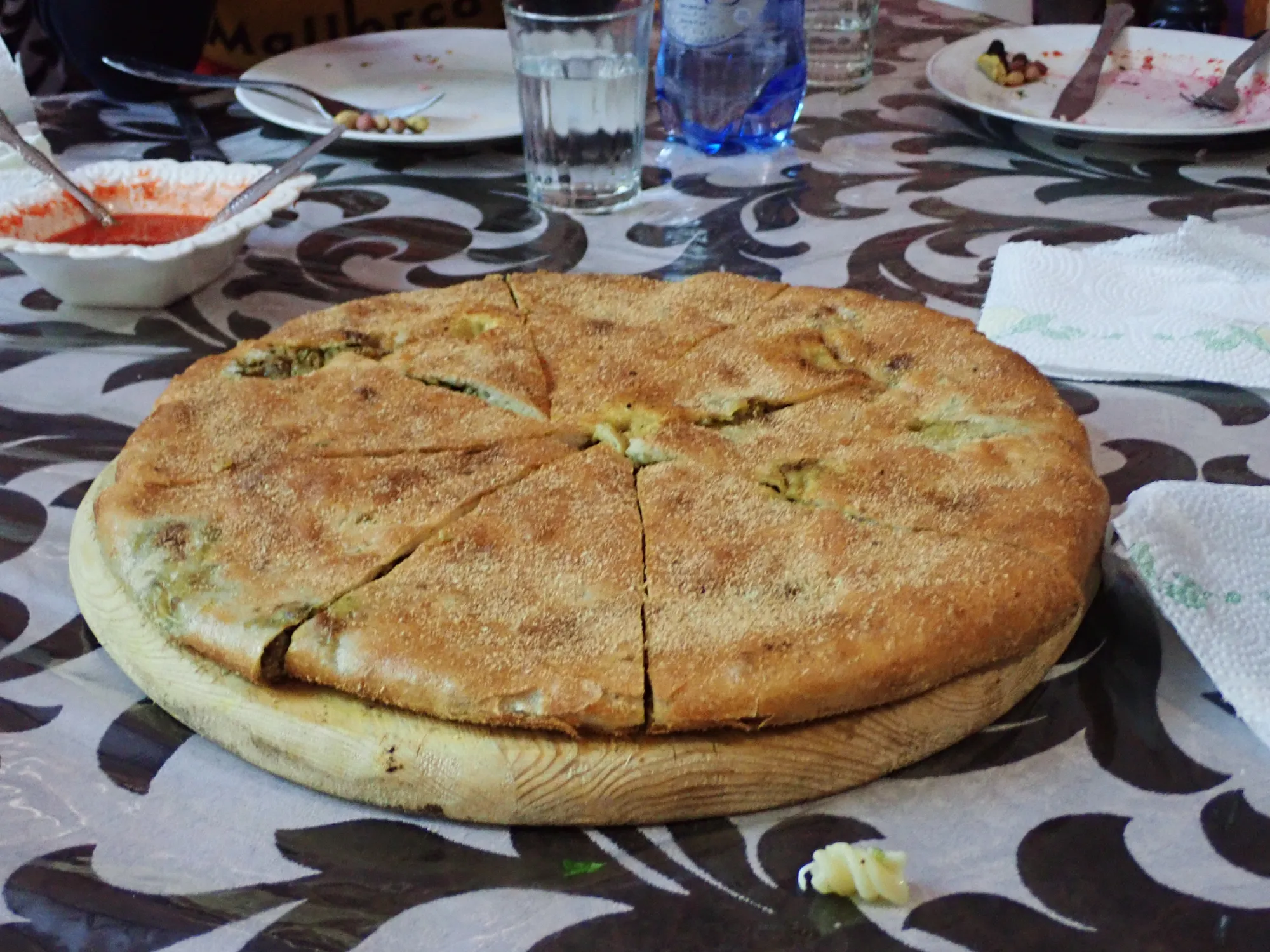
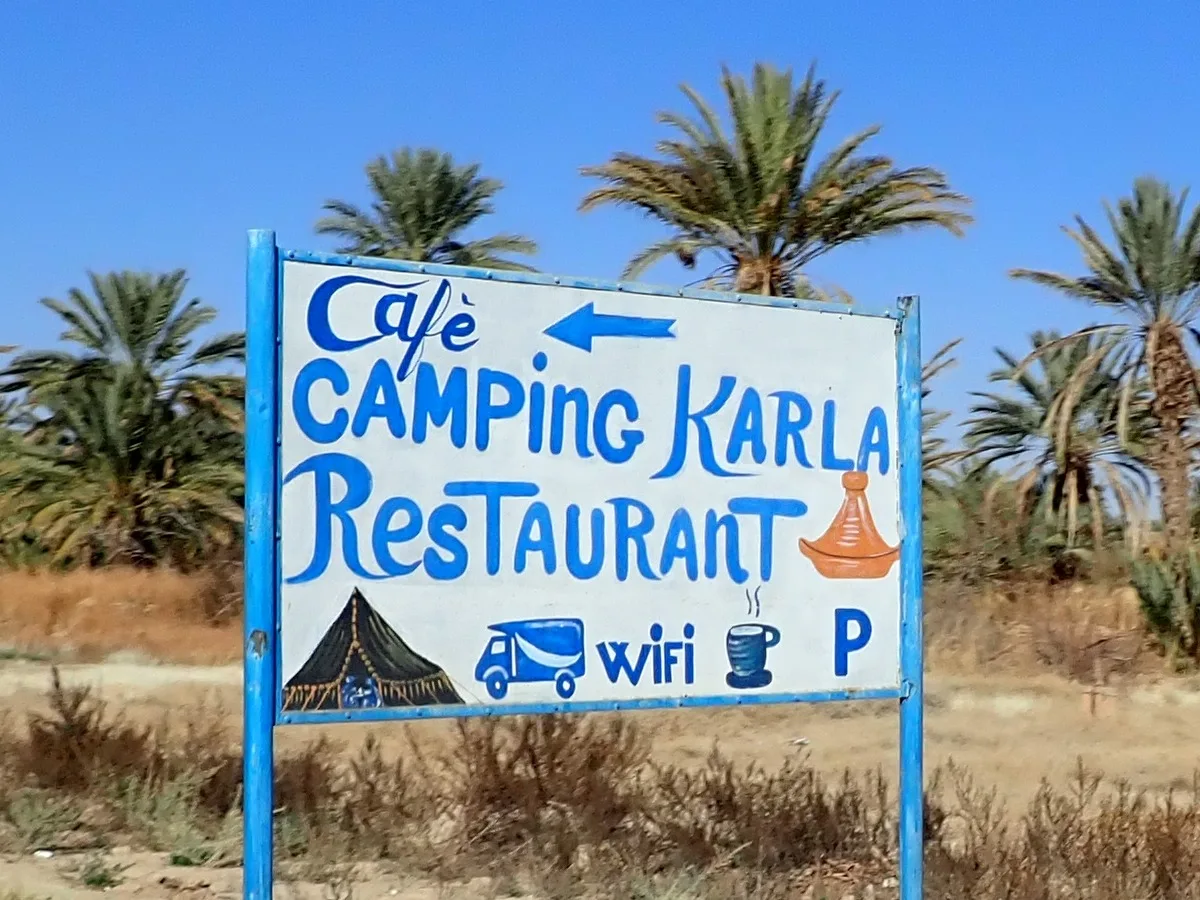
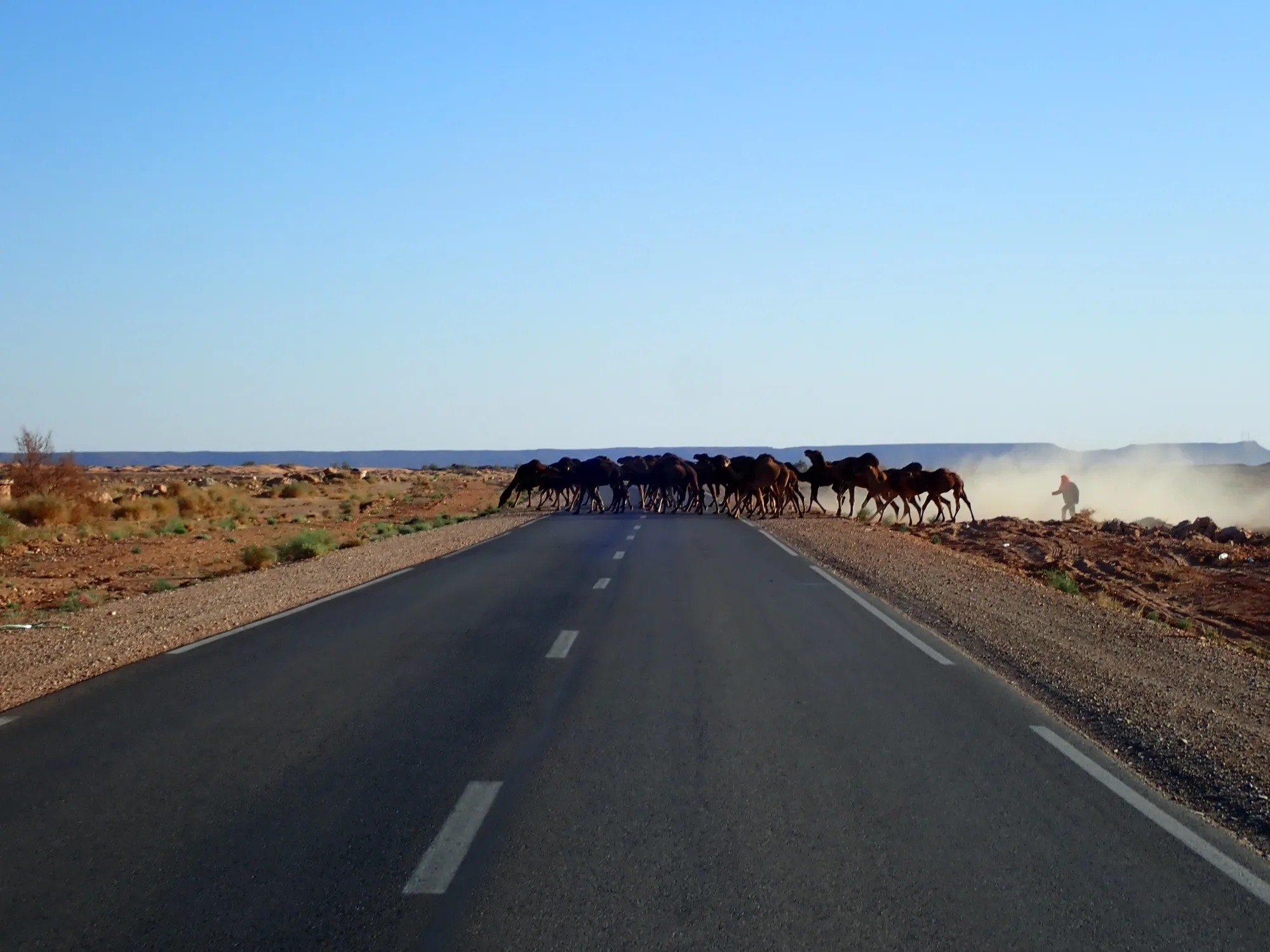
In Rissani we take a long lunch break: medfouna, a stuffed flatbread often called "Berber pizza". Later a hand-painted sign points the way to "Café Camping Karla", with a tajine painted on it. I like the name, and the tajine even more. Then a whole herd of camels crosses the road in front of us. Via Erfoud we roll on to our accommodation. According to the programme that would have been it for the day, but in the afternoon I add an extra loop with a few people from the group: about 40 kilometres north and back. By the end the computer shows 111 kilometres, further than I had ever ridden in a day.
Day 7: Race pace out of the desert, then into the Todra Gorge
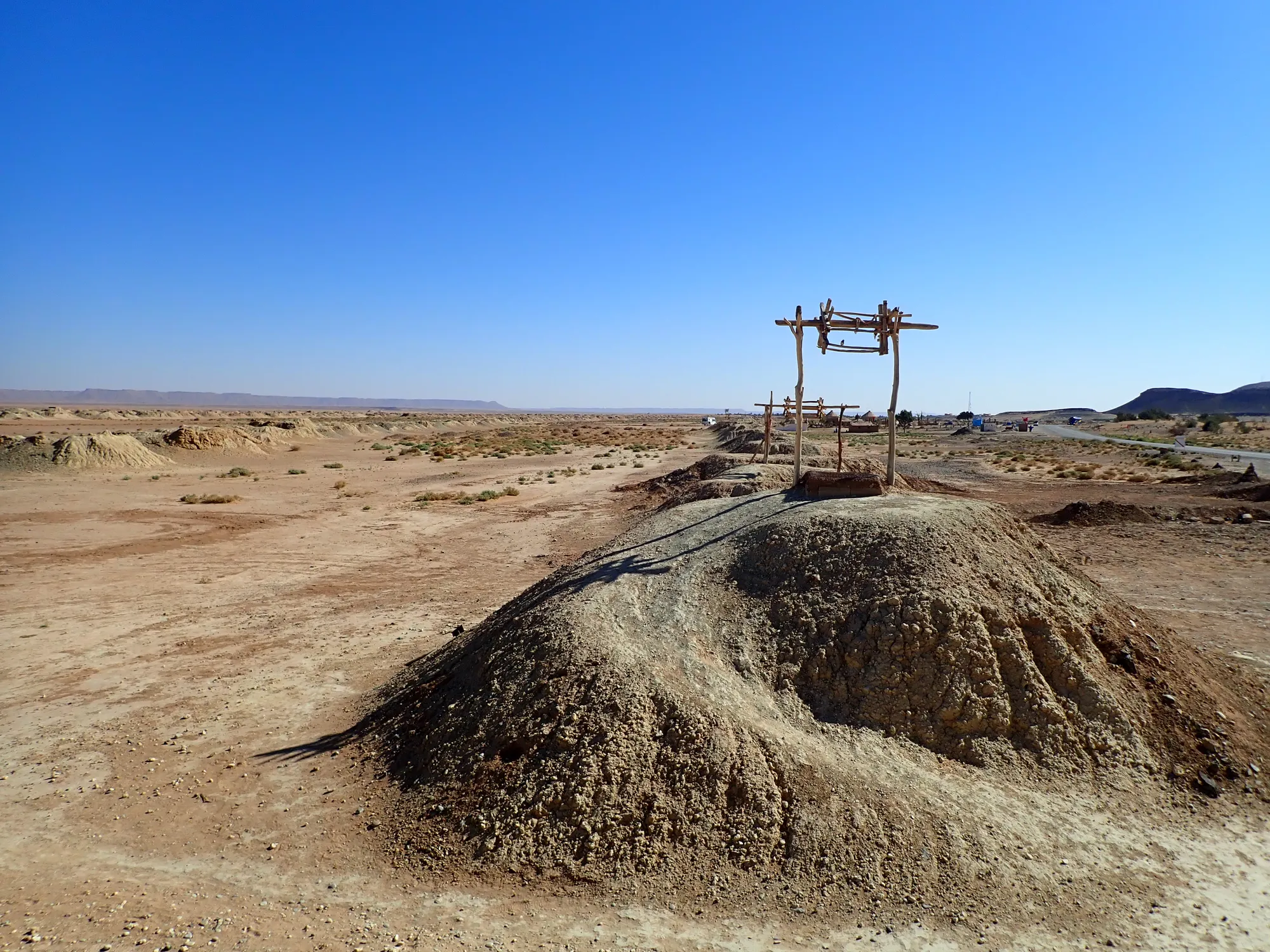
In the morning we race over the hills, and the desert is finally behind us. By the roadside I see mounds of earth with wooden frames on top, probably well shafts of a khettara, an old underground channel that carries water over many kilometres to the oases.
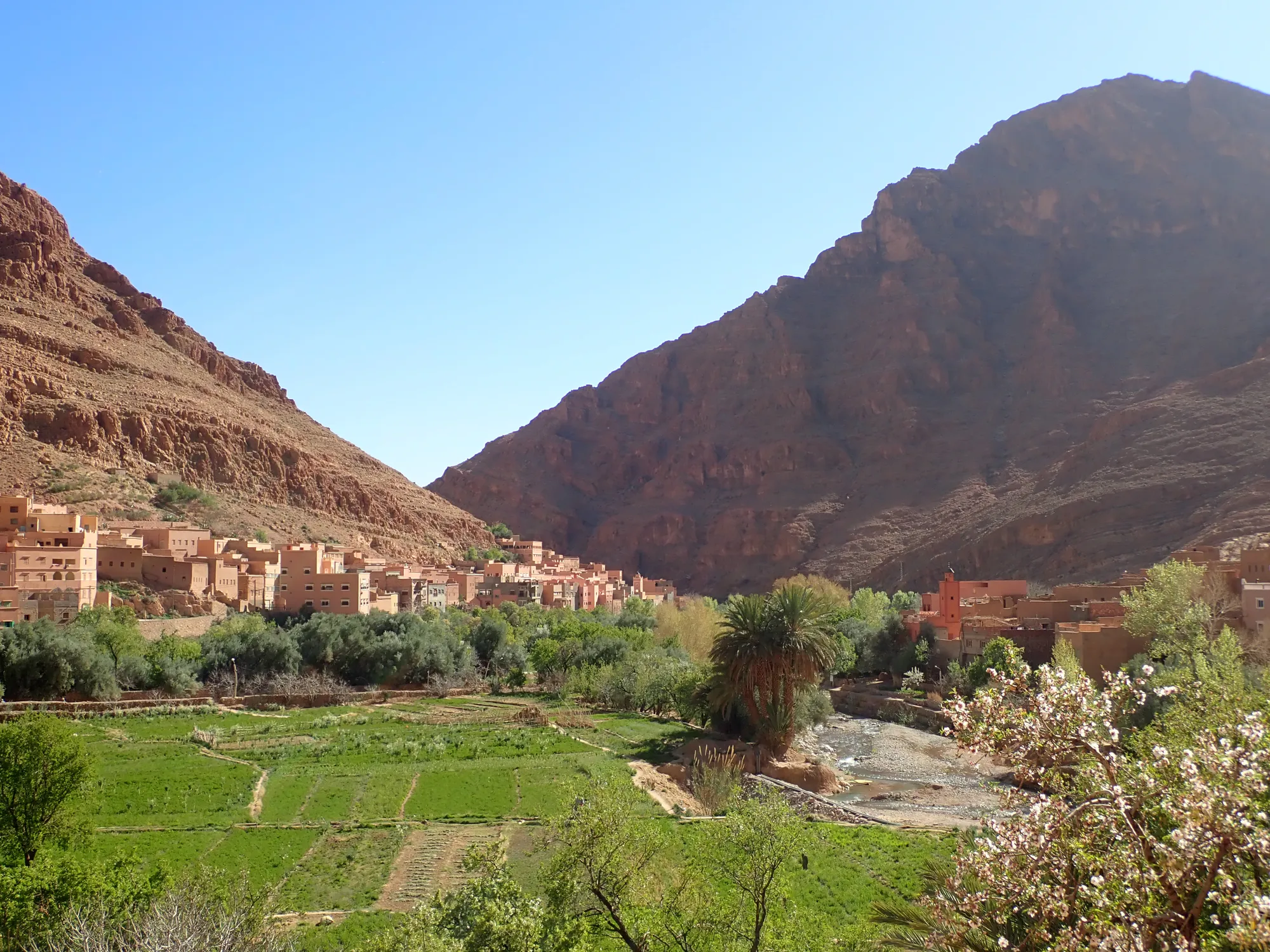
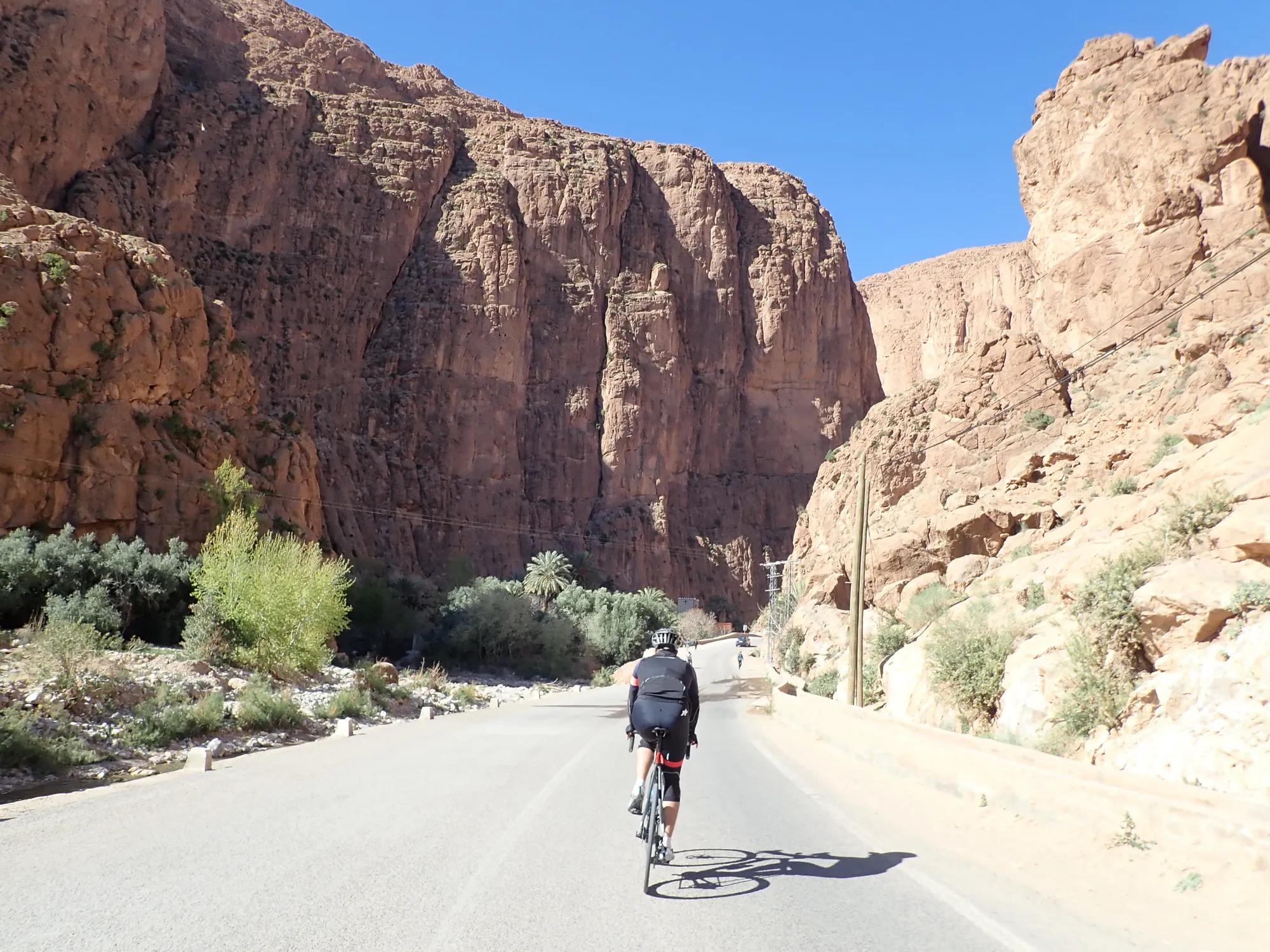
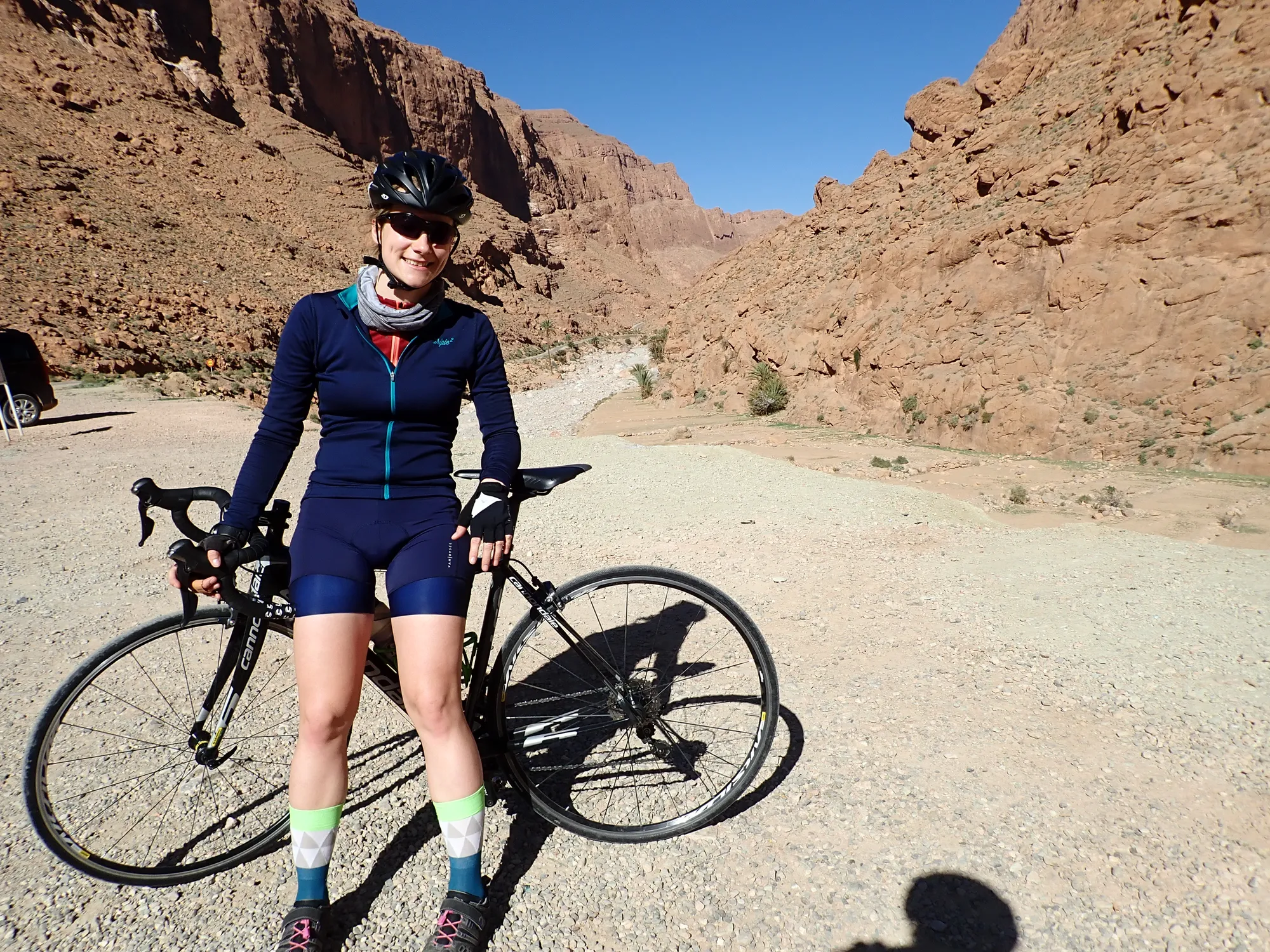
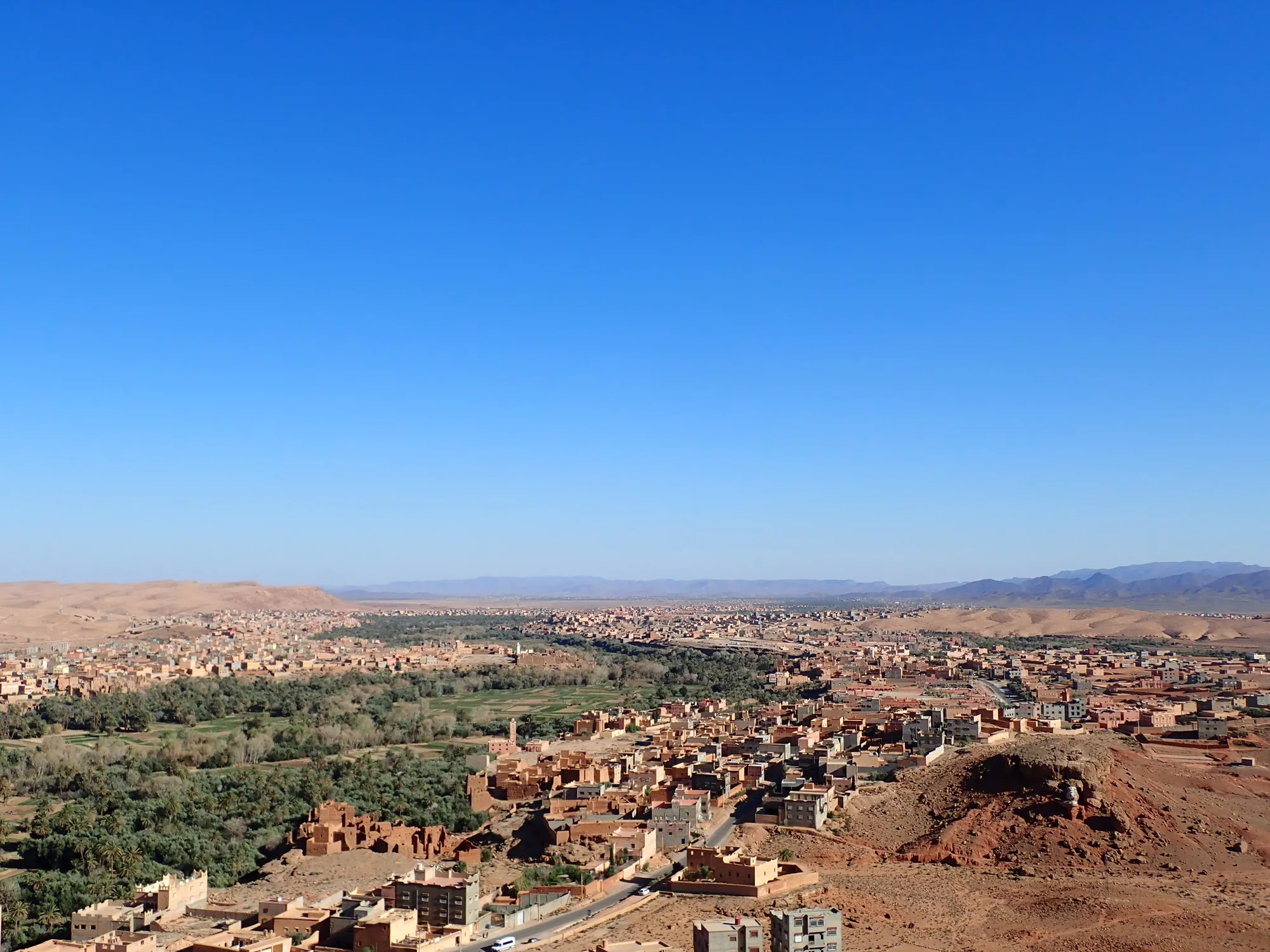
After a transfer at midday we ride into the Todra Gorge, and it is unreal. The rock walls rise so steeply that I have to tip my head right back. Then come some lovely climbs with views over green fields and the Tinghir oasis.
Day 8: Birthday ride through the Dades Gorge
The last day on the bike is my birthday, and I cannot think of a better present. From Boumalne Dadès we ride up the Dades Valley, through mud-brick villages and past almond trees in bloom. In the background the snowy peaks of the High Atlas shine.
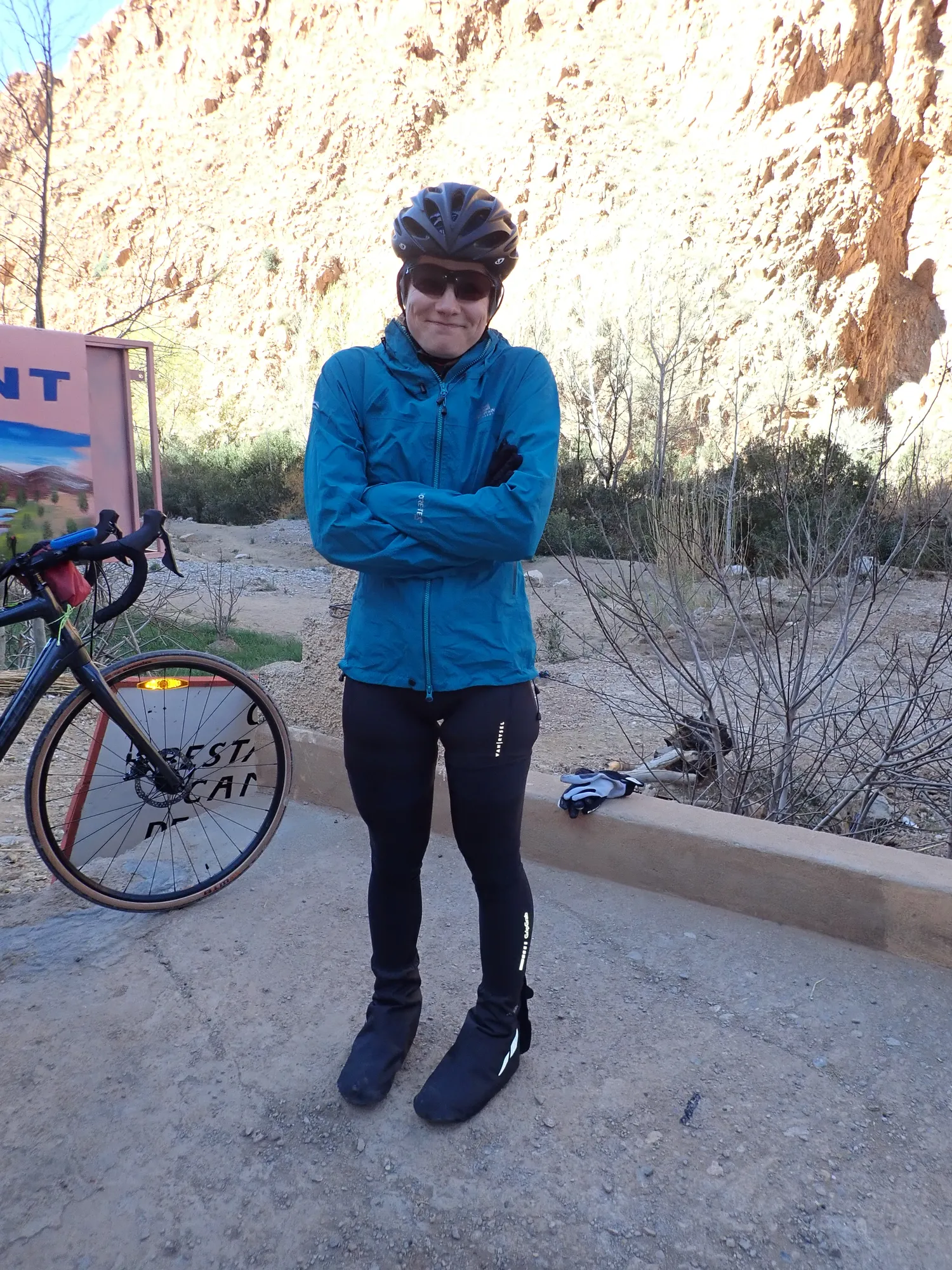
In the morning it is still properly cold in the gorge. I am freezing and put on everything I have.
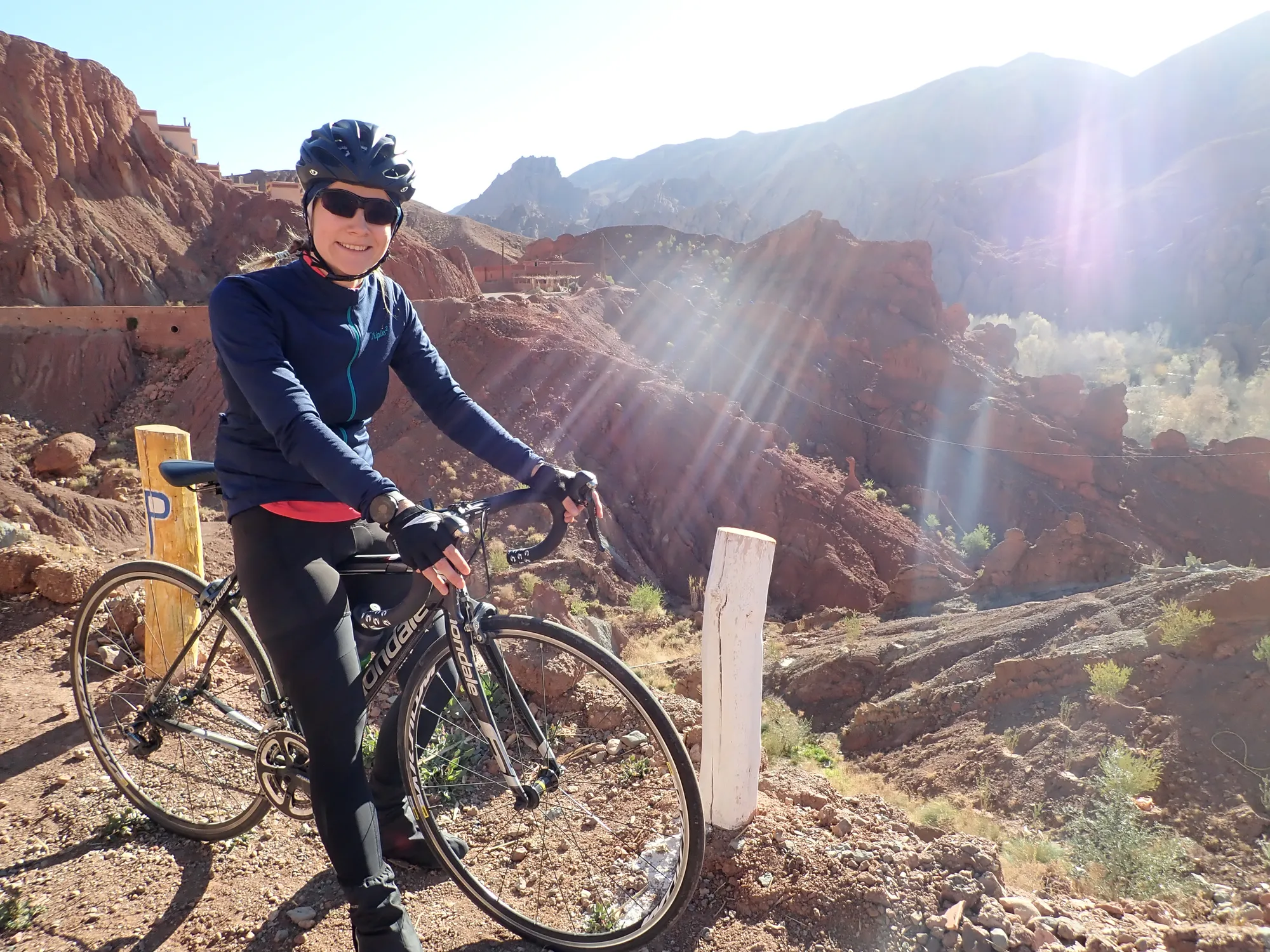
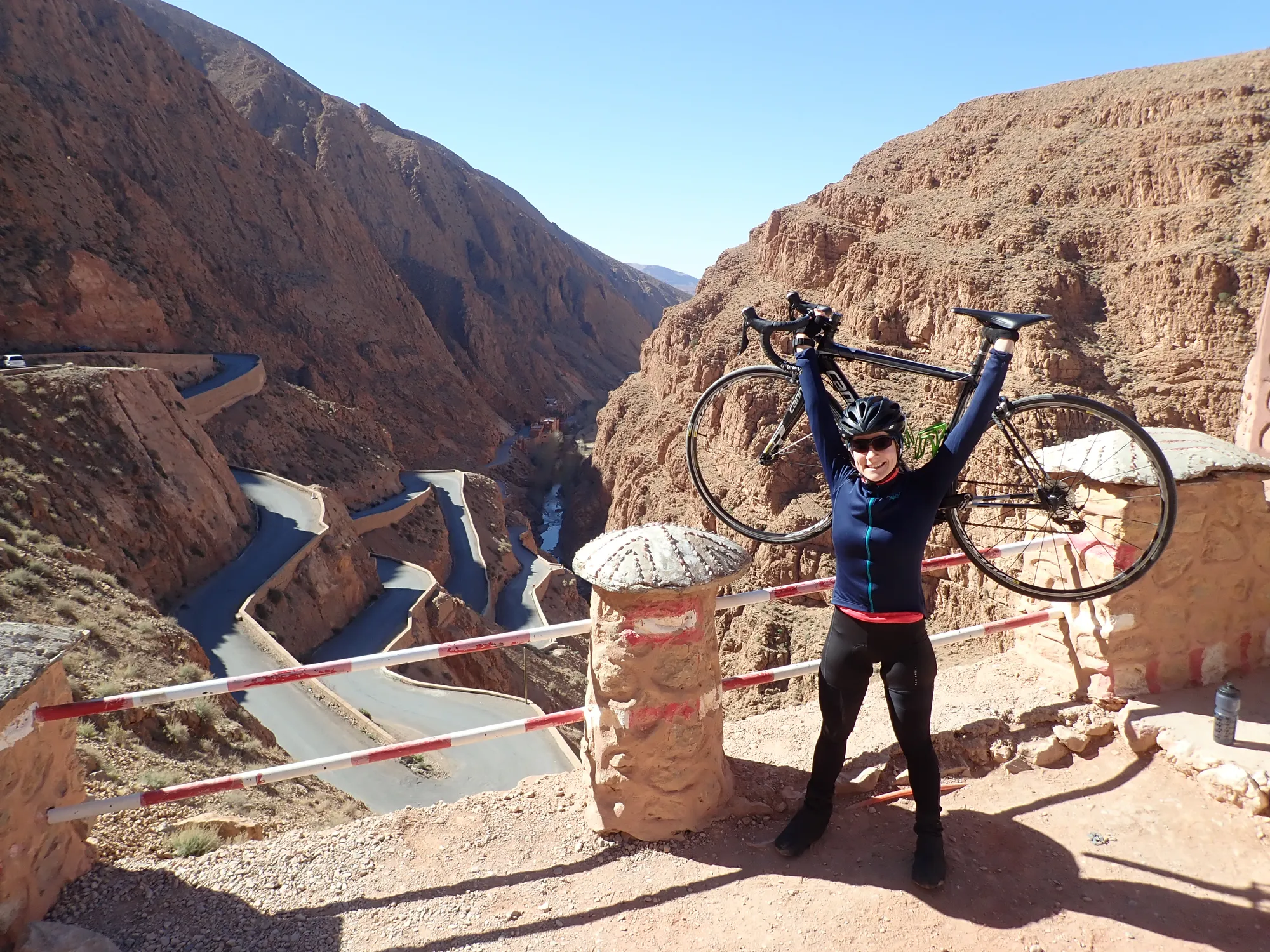
Then come the famous hairpins of the Dades Gorge. The road winds up the rock face in tight bends, and you just have to love this climbing. At the top I look down at the bends I have just ridden up, and lift the bike into the air once more.
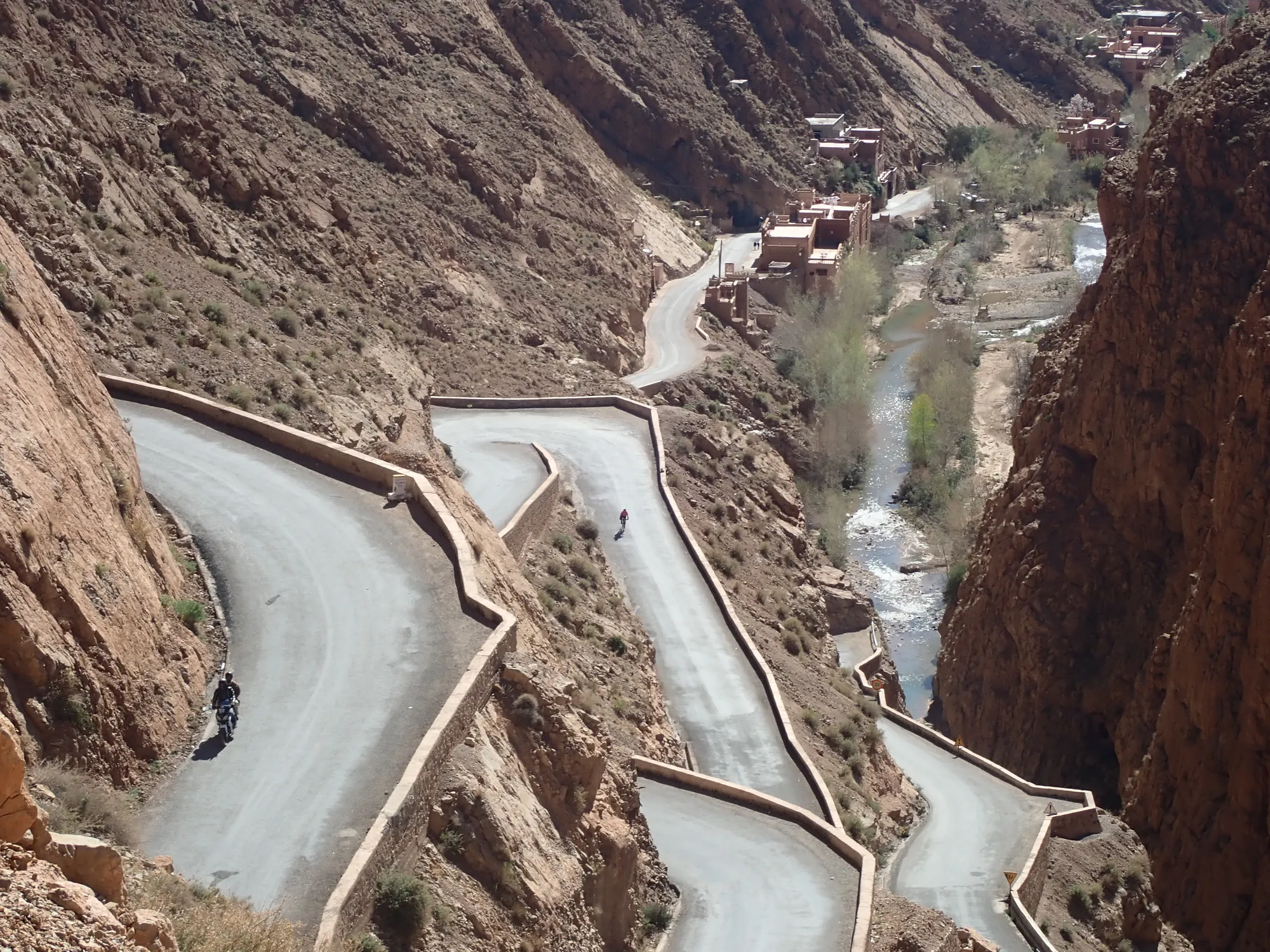
Further up the gorge gets so narrow that there is only just room for the road and the river side by side. We keep going towards M'Semrir before we turn around.
On the way back it hits me: low blood sugar, and a bad one. I have to sit down next to the support bus and eat oranges, oranges and more oranges. Then I roll to the lunch stop, eat properly and finish the day. In the end it is 113 kilometres, two more than my record from day 6. Strava says over 3,000 metres of climbing. That is certainly wrong, 1,500 is more realistic. I am tired anyway, and happy.
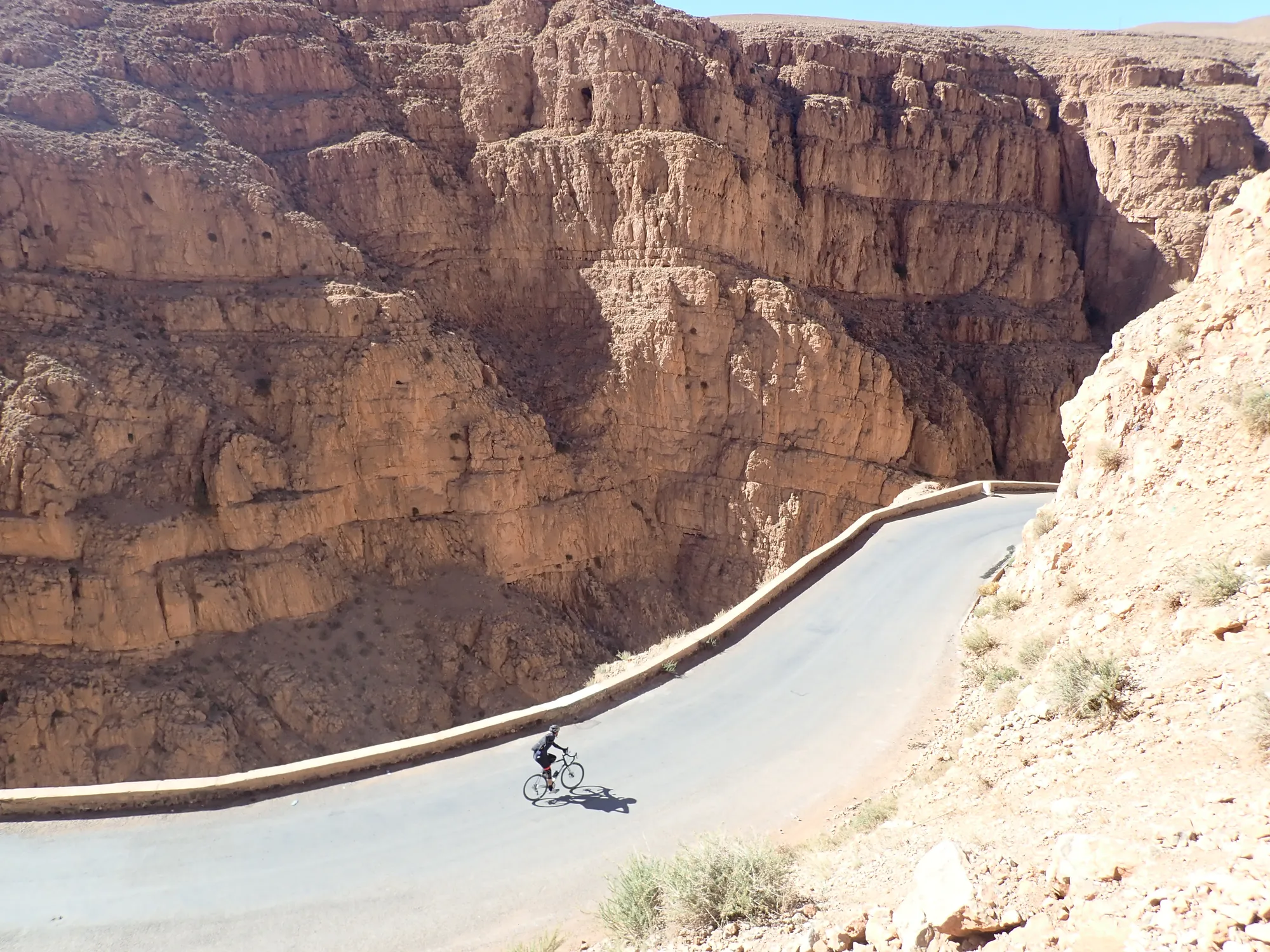
The next day the bus takes us back to Marrakech over the Tichka Pass, the same pass we climbed by bike on the first day.
Why I recommend this trip
I usually like to travel on my own. Here I was glad I didn't. We were a small group of about seven, with a great tour operator and Mustapha, a super guide who was with us for the whole tour. The bus follows in case someone gets tired or has a problem with the bike, and at the breaks it waits with fruit and nuts. I didn't have to think about anything except riding. Mustapha had a huge amount of interesting knowledge and helped us find our way in a country and a culture very different from what I know.
Above all, it is an amazing way to explore a country. On the bike you are slow enough to really take in the villages, the fields and the people by the roadside, and you get a tiny look behind the scenes. From the Atlas to the Sahara the landscape changes almost every day: pass, palms, stony desert, dunes, gorges.
Good to know
- Guided trip: I booked the "Atlas to Sahara Grand Tour" road cycling trip with Bike Morocco (Maroc Nature) and paid for it myself. We were a group of about seven. Included: an English-speaking Moroccan cycling guide, a support bus with bike rack, 4x4s for the desert section and full board on tour. I didn't plan the route myself, so there is no GPX to ride it on your own.
- Why guided: Some countries I prefer to explore on a guided tour. On my own, as a woman, I wouldn't have felt confident riding my bike in Morocco. With a guide and a group, that was no issue.
- Bike: I rented my road bike locally from the tour operator. You can also bring your own.
- Roads: Fully road-bike friendly: almost all tarmac (about 98 %), mostly quiet back roads. The climbs in the Atlas and the Dades Gorge are long, but that is exactly the appeal.
- Weather: In mid-February we had sunshine every day. Mornings were chilly, and I often started in long sleeves.
The route
Day by day
- Day 1
N9 below the Tichka Pass → Aït-Ben-Haddou
81 km · 1,260 m · 3:50 h Moving time
- Tarmac 98 %
- Unknown 2 %
- Day 2
Near Ouarzazate → Tamnougalt near Agdz
81 km · 1,130 m · 3:10 h Moving time
- Tarmac 94 %
- Gravel 2 %
- Unknown 4 %
- Day 3
Tamnougalt near Agdz → Zagora
91 km · 640 m · 3:22 h Moving time
- Tarmac 99 %
- Unknown 1 %
- Day 4
Zagora → Taghbalte near Tazarine
56 km · 650 m · 2:15 h Moving time
Then by 4x4 into the desert
- Tarmac 100 %
- Day 5
Taouz → Merzouga
21 km · 90 m · 0:52 h Moving time
Easy spin on the rest day
- Tarmac 99 %
- Dirt & trail 1 %
- Day 6
Merzouga → Erfoud
111 km · 500 m · 4:18 h Moving time
With an extra loop in the afternoon
- Tarmac 99 %
- Unknown 1 %
- Day 7
Erfoud → Tinghir
83 km · 1,200 m · 3:05 h Moving time
In two parts, with a transfer to the Todra Gorge in between
- Tarmac 98 %
- Unknown 2 %
- Day 8
Boumalne Dadès → Boumalne Dadès
113 km · 1,500 m · 4:53 h Moving time
Up the Dades Gorge towards M'Semrir and back
- Tarmac 95 %
- Gravel 3 %
- Unknown 2 %
Trip info
- Distance
- 637 km
- Elevation
- 6,970 m
- Days
- 8
- Tarmac 97 %
- Gravel 1 %
- Unknown 2 %
- Moving time
- 25:45 h
- Operator
- Bike Morocco (Maroc Nature)
- Included
- English-speaking Moroccan cycling guide, support bus and 4x4, full board on tour
- Bike
- Road bike, rented locally from the tour operator
I booked this as a guided trip and didn't plan it myself. The sketch shows where we rode; it is not a route to ride on your own. Dashed: transfers. Moving time: time in motion (faster than 3 km/h) from the GPS recording.